In 2026, buyers are no longer choosing bathroom doors by appearance alone. An Aluminum Bathroom Door must resist humidity, operate smoothly, and suit the available floor space. Recent market analysis from Grand View Research identifies steady growth in global aluminum doors, supported by lightweight construction, corrosion resistance, and recyclable material content. The U.S. Department of Energy also highlights the importance of controlling heat transfer through frames and glazing. That matters in bathrooms with poor ventilation.
The strongest choices include slim framed sliding doors, pivot doors, bifold doors, and aluminum-framed doors with frosted or low-iron glass. Each type solves a different problem. Sliding doors preserve a narrow walkway. Pivot doors create a cleaner entry. Bifold systems help in compact apartments. Frosted glass protects privacy without making a small room feel dark. European Aluminium Director General Gerd Götz has described aluminum as “a permanent material,” reflecting its ability to remain in the material cycle through recycling.
Yet, the ranking is not absolute. A cheap frame may flex, collect water, or develop coating damage around cut edges. That is the uncomfortable part. The 2026 buyer should inspect drainage gaps, hinge quality, powder-coat specifications, glass safety certification, and replacement-part availability. Reports from Grand View Research and the U.S. Green Building Council support stronger interest in durable and resource-conscious building products, but product claims still require verification. A beautiful door can fail quickly.
This guide compares the leading Aluminum Bathroom Door types by privacy, installation space, maintenance, ventilation, durability, and cost. It also considers real bathroom details, including wet floors, towel clearance, hard-water deposits, and imperfect walls.
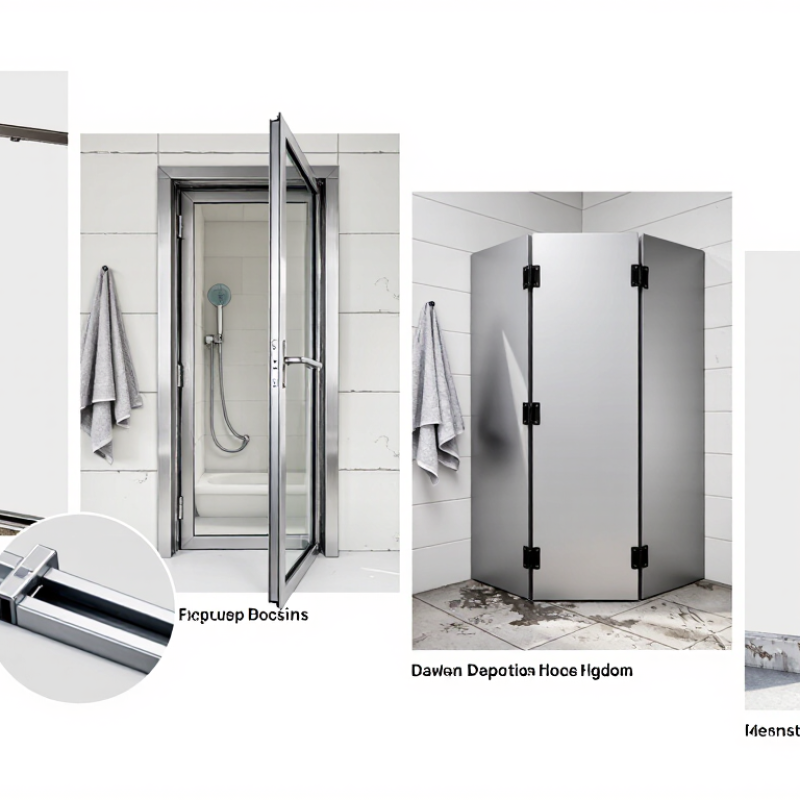
Aluminum bathroom doors come in several practical forms. Framed hinged doors suit compact rooms and provide a firm, familiar closing action. Sliding doors save floor space, especially beside a toilet or narrow vanity. Bi-fold doors fold toward the wall, but their hinges need accurate alignment. Pivot doors create a wider opening and a cleaner appearance, although they require careful swing clearance. For wet areas, aluminum shower doors usually combine anodized frames with tempered safety glass. The frame resists moisture, while silicone seals limit water leakage around the edges.
Material performance matters more than appearance alone. The International Aluminium Institute reports that about 75% of all aluminum ever produced remains in use, showing its long service potential when maintained correctly. Anodized or powder-coated surfaces reduce staining and simplify cleaning, but poor drainage can still create corrosion near screws and joints. A 2024 market analysis by Grand View Research identifies replacement demand as an important driver in the wider doors market. This supports choosing repairable hardware, not only attractive finishes. I would inspect the bottom track weekly in a humid bathroom. Small debris can cause noticeable drag. Some specifications also exaggerate “waterproof” performance; no door works well without accurate installation, level floors, and regularly replaced seals.
Comparing aluminum bathroom doors starts with the material, not the appearance. Look for corrosion-resistant aluminum with consistent wall thickness. Thicker profiles usually feel steadier, but they may increase weight and cost. Ask for information about alloy grade, surface treatment, and coating durability. A smooth anodized or powder-coated finish can resist moisture better than untreated metal. Check the corners closely. Uneven joints often reveal weak fabrication.
Design should match the bathroom’s daily conditions. Sliding doors save space, while hinged doors need a clear swing area. A narrow frame creates a lighter look, but it may offer less structural support. Frosted glass improves privacy without blocking all daylight. Clear glass feels more open, yet it shows water marks quickly. Sealed edges, adjustable hinges, and stainless-steel fasteners are practical details worth comparing. Door height also affects splash control and ventilation.
During installation, measure the opening in several places, because bathroom walls are rarely perfect. I once underestimated a slight floor slope, and the door closed unevenly. That small mistake caused repeated adjustments. Buyers should compare drainage gaps, seal quality, and replacement access before choosing a design. Request written maintenance instructions and product test information when available. A beautiful door can still disappoint if its rollers collect hair or its coating scratches easily. Consider cleaning habits honestly. Style matters, but daily handling exposes weak choices.
Comparison of common aluminum bathroom door designs using a practical 1–5 buyer rating. Higher scores indicate stronger performance for the selected criterion.
Framed swing doors offer strong privacy and sealing. Sliding doors save clearance space, while bi-fold doors are useful in narrow bathrooms. Louvered aluminum doors provide better ventilation but generally offer less privacy and sound control. Ratings are comparative design guidance rather than laboratory test results.
Choosing an aluminum bathroom door starts with the room, not the catalog. Measure the opening at three points, because walls are rarely perfectly square. Leave space for swing clearance, towel hooks, and wet-floor movement. For compact bathrooms, sliding or folding designs can protect usable floor area. A door should feel stable, not merely light. During site checks, I examine frame joints, drainage paths, and sill height. These details reveal installation problems before water reaches the hallway.
Aluminum alloy quality matters, especially in warm, humid rooms. Ask for corrosion-resistant treatment and a finish that tolerates daily cleaning. Avoid choosing by color alone; thin coatings may show scratches quickly. Check the glass thickness, safety certification, edge protection, hinges, rollers, and seals. Good seals reduce splashing, but they cannot correct a badly leveled frame. Magnetic closures should meet evenly without forcing the handle. I once underestimated the sill slope, and cleaning water collected near the corner. It was a small error with an annoying result.
Buying decisions should include installation skill, replacement parts, and written warranty terms. Confirm how the door opens during emergencies and whether hardware remains accessible. Compare total cost, not just the listed door price. Transport, wall repair, custom sizing, and future seal replacement can change the budget. Ask for drawings and care instructions before paying a deposit. If the seller cannot explain tolerances clearly, pause and measure again. A practical choice may look less fashionable, but it often performs better. I still leave room for doubt; bathrooms behave differently after years of steam.
| Door Type | Typical Opening Configuration | Space Requirement | Typical Single-Leaf Width | Ventilation Potential | Privacy Options | Main Advantages | Key Buying Factors | Best-Fit Applications |
|---|---|---|---|---|---|---|---|---|
| Hinged Aluminum Door | One-way swing; inward or outward opening depending on the room layout and local safety requirements. | Requires clear swing space equal to the door leaf depth; avoid conflicts with toilets, vanities, and shower enclosures. | Approximately 600–900 mm; wider openings may use a double-leaf design. | Low to medium with a solid panel; medium to high when fitted with a louver, transom, or ventilation grille. | Solid panelFrosted glassTextured glass | Simple operation, strong sealing potential, easy hardware replacement, and broad compatibility with common wall openings. | Check swing direction, frame depth, hinge load rating, corrosion-resistant hardware, threshold height, and water-resistant finishes. | Most standard residential bathrooms, guest bathrooms, and utility washrooms. |
| Sliding Aluminum Door | One or two panels slide along a top or top-and-bottom track. | Minimal floor clearance; requires sufficient wall length beside the opening or a suitable pocket cavity. | Approximately 600–1,000 mm per panel. | Low to medium unless a louvered or ventilated panel is specified. | Opaque panelFrosted glassTextured glass | Space-saving operation, convenient for compact rooms, and suitable for wide openings when multiple panels are used. | Inspect track drainage, roller capacity, anti-jump features, soft-close availability, bottom-track cleanliness, and sealing performance. | Small bathrooms, accessible layouts, narrow corridors, and renovations where swing clearance is limited. |
| Pivot Aluminum Door | Door rotates on pivot hardware positioned near the edge or slightly inside the panel. | Needs front and rear clearance based on the pivot location; planning must account for the larger movement path. | Approximately 700–1,200 mm, depending on the pivot system and panel weight. | Low to medium; can be increased with a transom or ventilated upper panel. | Solid panelFrosted glassOpaque laminate | Modern appearance, smooth movement with correctly sized hardware, and suitability for larger or heavier panels. | Confirm pivot load capacity, floor and head fixing conditions, closing control, water resistance, and safe opening clearance. | Contemporary residential projects, hotel-style bathrooms, and larger private bathrooms. |
| Bi-Fold Aluminum Door | Two connected panels fold toward one side of the opening. | Requires less swing depth than a hinged door but needs side stacking space and adequate panel clearance. | Approximately 600–900 mm overall; individual panels are commonly narrower than standard hinged leaves. | Low to medium; ventilation depends on the panel construction and optional louvers. | Solid panelFrosted glassDecorative screen | Good compromise between swing and sliding systems; offers relatively wide access in a compact footprint. | Check folding hardware quality, panel alignment, finger-clearance protection, track support, and ease of cleaning. | Compact bathrooms, en-suite rooms, closets adjacent to bathrooms, and space-constrained remodeling projects. |
| Louvered Aluminum Door | Usually hinged, with fixed or adjustable louvers integrated into the panel or lower section. | Uses the same floor area as a hinged door; louver depth and air passage must be considered. | Approximately 600–900 mm. | High, because the louver openings support continuous air exchange when the layout allows it. | Partial privacySolid lower panelOpaque louver blades | Helps reduce condensation and odors, supports passive ventilation, and remains relatively lightweight. | Balance airflow against privacy, inspect louver spacing, confirm insect-screen compatibility where needed, and select easy-clean surfaces. | Bathrooms with limited mechanical ventilation, laundry-bath combinations, and humid climates. |
| Aluminum-Framed Glass Door | Hinged, pivot, or sliding system using safety glazing within an aluminum frame. | Depends on the selected operating system; sliding versions save floor space, while hinged versions need swing clearance. | Approximately 600–1,000 mm per panel. | Low unless a ventilated transom, grille, or operable section is included. | Obscure glassAcid-etched glassPatterned glass | Allows daylight, creates a clean visual appearance, and can make a small bathroom feel more open. | Specify safety glazing, edge protection, frame drainage, seal quality, glass thickness, privacy level, and anti-fingerprint finishes. | Modern homes, apartments, hospitality interiors, and bathrooms where natural light is important. |
| Pocket Aluminum Door | Sliding panel retracts into a cavity inside the wall. | Very low room-side clearance; requires a suitable wall cavity free from conflicting plumbing, wiring, and structural elements. | Approximately 600–900 mm. | Low to medium, depending on the door panel and optional ventilation details. | Solid panelFrosted glassTextured panel | Maximizes usable floor area and provides a clean, unobstructed doorway when fully open. | Verify wall thickness, pocket-frame compatibility, moisture protection, access for future repairs, track quality, and soft-close performance. | Small bathrooms, accessible homes, apartments, and layouts requiring maximum circulation space. |
Note: Dimensions and performance descriptions are typical planning ranges rather than fixed specifications. Final selection should be checked against the actual opening size, wall construction, ventilation requirements, safety-glazing rules, accessibility standards, moisture exposure, and local building regulations.
Bathroom door selection begins with the opening, not the frame finish. Measure the wall thickness, finished floor level, and swing path after tiles are installed. A 10 mm error can create uneven reveals or a door that scrapes the floor.
The NKBA Bathroom Planning Guidelines recommend 30 inches of clear floor space in front of bathroom fixtures. They allow 21 inches as a tighter minimum. Use the larger clearance when the room serves children, older adults, or wheelchair users. The 2023 ICC A117.1 accessibility standard also uses a 32-inch minimum clear door opening in many accessible layouts. Check local requirements before ordering.
Sliding aluminum doors can protect narrow circulation zones. Hinged doors may provide easier cleaning and emergency access. Measure twice. Leave room.
For installation, keep the bottom track level and seal fastener points against moisture. A small slope can cause rollers to drag, while excessive silicone may trap water behind the frame. The U.S. Environmental Protection Agency’s WaterSense bathroom guidance emphasizes moisture control and leak prevention, although it does not certify door systems. That distinction matters. An attractive enclosure can still fail through poor drainage.
I once underestimated the space needed for a towel bar beside the entry. The door worked, but daily movement felt awkward. Recheck handles, toilet projection, shower clearance, and cleaning access before drilling. A simple floor template exposes conflicts earlier.
Aluminum bathroom doors suit humid rooms because they resist swelling, unlike many wood-based alternatives. Hinged doors are simple to repair. Sliding doors save floor space but need clean, level tracks. Folding doors work in narrow bathrooms, though their hinges collect soap residue. Powder-coated finishes usually hide fingerprints better than bare metal. Still, coating quality matters more than appearance.
Maintenance remains modest, not maintenance-free. Wipe frames weekly with mild soap and a soft cloth. Avoid abrasive pads, bleach mixtures, and acidic cleaners. Check rollers, hinges, and seals every three months. A loose screw can become a rattling panel or a water leak.
The International Aluminium Institute reports that recycled aluminum uses about 5% of the energy required for primary aluminum production. That supports choosing recyclable frames, but recycling depends on local collection systems. The U.S. Environmental Protection Agency reported about 600 million tons of construction and demolition debris in 2018. Durable components can help reduce replacement waste.
Tips: Compare total ownership cost, not only the purchase price. Ask for coating specifications, hardware warranties, replacement-part availability, and corrosion-test results. A cheap sliding door may need track replacement sooner. A hinged model may cost more initially but simplify servicing. I would inspect the bottom frame carefully, especially in bathrooms with standing water. Small design details often decide long-term value. Lower price is not always lower cost.
Choose corrosion-resistant aluminum with consistent wall thickness. Thicker profiles feel steadier but may cost more. Ask about alloy grade and coating durability.
Sliding doors protect narrow circulation areas. Hinged doors need a clear swing path. Folding doors fit tight rooms but their hinges collect soap residue.
Frosted glass improves privacy while keeping some daylight. Clear glass feels open but shows water marks quickly. Neither option eliminates cleaning.
Measure width, height, wall thickness, and floor level in several places. Bathroom walls are rarely perfect. A 10-millimeter error can cause scraping.
Keep the bottom track level. Seal fastener points carefully. Avoid excessive silicone because it can trap water behind the frame.
Leave clear floor space near fixtures and check the full swing path. About 30 inches feels more comfortable than a tighter 21-inch clearance.
Wipe the frame weekly with mild soap and a soft cloth. Check rollers, hinges, seals, and screws every three months. Small faults grow.
Powder-coated surfaces often hide fingerprints better than bare metal. Anodized finishes can resist moisture well. Appearance alone does not prove coating quality.
Include replacement parts, hardware warranties, coating tests, and service access. A cheaper sliding door may need track replacement sooner. I may still underestimate repair effort.
Choosing the right Aluminum Bathroom Door requires balancing style, performance, and long-term value. Common types include sliding, hinged, folding, and framed or semi-frameless designs, each offering different benefits for ventilation, privacy, accessibility, and space efficiency. Buyers should compare aluminum finishes, glass or panel options, frame strength, water resistance, sealing quality, and overall design compatibility with the bathroom layout. Practical factors such as door size, opening direction, clearance, safety hardware, and installation requirements are also essential, especially in compact or moisture-prone spaces.
A well-planned installation should support smooth operation, effective drainage, and reliable protection against water entry. During selection, consider corrosion resistance, ease of cleaning, structural durability, warranty coverage, and the expected maintenance schedule. Although lower-cost options may seem attractive, stronger materials and better sealing can reduce future repairs and replacement expenses. By evaluating function, appearance, installation conditions, durability, and total cost together, buyers can select an Aluminum Bathroom Door that provides lasting convenience and a clean, modern bathroom environment.