Choosing a China-based manufacturer for an Aluminium Sliding Window involves more than comparing prices or polished catalogue photographs. Buyers need to examine frame profiles, glass options, drainage design, hardware, finish consistency, and production quality. Small details matter. A smooth sample can still hide weak rollers or poor water management.
Building-science expert Joseph Lstiburek’s guidance can be paraphrased this way: Judge a window as part of the wall assembly, not as a standalone product. That perspective is useful when reviewing manufacturers. Ask how they test air and water performance, what tolerances they control, and how they document materials and quality checks. Request project references and inspect finished installations where possible. A convincing answer should include measurable specifications, not only broad promises.
This outline explores how to compare China’s Aluminium Sliding Window manufacturers, assess product construction, and evaluate customization, certifications, communication, and after-sales support. It also considers what buyers should clarify before requesting a quotation, including dimensions, glass configuration, finish, packaging, and delivery requirements. One caution: factory capacity alone does not prove dependable performance. Even a detailed checklist has limits. Site conditions, installation quality, and maintenance can change how a window performs over time. The right supplier is not simply the one with the largest showroom or lowest bid. It is the manufacturer that can explain its choices, support its claims with evidence, and address the less glamorous details clearly.
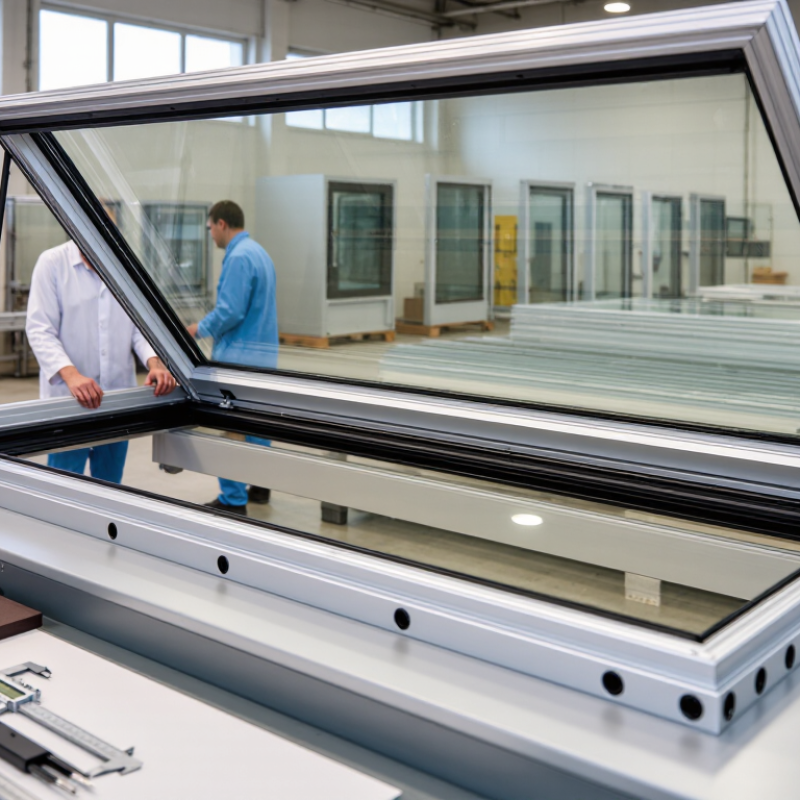
Define “Best”: Compare 6063-T5 Profiles, Thermal Breaks, and Hardware
China Best Aluminium Sliding Window Manufacturers
Define “Best”: Compare 6063-T5 Profiles, Thermal Breaks, and Hardware
“Best” should mean measured performance, not a glossy frame sample. For 6063-T5 profiles, check alloy certificates, section drawings, wall thickness, and corner-joint quality. T5 identifies a defined temper condition; it does not guarantee a rigid sash. A slim profile may look elegant yet flex under wind load if its geometry is inadequate. Ask for product-level structural test results, not just alloy descriptions. Fit matters.
Thermal breaks interrupt heat flow between inner and outer aluminum sections. Inspect strip continuity at corners and meeting rails, then compare whole-window U-factor and solar heat gain coefficient. NFRC ratings evaluate the complete window, not just its frame. The U.S. Department of Energy’s Energy Saver guidance estimates that windows account for about 25–30% of home heating and cooling energy use. That estimate is a useful reminder, not a promise that one window will save that amount.
Hardware deserves equal scrutiny. Slide the sample sash repeatedly; notice sticking, roller noise, handle play, and uneven locking. Request operating-cycle and air- and water-performance test records, plus details on replacement parts. A heavy roller may feel reassuring, but poor track alignment can still cause drag. One limitation: showroom samples rarely reveal years of dust, salt, or imperfect installation. Compare test results and inspect a full-size installed unit when possible.
How Sliding Windows Work: Sashes, Tracks, Rollers, Seals, and IGUs
An aluminium sliding window moves when its sash slides along a fixed frame track. The sash holds the glass and transfers its weight to small rollers beneath it. Rollers should turn smoothly, without scraping or rocking. Small parts matter. Dirt, bent track edges, or uneven installation can make even a well-made sash difficult to operate.
Brush or fin seals sit where the moving sash meets the frame. They help reduce drafts, dust, and water entry, but they are not a substitute for correct drainage or careful fitting. Insulating glass units, often called IGUs, use two or more panes separated by a spacer. The sealed gap slows heat transfer and can reduce outside noise. Performance depends on glass, spacer design, and the quality of the edge seal. A cloudy appearance between panes may indicate seal failure.
For buyers comparing aluminium sliding window manufacturers in China, ask how rollers, track tolerances, drainage paths, and seals are checked during production. Request test details for air and water performance, and confirm that the specified IGU matches the project’s climate and noise needs. A polished frame is easy to notice; consistent operation after repeated use is harder to judge. I would not overlook that distinction.
China Best Aluminium Sliding Window Manufacturers — How Sliding Windows Work: Sashes, Tracks, Rollers, Seals, and IGUs
Nominal Clear Opening as a Share of Frame Width
How to read this: The percentages show idealized opening width divided by total frame width for the stated equal-panel layouts: one panel-width opening in a two-panel or three-panel layout, and a two-panel-width center opening in a four-panel layout. Actual clear openings are smaller because of frame profiles, meeting rails, and sash overlap. Sashes move along tracks on rollers; seals close gaps when the window is shut. IGUs (insulating glass units) provide glazing insulation but do not determine the opening width.
Read Performance Data: U-Value, Air, Water, Wind, and Sound Ratings
China Best Aluminium Sliding Window Manufacturers
Performance figures help compare aluminium sliding windows, but only when the test basis is clear. U-value describes heat transfer; a lower figure generally means better insulation. Check whether it applies to the complete window or only the glass. The distinction matters on a cold morning, when the frame may feel much cooler than the pane. Ask for the tested size and configuration, too.
Tips: Compare matching test standards and window dimensions. Keep the performance report, not just a sales chart. Small detail, big difference.
Air leakage, water resistance, and wind-load ratings describe different challenges. Air results indicate how much air passes through closed joints. Water results show resistance under stated pressure and exposure. Wind ratings relate to structural performance, not everyday comfort alone. Sound ratings can help near busy roads, but test conditions and glass build-up affect results. A high sound figure may not reflect the whole installed opening. I would not choose by one number; the evidence can be uneven, and that deserves a second look. Check seals, drainage paths, and hardware details alongside the ratings.
Verify Compliance: GB/T 8478-2020 and GB/T 7106-2019 Test Reports
When comparing China’s aluminium sliding window manufacturers, treat compliance documents as product evidence, not decoration. The International Energy Agency’s 2023 Buildings report estimates that buildings account for about 30% of global final energy consumption. That figure does not mean windows alone determine energy use, but it shows why the building envelope deserves careful scrutiny. Ask for reports tied to the actual window system, including its profile, glass, seals, and hardware. Small details matter. A report for a different configuration may offer little assurance.
GB/T 8478-2020 sets requirements for aluminium alloy windows and doors, while GB/T 7106-2019 specifies testing and grading for air permeability, watertightness, and wind-load resistance. Request the full test report. Check the specimen size, opening type, test date, laboratory scope, and measured results; then compare them with the specification being offered. Look for clear figures, not only a pass statement. A cropped certificate is not enough. I would still inspect a physical sample, because paperwork cannot reveal every installation weakness. That is an imperfect check, but it helps connect laboratory results with real project details.
China Best Aluminium Sliding Window Manufacturers - Verify Compliance: GB/T 8478-2020 and GB/T 7106-2019 Test Reports
| Verification item |
Applicable standard |
Evidence to request |
What to check |
Review status |
| Product standard and edition |
GB/T 8478-2020 — Aluminium alloy windows and doors |
Product specification and relevant conformity documentation |
Confirm that the cited standard number and year are stated correctly and that the documentation applies to the offered aluminium sliding window. |
To be verified |
| Air-permeability performance |
GB/T 7106-2019 — Test methods of air permeability, watertightness and wind load resistance performance for building exterior windows and doors |
Complete test report showing the test method, specimen details and results |
Check the reported result and any performance classification against the project specification; do not assume a universal required grade. |
To be verified |
| Watertightness performance |
GB/T 7106-2019 |
Test report identifying the water test conditions and outcome |
Verify the reported pressure, test observations and classification, where provided, against the intended application and project requirements. |
To be verified |
| Wind-load resistance |
GB/T 7106-2019 |
Test report stating the test pressures, specimen configuration and results |
Compare the reported performance with the project design requirements and confirm that the tested configuration is relevant. |
To be verified |
| Test specimen matches the offered window |
GB/T 8478-2020 and GB/T 7106-2019 |
Report specimen description, drawings or configuration records |
Compare window type, opening arrangement, dimensions, frame and sash details, glazing, seals and hardware with the proposed product. |
To be verified |
| Report identity and traceability |
Test report review |
Full report, including report number, issue date, laboratory details and any appendices |
Check that pages are complete and consistent, and confirm report authenticity with the issuing laboratory when necessary. |
To be verified |
| Project-specific acceptance |
Project specification and applicable requirements |
Approved performance schedule and product submittal |
Confirm that documented results meet the project’s specified performance levels; this table does not state or imply test results for any manufacturer. |
To be verified |
Assess Manufacturers: ISO 9001, Production Capacity, Lead Time, and Warranty
China Best Aluminium Sliding Window Manufacturers
Assess Manufacturers: ISO 9001, Production Capacity, Lead Time, and Warranty
When assessing aluminium sliding window manufacturers in China, treat ISO 9001 as a starting point, not proof of flawless products. ISO’s 2022 Survey reported about 1.27 million ISO 9001 certificates worldwide. Certification indicates a documented quality-management system; it does not verify every window’s performance. Ask to see the factory’s current certificate and confirm its scope covers the relevant production site. Then request inspection records for frame dimensions, coating thickness, glass fit, and sliding hardware. Small details matter.
Production capacity should be demonstrated with recent output records, not a large number on a brochure. Ask how many units the facility completed in a typical month, and whether cutting, assembly, glazing, and packing happen on-site. A factory may have spare capacity today and still face material delays next month. Lead-time quotes should separate sample approval, production, inspection, and shipping. Compare the promised schedule with recent delivery records. For warranty terms, check the written coverage period, exclusions, and process for replacement parts. A broad warranty can sound reassuring, but unclear claim procedures are a real weakness.
Tips: Request a production schedule for your order, plus dated inspection photos. Ask who pays freight for replacement parts. Keep one question open: what happens if a component is discontinued?
Conclusion
Choosing the best Aluminium Sliding Window requires comparing the details that affect durability, comfort, and everyday operation. Start with 6063-T5 aluminium profiles, checking their construction and finish, and assess whether thermal breaks suit the project’s climate and energy goals. Hardware also matters: dependable rollers, handles, and locking components help sashes move smoothly and close securely. Understanding the tracks, seals, and insulating glass units (IGUs) makes it easier to judge how the complete window system manages weather and sound.
Review performance data rather than relying on general claims. U-value, air infiltration, water resistance, wind pressure, and sound ratings offer useful points of comparison when measured and reported clearly. Ask for relevant test reports aligned with GB/T 8478-2020 and GB/T 7106-2019, then assess each manufacturer’s quality management, production capacity, realistic lead times, and warranty terms. Together, these checks support a more informed choice for the intended application.