China’s aluminium window and door sector includes large industrial groups, specialist fabricators, and export-focused suppliers. This guide examines ten manufacturers for buyers comparing products, capabilities, and service. A company’s place on a list is not proof of suitability. Project requirements matter.
Architect Carl Elefante’s widely cited observation, “The greenest building is the one that is already built,” offers a useful perspective on product life and renovation. Aluminium frames can support long service life, but performance depends on design, fabrication, installation, and maintenance. The material alone tells only part of the story. Look closely.
The comparison considers thermal-break design, profile options, glazing compatibility, hardware, surface finishes, and documented testing. It also considers factory capacity, export experience, customization, lead times, and after-sales support. Ask manufacturers for project references and technical documents, including relevant air, water, and structural performance results. Verify that claims match your local climate and building requirements.
There is no perfect shortlist. Available public information varies, and polished product photos cannot reveal how a frame performs after years of use. That matters. Treat the rankings as a starting point, then compare specifications and service commitments directly before choosing an Aluminium Windows & Doors supplier.
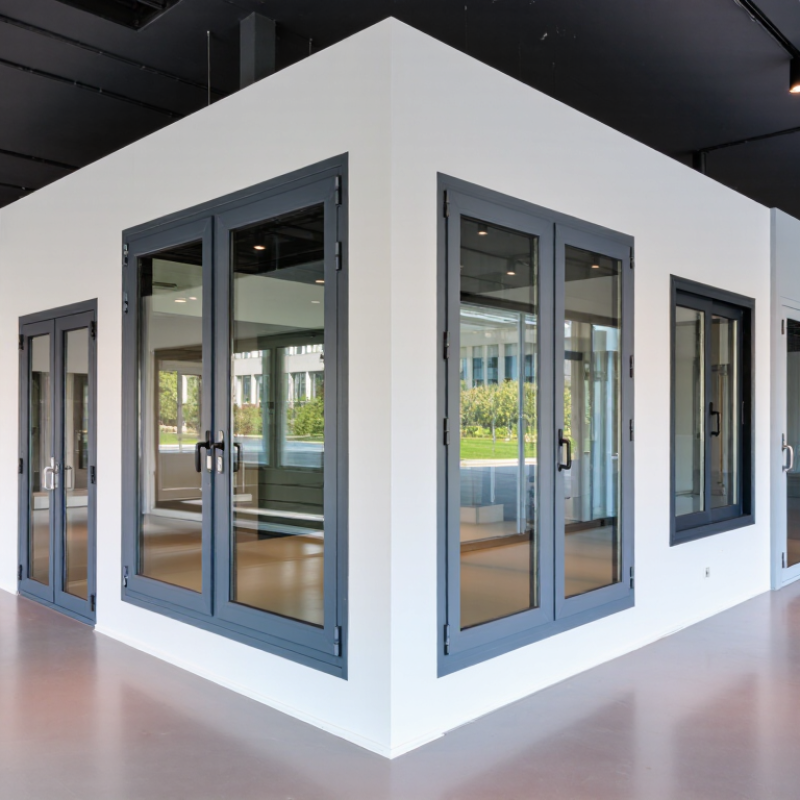
China’s aluminium window and door industry works through several linked stages. Upstream suppliers produce aluminium profiles, glass, seals, and hardware. Fabricators cut and assemble these components into windows or doors. Some also add thermal breaks, drainage channels, and glazing. System designers may specify dimensions and performance, while contractors or specialist installers handle site fitting. In practice, these roles can overlap. The structure is not always neat.
Demand also shapes this chain. China’s National Bureau of Statistics reported that floor space completed by real estate development enterprises reached 998.31 million square metres in 2023, down 20.9% year on year. This figure covers buildings, not window orders, so it is only a broad market signal. Still, it highlights why suppliers serve both new construction and renovation projects. Capabilities vary widely, from small custom workshops to larger plants serving project and export buyers. A product catalogue alone cannot show production control or installation quality.
A reliable comparison of aluminium window and door manufacturers should begin with measurable performance, not showroom appearance. Ask how profiles, thermal breaks, glazing, seals, and hardware work together in the proposed system. Request current test reports for air leakage, water resistance, and wind pressure, then check that the tested configuration matches your order.
Ask for evidence.
A certificate alone may not cover every size, opening style, or glass combination. This detail is easy to miss. Review manufacturing controls as well. Ask how incoming aluminium is inspected, how coating thickness is checked, and whether finished units receive documented checks before packing. A factory visit can reveal storage conditions, cutting accuracy, and how workers protect frame corners.
These observations are useful, but one visit cannot prove consistent quality across every production run. Check recent project references and confirm that the supplier can explain installation tolerances and maintenance needs in writing. Compare sample corners, drainage paths, and gasket joints, not just finish colour. No checklist is perfect. Delivery time, communication, and support after installation matter too, and written answers are easier to verify than confident promises.
A useful review of ten Chinese manufacturers should compare capabilities, not just factory size. One profile may focus on export orders and careful packing. Another may specialize in thermal-break frames, with polyamide strips visible inside sample sections. A third may build sliding systems for compact apartments. Others may concentrate on curtain-wall assemblies, custom residential openings, or slim-frame designs. These distinctions matter. They affect lead times, installation details, and the options available for different projects.
The remaining profiles can cover high-rise engineering, energy-conscious glazing, project-based fabrication, and in-house testing. Ask each supplier for drawings, hardware specifications, and recent test documentation. A sample corner joint can reveal more than a polished brochure. Check how drainage holes are positioned and whether seals meet cleanly at the corners. Claims about performance need project-specific evidence. This comparison is not a ranking, and a strong export record alone does not guarantee a suitable product. There is room for doubt. Even detailed profiles cannot replace checking samples and production controls before placing an order.
When comparing China’s top aluminium window and door manufacturers, look beyond frame color and quoted price. Ask for section drawings, alloy and wall-thickness details, thermal-break specifications, and hardware options. A sample corner joint can reveal clean cuts, tight seals, and consistent coating. Small details matter.
Certifications should match the product and destination market, not simply appear in a brochure. Request current test reports and check which window or door configurations they cover. A rating for one size or glazing setup may not apply to another. Verify it directly.
Service is just as important. Compare drawing support, packaging plans, spare-parts availability, and response times for technical questions. Ask how the supplier handles damaged glass, installation issues, and changes after approval. Clear answers are reassuring. Vague promises are not. A factory visit or live production video can help, but neither replaces written specifications and inspection records. I would also compare lead-time assumptions carefully; schedules often look precise until custom colors or unusual sizes enter the order.
Choosing an aluminium window and door manufacturer requires more than comparing prices or glossy samples. Ask for recent, independently verified test reports covering air leakage, water penetration, wind resistance, and whole-window thermal performance. Check that the tested frame, glass, and hardware match the system being quoted. A brochure figure may describe a different configuration. Details matter.
Energy performance deserves careful attention. The 2023 Global Status Report for Buildings and Construction, published by UNEP and GlobalABC, estimates that buildings and construction accounted for 34% of global energy demand and 37% of energy- and process-related CO2 emissions in 2022. These figures cover the wider sector, not windows alone, but they underline why frame design and glazing choices matter. Ask how thermal breaks, seals, and glazing options suit your local climate. Request clear test conditions, not just a headline rating.
Inspect production controls, too. Ask how the factory checks alloy records, extrusion dimensions, coating thickness, and corner-joint strength. A polished showroom sample can still hide weak joints. I would not rely on a warranty alone; ask who handles replacement parts and installation questions, and how quickly they respond. If possible, review a finished unit and its packing before shipment. Small checks, big difference. No supplier is perfect, so record agreed specifications and tolerances in writing.
| Factor | What to Compare | Evidence to Request | Why It Matters |
|---|---|---|---|
| Product and project experience | Experience with the required window and door types, opening sizes, building use, and destination market. | Anonymized project references, product schedules, and examples of comparable completed work. | Relevant experience helps confirm that the proposed system suits the project’s design and operating requirements. |
| Applicable standards and compliance | Requirements applicable to the destination country, building type, and specific product configuration. | Current declarations, certificates, and test reports; confirm the tested product matches the quoted system. | Standards and regulatory requirements differ by market. A quality-management certificate alone does not establish product performance or code compliance. |
| Air, water, and structural performance | Tested air leakage, water penetration resistance, and structural performance for the proposed system and size. | Reports from a competent testing laboratory, including the specimen description, dimensions, test method, and results. | These results help assess weather resistance and suitability for the project’s exposure and design loads. |
| Thermal and glazing performance | Frame thermal break, glass make-up, whole-window thermal transmittance, and solar-control requirements. | Product-specific calculations or test data identifying the frame, glass, spacer, and calculation or test method. | Thermal performance depends on the complete window assembly, not just the glass or frame in isolation. |
| Aluminium profiles and materials | Profile dimensions, alloy and temper, wall thickness, thermal-break specification, and hardware materials. | Approved drawings, material specifications, inspection records, and traceability documents where required. | Clear specifications make it easier to check that production matches the approved design and project requirements. |
| Surface finish and corrosion resistance | Finish type, colour consistency, coating or anodizing specification, and suitability for the installation environment. | Finish samples, written process specifications, inspection criteria, and relevant test records. | Exposure conditions and maintenance affect finish selection; sample approval helps set expectations for colour and appearance. |
| Manufacturing quality control | Incoming-material checks, fabrication tolerances, assembly inspections, glazing procedures, and final inspection. | A written quality-control plan, inspection checklists, non-conformance process, and sample inspection records. | Documented controls help identify defects consistently and provide a clear basis for acceptance. |
| Customization and technical support | Ability to provide shop drawings, installation details, hardware options, and coordinated responses to technical questions. | A sample drawing package, named technical contact, revision process, and documented approval workflow. | Accurate coordination before production reduces the risk of mismatched openings, interfaces, or specifications. |
| Packaging, shipping, and delivery planning | Packaging method, product identification, container loading plan, delivery terms, and communication of production milestones. | Packaging specifications, sample labels, loading photos or procedures, and a written delivery schedule. | Windows and doors need protection and clear identification during transport, handling, and installation. |
| Warranty, spare parts, and after-sales service | Warranty scope and exclusions, hardware availability, replacement-part process, and response arrangements. | Written warranty terms, service contact details, spare-parts list, and claim procedure. | Written terms clarify responsibilities and the process for addressing defects or service needs after delivery. |
Compare tested performance, profile details, manufacturing checks, delivery plans, and after-sales support. Showroom appearance is not enough.
Ask for current reports on air leakage, water resistance, and wind pressure. Check whether each report covers your exact configuration.
Test results may apply only to specific sizes, opening styles, and glass. A rating for one setup may not cover yours. Check it directly.
Ask how incoming aluminium, coating thickness, and finished units are inspected. Look at cutting accuracy and protected frame corners during a visit.
It can show clean cuts, tight seals, and consistent coating. Small details matter.
Request section drawings, alloy and wall-thickness details, thermal-break specifications, and hardware options. These details make comparisons more practical.
Ask about drawing support, packaging, spare parts, response times, and solutions for damaged glass or installation issues. Get answers in writing.
No. A visit or live video offers useful clues, but cannot prove consistent quality across every production run.
Ask how custom colours and unusual sizes affect lead times. Precise dates can change. I may still overlook a detail, so review assumptions carefully.
No. Match certificates to the product and destination market, then review test reports and inspection records. No checklist is perfect.
This article examines the structure of China’s aluminium window and door industry, from manufacturers with broad production capabilities to businesses focused on particular product types or customer needs. It explains the criteria used to identify notable manufacturers, including product range, manufacturing capacity, quality control, technical expertise, certifications, and export or customer service. The article then presents profiles of ten manufacturers without treating any one company as a universal fit for every project.
A comparison of their Aluminium Windows & Doors, certifications, and services helps readers understand how suppliers may differ in design options, customization, production support, and after-sales assistance. The final section outlines practical factors to consider when choosing a manufacturer, such as project requirements, material and performance specifications, communication, delivery expectations, and the level of support available. Together, these topics offer a clear starting point for evaluating potential suppliers.