Choosing the top Aluminium Washroom Door suppliers requires more than comparing catalogue prices. Durability, moisture resistance, hygiene, installation support, and documented performance matter in daily use. A busy airport washroom can expose doors to constant contact, cleaning chemicals, trolley impacts, and humidity. Supplier quality becomes visible quickly.
The International Aluminium Institute reported approximately 70.6 million tonnes of primary aluminium production in 2023. Its sustainability research also notes that recycled aluminium can require about 95% less energy than primary production. These figures make material sourcing and recycling policies relevant selection criteria. A responsible supplier should explain alloy grades, recycled content, surface treatments, and end-of-life options. Claims need evidence.
Market research from Grand View Research identifies construction as a major aluminium-use sector, while reports from organisations such as World Aluminium highlight growing pressure for lower-carbon materials. However, market size does not prove supplier reliability. It is only context. Buyers should examine completed washroom projects, corrosion testing, hinge performance, edge protection, and replacement-part availability. Clear technical drawings help too.
The strongest suppliers usually provide consistent dimensions, moisture-resistant cores, stainless-steel hardware, and finishes that remain practical after repeated cleaning. Some offer impressive samples but weak after-sales support. That matters more than appearance. This guide compares leading Aluminium Washroom Door suppliers through product quality, manufacturing experience, certifications, sustainability evidence, delivery capability, and customer service. The ranking may still require local verification, because regional standards, climate, and installation conditions can change the final outcome.
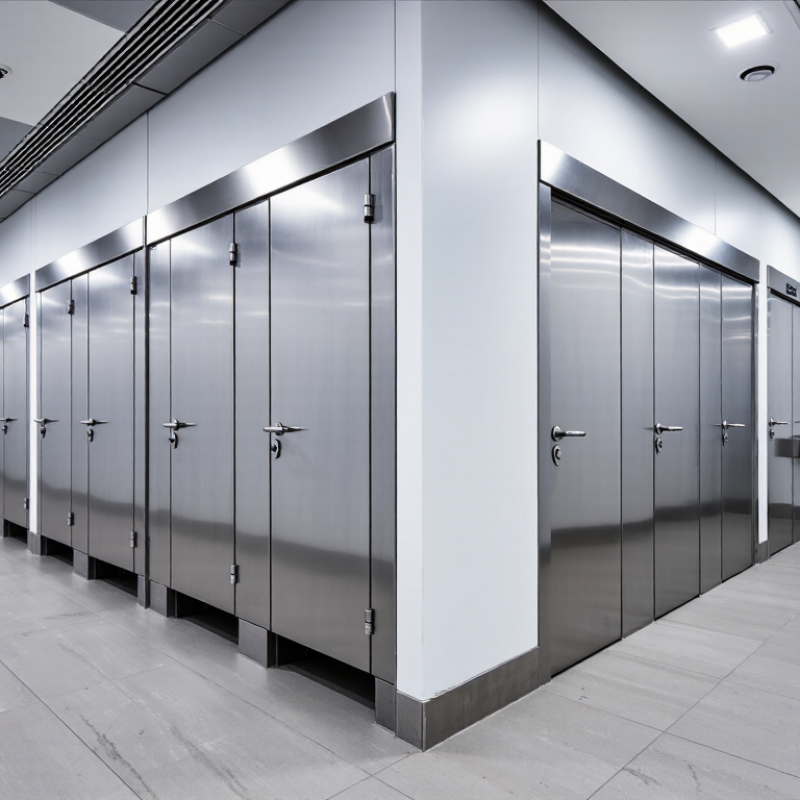
Aluminium washroom doors are valued for their light weight, moisture resistance, and clean appearance. They suit public toilets, schools, offices, and hospitality spaces. Unlike untreated steel, aluminium does not easily rust in humid rooms. However, it is not completely maintenance-free. Poor drainage, harsh cleaners, and loose fittings can still damage the surface.
A reliable supplier should explain the door’s alloy, frame thickness, surface treatment, and hardware quality. Powder-coated finishes usually provide a consistent colour and a smoother cleaning routine. Anodised surfaces can offer a durable metallic appearance. Check whether hinges, locks, handles, and privacy indicators are designed for frequent use. Small details matter. A weak latch can quickly become a daily frustration.
During supplier evaluation, request installation drawings, test information, warranty terms, and spare-part availability. Experienced suppliers should calculate opening sizes accurately, especially in older buildings with uneven walls. They should also discuss ventilation, threshold levels, and accessible cubicle requirements. One common mistake is choosing the lowest quotation without checking the frame structure. I have seen inexpensive doors look impressive at delivery, then flex noticeably after repeated use. That experience makes product samples and reference projects worth reviewing before approval.
These reference dimensions represent commonly used washroom door and cubicle design benchmarks. The 813 mm clear opening reflects the 32-inch minimum commonly specified for accessible routes under ADA guidance, while the other dimensions reflect widely used commercial washroom planning ranges.
How to Evaluate Aluminium Washroom Door Suppliers
A reliable aluminium washroom door supplier should explain material choices clearly. Ask whether the frames use corrosion-resistant aluminium suitable for humid interiors. Request coating details, thickness, and test reports. Vague claims are warning signs. Look closely.
Evaluate the door’s practical construction, not only its appearance. Check hinge strength, lock quality, edge finishing, and panel alignment. A well-made door should open smoothly after repeated use. Ask for sample sections or visit a completed installation. This reveals details that photographs often hide, including uneven gaps and sharp corners. Supplier experience matters here. Experienced teams can recommend suitable door sizes, ventilation gaps, and fixing methods for busy facilities.
Documentation also shows professional reliability. Request installation instructions, maintenance guidance, product tolerances, and a written warranty. Confirm lead times and ask how damaged components are replaced. Independent test evidence is more useful than broad promises. References from schools, offices, or public facilities can reveal long-term performance. Speak with the installer, if possible. Their comments may be less polished but more honest.
Price deserves careful comparison. A low quotation may exclude delivery, hardware, or installation preparation. Compare the complete specification line by line. I have learned that even strong aluminium doors can perform poorly when walls are uneven or fittings are rushed. That part is easy to overlook. Suppliers should discuss these risks before accepting an order, explain reasonable limitations, and provide a clear inspection process after installation.
| Evaluation Dimension | Strong Supplier Benchmark | Recommended Evidence to Request | Suggested Weight | Score (1–5) |
|---|---|---|---|---|
| Aluminium Frame and Panel Construction | Uses corrosion-resistant aluminium profiles and moisture-resistant infill panels suitable for high-humidity washroom environments. | Material specifications, profile drawings, panel composition, and sample inspection. | 15% | — |
| Material Thickness and Structural Stability | Clearly states aluminium profile and panel thickness; doors remain rigid during repeated opening, closing, and cleaning. | Technical datasheet, section details, deflection information, and a full-size or representative sample. | 10% | — |
| Corrosion and Surface Protection | Provides anodized or powder-coated finishes with documented coating specifications and consistent coverage on exposed surfaces. | Finish standard, coating thickness information, color samples, and corrosion-resistance test reports where required. | 10% | — |
| Hardware Quality | Includes corrosion-resistant hinges, privacy indicators, handles, coat hooks, and adjustable fittings designed for frequent use. | Hardware schedule, material details, cycle-test information, replacement-part availability, and warranty terms. | 12% | — |
| Water, Cleaning, and Hygiene Performance | Smooth, sealed, easy-to-clean surfaces with minimal dirt traps and details that tolerate routine commercial cleaning products. | Cleaning and maintenance instructions, sealant details, chemical-resistance information, and installation photographs. | 10% | — |
| Safety, Accessibility, and Compliance | Can adapt door clearances, opening direction, privacy hardware, visibility gaps, and accessible cubicle requirements to the applicable code. | Compliance declaration, tested details where applicable, accessible design drawings, and local code references. | 12% | — |
| Fire and Building-Product Documentation | Identifies whether the proposed door assembly requires fire, smoke, reaction-to-fire, or other project-specific testing rather than making unsupported claims. | Applicable test reports, declarations, certification scope, and confirmation that documents cover the quoted construction. | 8% | — |
| Customization and Dimensional Accuracy | Provides shop drawings, coordinated cubicle layouts, non-standard sizes, cut-outs, colors, and hardware options with controlled revisions. | Approved drawings, tolerance information, sample approval procedure, and record of comparable custom projects. | 8% | — |
| Lead Time and Production Capacity | Gives a written schedule covering drawing approval, production, packing, delivery, and installation; communicates capacity limits early. | Project schedule, production milestones, delivery terms, stock policy, and references for comparable order volumes. | 5% | — |
| Warranty, After-Sales Service, and Spare Parts | Offers written coverage for manufacturing defects, defined exclusions, responsive technical support, and access to replacement hardware. | Warranty certificate, service response times, spare-parts list, maintenance guidance, and escalation contacts. | 5% | — |
| Sustainability and Supply-Chain Transparency | Can provide aluminium content information, responsible sourcing details, packaging practices, and product environmental data when requested. | Environmental product information, recycled-content declaration, packaging policy, and relevant management-system certificates. | 5% | — |
| Total Suggested Weight | 100% | — | ||
Selecting an aluminium washroom door supplier requires more than reviewing photographs. Product quality appears in the details: rigid frames, even anodised finishes, accurate hinges, and smooth closing action. On busy projects, weak hardware quickly reveals itself. Doors should resist moisture, frequent cleaning, and repeated impact without becoming loose or noisy. Ask for material specifications, core construction, surface treatment, and tested cycle performance. A sample helps, but it can hide installation weaknesses.
Customisation should serve the building, not complicate it. Reliable suppliers can adjust door height, width, privacy gaps, colours, ventilation panels, and accessible hardware. They should provide clear drawings before production. Check whether custom dimensions affect lead times or warranty coverage. Small changes matter. A poorly positioned indicator or handle can frustrate daily users. I have found that suppliers sometimes promise flexibility before confirming tooling limits, so written confirmation remains essential.
Certifications add confidence, but certificates need careful checking. Review the issuing body, test standard, product scope, and validity date. Fire, corrosion, hygiene, accessibility, and impact claims may require different evidence. A supplier should provide traceable reports rather than generic certificates copied from another product range. Site conditions also matter; coastal humidity may demand stronger surface protection. No supplier is perfect. Even detailed comparisons can miss packaging damage or inconsistent batches, making pre-shipment inspection and documented quality checks worthwhile.
Top aluminium washroom door suppliers should be compared beyond catalogue prices. The World Bank Commodity Markets Outlook placed aluminium near US$2,400 per metric ton in 2024. Material prices can shift quickly. Ask whether the quote fixes the aluminium rate, hardware, packaging, and delivery. A realistic comparison should include a 900mm door, frame, hinges, locks, and site unloading.
Lead time often separates reliable suppliers from attractive ones. Request a written production schedule with approval, fabrication, coating, and dispatch dates. Turner & Townsend’s 2024 International Construction Market Survey identifies labour and material availability as continuing construction cost pressures. Standard colours may leave factories in two to four weeks, while custom finishes can take longer. Treat every estimate as provisional. I have seen projects lose days because drawings lacked hinge positions and floor clearances.
Tips: Ask for two completed project references. Confirm installation responsibility, tolerance checks, and protection during delivery. Require a replacement procedure for scratched panels, missing hardware, or incorrect sizes. After-sales support should state response times, spare-part availability, and warranty exclusions. A supplier promising “fast support” needs measurable terms. The weakest detail is often overlooked. Prices should also be compared against installation hours, not only unit cost. Some low bids exclude wall preparation and final adjustment. That is where budgets quietly move.
Selecting the right aluminium washroom door supplier requires more than comparing prices. Check alloy grade, panel thickness, edge protection, hardware quality, and moisture resistance. A reliable supplier should provide test results, installation guidance, warranty terms, and traceable material information. The World Economic Forum’s Aluminium for Climate report estimated that aluminium production created about 1.1 billion tonnes of CO2 emissions in 2018. Therefore, recycled content and verified environmental data deserve attention. Ask for an Environmental Product Declaration where available. Sustainability should be measurable, not merely promised.
Tips: Request a physical sample. Test hinges, locks, and corners. Confirm lead times in writing. Inspect the supplier’s previous commercial installations. Ask how damaged panels are replaced. A polished showroom can still hide weak after-sales support.
Project conditions should guide the final decision. Busy airports, schools, and leisure centres need impact-resistant doors, robust privacy locks, and simple cleaning surfaces. Coastal or highly humid sites may require enhanced corrosion protection. The UNEP 2023 Global Status Report for Buildings and Construction reported that buildings represented 37% of global energy and process-related emissions in 2021. This makes durable, maintainable products increasingly important, even for small washroom packages. I would not select a supplier from a brochure alone. Review drawings, sample details, references, and delivery records. The cheapest quotation may become expensive after warped doors, missing hardware, or repeated call-outs. Performance matters.
Check rigid frames, accurate hinges, even anodised finishes, and smooth closing action. Weak hardware becomes loose or noisy quickly. Ask for material specifications and tested cycle performance.
A sample shows surface finish, corner quality, hinges, locks, and panel thickness. It cannot reveal every installation weakness. Review drawings and installation details too.
Common options include door height, width, privacy gaps, colours, ventilation panels, and accessible hardware. Request clear drawings before production. Written confirmation prevents misunderstandings.
Yes. Custom sizes and finishes may require extra tooling or production time. Ask for approval, fabrication, coating, and dispatch dates. Treat estimates as provisional.
Check the issuing body, test standard, product scope, and validity date. Confirm that each report matches the exact door system. Generic certificates are not enough.
Compare the complete package, including the door, frame, hinges, locks, packaging, delivery, and unloading. Check whether the aluminium rate is fixed. Low prices can hide installation costs.
Confirm installation responsibility, tolerance checks, delivery protection, and final adjustments. Ask about scratched panels, missing hardware, and incorrect sizes. Support needs measurable response times.
Busy schools, airports, and leisure centres need impact-resistant doors and robust privacy locks. Coastal sites may need stronger corrosion protection. Simple cleaning surfaces also matter.
Yes. Ask about recycled content and verified environmental data. An environmental declaration is useful when available. Promises alone are weak evidence.
Not always. Warped doors, missing hardware, and repeated call-outs can increase costs. Compare installation hours, warranty limits, and maintenance needs. My comparison may still miss packaging damage, so inspect deliveries.
Choosing the right Aluminium Washroom Door supplier requires more than comparing prices. A reliable supplier should offer durable, moisture-resistant doors designed for demanding washroom environments, with suitable finishes, hardware, and privacy features. Buyers should evaluate material quality, manufacturing consistency, customisation options, and relevant product certifications to ensure the doors meet project requirements and performance expectations.
It is also important to review the supplier’s pricing structure, production lead times, delivery capability, and installation support. Clear communication, accurate quotations, dependable after-sales service, and practical warranty arrangements can reduce project risks. By comparing these factors together, contractors, designers, and property owners can select an Aluminium Washroom Door supplier that provides the right balance of quality, flexibility, value, and long-term service for commercial, public, or institutional applications.