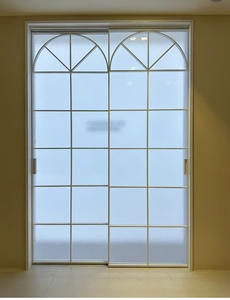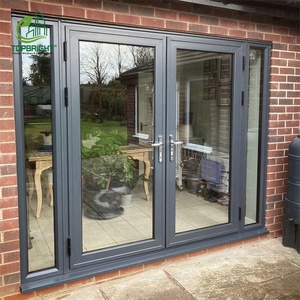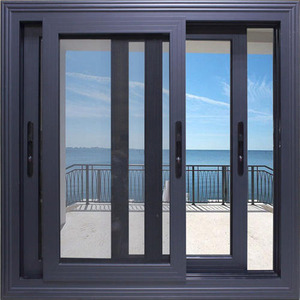
EN 14351-1 CE & AS2047 Certified Fenestration

CE Certified Aluminium Big Windows Factory & Supplier

Global engineering leader in oversized architectural glass walls, thermally broken slimline profiles, heavy-duty lift-slide fenestration, and custom structural facade systems.

Direct Factory Catalog

Featured Commercial & Residential Fenestration Systems

Precision-machined architectural fenestration solutions tested to international CE, ISO 9001, AS2047, and UL fire-rated standards. Engineered specifically for estate villas, coastal resorts, and commercial envelopes.

Get a Quote
Technical White Paper

Structural Fenestration Engineering: The Science of Big Openings

When specifying oversized floor-to-ceiling panoramic glass panels exceeding 3,000mm in height, fenestration failure is almost never a glass failure—it is an engineering miscalculation of profile deflection, dead-load transfer, and wind shear pressure.

Mullion Moments of Inertia ($I_x$ & $I_y$)

Big windows subject to cyclic wind gusts generate massive perpendicular forces. Our CE-certified factory employs internal structural steel flitch plates or specialized hollow box extrusions delivering moments of inertia ($I_x$) up to 1200 cm⁴, strictly guaranteeing deflection rates below L/300 according to EN 13116.

PA66GF25 Thermal Insulation Systems

A major challenge of oversized aluminium framing is linear thermal expansion. We utilize German-engineered Technoform 34mm multi-cavity polyamide strips reinforced with 25% glass fiber (PA66GF25), perfectly matching the thermal expansion coefficient of aluminium ($\alpha \approx 2.4 \times 10^{-5}/\text{K}$) to prevent sash bending.

Hydrostatic Pressure & Drainage Chambers

CE compliance under EN 12208 demands watertightness up to Class 9A or E1200 (>1200 Pa). Our windows use pressure-equalized rain-screen cavities combined with multi-stage non-return drainage valves that channel water outwards without back-drafting during severe 100 km/h windstorms.

Performance Vector Standard Market Big Windows DERCHI CE Certified Fenestration System Regulatory Benchmark Compliance
Structural Wind Load Deflection Class C2 (800 Pa) / L/175 deflection Class C5 / N6 (3000 Pa to 4500 Pa) / L/300 EN 12210 / AS 2047 Serviceability
Overall U-Factor ($U_w$) 2.2 – 2.8 W/m²·K (Basic thermal break) 0.82 – 1.25 W/m²·K (Argon triple glazing + Low-E) EN ISO 10077-1 / ASHRAE 90.1
Air Permeability Index Class 2 (300 Pa baseline leakage) Class 4 (> 600 Pa near-zero air leakage) EN 12207 / ASTM E283
Acoustic Attenuation ($R_w + C_{tr}$) 28 – 32 dB (Dual pane float) 42 – 48 dB (Acoustic PVB/SGP laminated units) EN ISO 717-1 / ASTM E90
Marine Grade Surface Finish Standard polyester powder (60μm) Qualicoat Class 2 / Seaside Anodizing (25μm) AAMA 2605 / ISO 2360 / ASTM B117
180,000 m²
Intelligent Factory Base
25+ Yrs
Engineering Heritage
100+
Certificates & Patents
600+
Master Technicians
Strategic Sourcing Intelligence

Future Procurement Trends in Architectural Big Windows (2025–2030)

Procurement directors, general contractors, and real estate developers are shifting from standard catalog order forms to digital, highly audited, and decarbonized fenestration supply chains.

Direct BIM & CAD/CAM Integration

Procurement no longer tolerates manual site redraws. Forward-thinking contractors demand direct Revit and IFC family files from window manufacturers. Our engineering division produces zero-error BIM Level 2 shop drawings linked directly to our CNC profile milling lines, eliminating up to 14 days of jobsite coordination delays.

Embodied Carbon & Circular Billets

EU CBAM (Carbon Border Adjustment Mechanism) and US LEED v4.1 standards are mandating low-carbon aluminium. Our factory utilizes hydro-powered smelting billets with certified recycled content (>40%), lowering the embodied carbon to under 4.0 kg CO₂e/kg Al compared to global averages exceeding 12.0 kg CO₂e.

Unitized Modular Prefabrication

With sky-high jobsite labor costs across North America and Australia, builders are abandoning knock-down site-assembled windows. Sourcing has pivoted to pre-glazed, pre-shimmed unitized big window cassettes that crane into place in minutes, slashing exterior staging and scaffold rental durations.

Rigorous Third-Party Factory Auditing

Virtual factory inspections and verifiable traceability logs have superseded unverified claims. Our 180,000m² manufacturing facility hosts real-time 360° VR production tracking, robotic laser cut verification, and full material batch certification per ASTM and EN standards before dispatch.

Industry Horizon

Technological Evolution in Architectural Fenestration

How architectural demand for invisible structural boundaries is driving high-performance glass science, motorized automation, and extreme weather adaptation.

Ultra-Narrow 20mm Sightlines with Structural Glass Bond

The boundary between window frame and structural curtain wall is evaporating. Modern big windows utilize structural silicon adhesive (DOWSIL™ 983) bonding directly between the double/triple insulated glass unit and concealed sub-frames, transforming the glass itself into a structural load-carrying element.

Smart Actuation & Electrochromic Dynamics

Big glass expanses risk overheating without active envelope management. Current industrial developments integrate concealed brushless DC motors capable of shifting 1,000 kg sliding sashes silently at 0.1 m/s, paired with dynamic electrochromic glass that shifts solar heat gain coefficients (SHGC) from 0.42 down to 0.09 at the touch of a button.

Cyclone & Extreme Weather Hardening

Climate volatility requires windows engineered for Category 5 hurricanes and severe coastal typhoons. With AS 2047 N6 testing benchmarks, our big windows utilize SentryGlas® (SGP) ionoplast interlayers, creating an impenetrable envelope barrier that remains intact even if outer glass panes shatter from flying debris.

Enterprise Manufacturing Authority

Guangdong Dejiyoupin: 25 Years of Factory Direct Precision

Headquartered in Shishan Town, Foshan—the global epicenter of high-end aluminium extrusion—DERCHI represents the pinnacle of Chinese high-capacity industrial fenestration manufacturing.

Integrated Mega-Plant Infrastructure

Operating across a monolithic 180,000 square meter intelligent manufacturing park with over 600 full-time specialists. We control every stage under one roof: virgin alloy billet extrusion, electrostatic vertical powder coating, precision thermal break crimping, CNC 5-axis robotic machining, and automated IG glass assembly.

Dedicated North American & Global Engineering Desk

Bridge the time-zone barrier effortlessly. Our bilingual architectural engineering desk works actively during North American EST/PST and European CET hours, converting imperial door schedules, takeoff lists, and structural blueprints into actionable fabrication drawings within 24 to 48 hours.

Engineered Marine-Grade Export Crating

Zero glass transit damage is our standard. Big window panels are packed inside heavy-duty, fumigated IPPC wooden crates engineered with high-density EPE buffer foams, desiccant vapor packs, and shock/tilt indicator sensors ensuring complete protection across 10,000+ nautical miles of ocean freight.

B2B Procurement Guide

Frequently Asked Architectural Fenestration Questions

Key structural, logistical, and technical compliance queries answered by our chief facade engineers to assist international buyers, specifiers, and developers.

What specific test documentation does your CE Certification include for Big Windows?
Our CE marking is backed by EN 14351-1:2006+A2:2016 Factory Production Control (FPC) verified by certified notified bodies. Comprehensive test reports cover: Air Permeability (EN 12207 Class 4), Water Tightness (EN 12208 Class 9A/E1200), Wind Load Resistance (EN 12210 Class C5 deflection limit), Acoustic Insulation (EN ISO 140-3), and Thermal Transmittance ($U_w$) calculations according to EN ISO 10077-1 and 10077-2. We issue authentic Declarations of Performance (DoP) with every commercial consignment.
How do you manage thermal expansion differentials in oversized big window frames?
Oversized windows exposed to intense direct sunlight can develop a temperature differential of up to 50°C between the exterior and interior aluminium walls, inducing the "bimetallic strip effect" (banana bowing). To mitigate this, our extrusions incorporate anti-bi-metal sliding polyamide thermal barrier strips. These allow differential longitudinal thermal expansion between outer and inner aluminium profiles without transmitting shear deflection to the sash lock points.
Can your factory fabricate windows directly from architectural CAD/Revit schedules?
Yes. Our in-house engineering department regularly works with DWG, DXF, Revit (RVT), and IFC schedules. We produce complete shop drawing submittal packages free of charge for approved projects—including perimeter flashings, sub-sill details, anchor spacing schedules, structural deflection calculations, and rough opening tolerances (usually ±6mm). Production only commences after the project architect or general contractor signs off on final submittals.
What glass configurations are recommended for coastal high-wind applications?
For hurricane zones and exposed coastal cliffs, we specify double-glazed or triple-glazed units combining a minimum 8mm or 10mm tempered outer lite with a heavy laminated inner lite utilizing Kuraray SentryGlas® (SGP) or high-grade 1.52mm PVB. This provides exceptional residual load capacity even post-breakage, resisting both positive wind pressure and negative suction pressures up to 4500 Pa (equivalent to Category 5 wind speeds).
How does your factory protect finishes against aggressive salt spray (C5 marine environments)?
For coastal installations within 500 meters of the coastline, standard powder coating is inadequate. We offer Qualicoat Class 2 hyper-durable fluoropolymer PVDF coatings (70% Kynar 500 resin system) or marine-grade Class 25 hard anodizing (25-micron thickness). These surface treatments pass rigorous 3,000-hour acetic acid salt spray (AASS) testing per ISO 9227 and AAMA 2605 specifications with zero blistering or color loss.
What are the lead times and container loading procedures for oversized windows?
Standard production turnaround for custom big windows is 25 to 35 business days from approved shop drawings. Oversized units are loaded into 40ft High Cube (40HC) or Open Top containers utilizing custom steel A-frames secured with high-tensile ratchet lashing straps. Every container undergoes 3D digital packing simulation prior to staging to optimize volume utilization and prevent load shifting at sea.
Connect With Engineering

Request Architectural Shop Drawings & Factory Pricing

Send us your window schedules, elevation blueprints, or project tender documents. Our engineering team will deliver a comprehensive proposal with structural calculations and CE-compliant specifications within 24 hours.

Get a Quote