The Physics of Thermal Separation: Why Polyamide 66 Matters
Modern commercial and residential architectural fenestration requires uncompromising thermal isolation to prevent internal surface condensation and unnecessary building HVAC energy load. Standard aluminum windows without a thermal break exhibit a high thermal conductivity rate (approximately 160 W/m·K), turning window frames into aggressive thermal bridges.
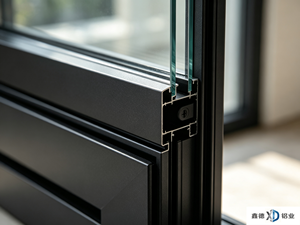
Our CE certified architectural profiles utilize precision-crimped PA66 GF25 (Polyamide 66 reinforced with 25% glass fiber) thermal barrier strips. This structural configuration creates an unbroken insulating chamber between the interior and exterior aluminum extrusions, reducing frame U-values (Uf) to as low as 1.1 W/m²K when paired with argon-filled triple insulating glass units (IGU).
Engineering Rule of Thumb: When specifying fenestration in climate zones with temperature differentials (ΔT) exceeding 30°C, always request multi-chamber thermal struts with integrated low-emissivity isolation foams rather than single pour-and-debridge polyurethane bridges.