Featured CE-Certified Aluminium Glazed Doors & Window Systems
Precision-extruded 6063-T5/T6 alloys, polyamide thermal breaks, and structural argon-filled safety glazing engineered for rigorous European and North American building envelope requirements.
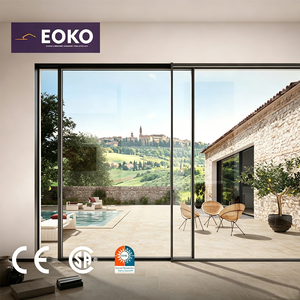
EOKO CE CSA Certified Ultra Slim Aluminum Sliding Door Thermal Break 38dB Soundproof Patio Sliding Door
- Acoustic Insulation: Rw 38 dB Rating
- Interlock Sightline: 20mm Ultra-Slim Profile
- Polyamide PA66 GF25 Thermal Break
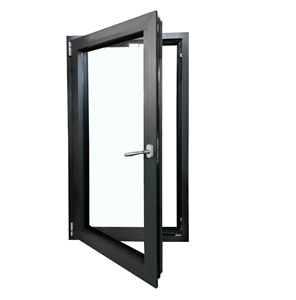
Wind Resistant Thermal Break Aluminum Casement Window Double Glazed High Strength Frame
- Wind Pressure Rating: Class C5 (EN 12210)
- Glazing: 6mm+12Ar+6mm Low-E Argon
- High-grade EPDM Co-extruded Gaskets
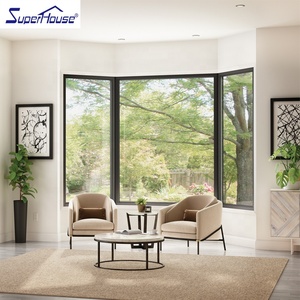
Modern Villa House Window Customized Frame Color Size Large Corner Panel Aluminium Fixed Picture Window
- Seamless Glass-to-Glass 90° Joint
- Structural U-Value: Uw ≤ 1.1 W/m²K
- Tempered Laminated Safety Glass (SGCC/CE)
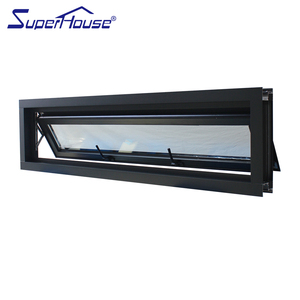
Commercial Replacement Double Glass Fixed Window Storefront Heavy-Duty Fenestration
- High-Footfall Commercial Heavy Extrusions
- Air Permeability: Class 4 (EN 12207)
- Water Tightness: Class 9A (EN 12208)
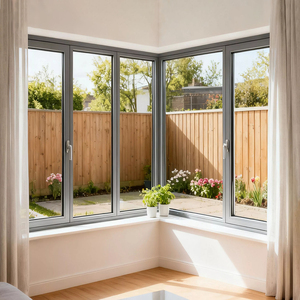
Aluminum Exterior Sliding Windows for Villas Modern Stackable Balcony Horizontal Soundproof
- Heavy Duty Stainless Steel 304 Track
- Roller Capacity: 350kg per Sash
- Thermal Barrier: Isobar Multi-chamber
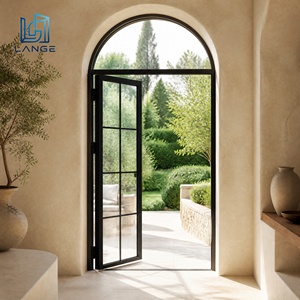
Modern Luxury Cream Series Thermal Break Aluminum Casement Door Slim Frame Glass Swing Doors
- Fluorocarbon Powder Coating (AkzoNobel)
- German Siegenia/Hoppe Hardware Prep
- Concealed Hinge Architectural Flush Fit
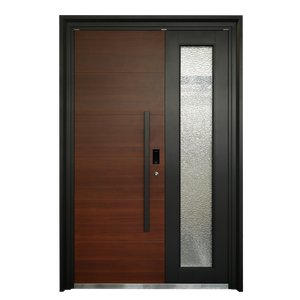
Aluminum Security French Door Waterproof Exterior Entry Door for Hotel Apartment Villa Use
- European Standard Multi-Point Deadbolt
- Thermal Threshold with Drain Channel
- EN 1627 RC3 Burglary Resistance Class
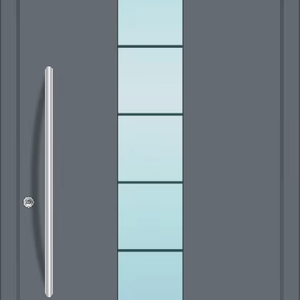
Casement Exterior French Doors Hurricane Proof Laminated Safety Glass Impact Resistant Door
- Missile D Impact Rating / AS 2047 N6
- SentryGlas (SGP) Interlayer Glass
- Structural Wall Thickness: 3.0mm Profile
The Regulatory Architecture of CE Marking for Aluminium Glazed Doors (EN 14351-1:2006+A2:2016)
In contemporary architectural engineering, the specification of glazed exterior openings is no longer simply an aesthetic calculation; it is a legally enforced envelope performance mandate. Sourcing aluminium glazed doors across the European Economic Area (EEA), the United Kingdom (UKCA alignment), and increasingly for high-specification projects throughout North America, Australia, and the Gulf Corporation Council (GCC) requires adherence to the Construction Products Regulation (CPR 305/2011/EU).
For fenestration assemblies without resistance to fire or smoke leakage characteristics, the definitive harmonized European standard is EN 14351-1:2006+A2:2016 ("Windows and pedestrian doorsets — Product standard, performance characteristics"). A genuine CE marking affixed to an aluminium glazed door assembly does not constitute a generic stamp of quality; rather, it is a legally binding assertion by the manufacturer that the specific product configuration satisfies explicit, quantifiable European test protocols backed by an audited Factory Production Control (FPC) regime under Assessment and Verification of Constancy of Performance (AVCP) System 3.
A CE mark without a corresponding, project-verifiable Declaration of Performance (DoP) is legally invalid. Façade consultants and main contractors must demand the official DoP document delineating exact figures for thermal transmittance (Uw), air permeability (EN 12207), water tightness (EN 12208), wind load resistance (EN 12210), and dangerous substances release.
Essential Characteristics and Testing Metrics under EN 14351-1
When evaluating suppliers of CE-certified aluminium glazed doors, structural specifiers must examine five foundational laboratory performance characteristics. These determine the physical survivability and building energy efficiency contribution of the fenestration system over a 30- to 50-year service lifecycle:
| Performance Characteristic | Test Standard | Classification Standard | Engineering Significance for Glazed Doors | Premium Factory Benchmark (DERCHI Grade) |
|---|---|---|---|---|
| Resistance to Wind Load | EN 12211 | EN 12210 | Evaluates structural deflection (spans L/200, L/300) under positive/negative cyclic pressure gusts. | Class C5 (P1=2000Pa, P2=1000Pa, P3=3000Pa safety proof) |
| Water Tightness | EN 1027 | EN 12208 | Dynamic water spray under continuous pneumatic pressure before water ingress occurs. | Class 9A / Class E900 (Unshielded up to 900 Pa pressure differential) |
| Air Permeability | EN 1026 | EN 12207 | Measures parasitic infiltration/exfiltration air volume per square meter of sash surface. | Class 4 (≤ 3 m³/(h·m²) at 100 Pa reference baseline) |
| Thermal Transmittance (Uw) | EN ISO 10077-1 / EN ISO 10077-2 | EN ISO 12567-1 (Hot Box) | Compound U-value incorporating thermal barrier frame (Uf) and insulated glazing unit (Ug). | Uw 0.85 – 1.30 W/(m²·K) using triple Low-E warm edge spacers |
| Acoustic Performance (Rw) | EN ISO 10140-2 | EN ISO 717-1 | Weighted sound reduction index across human speech and traffic vibration frequencies. | Rw (C; Ctr) = 38 dB (-1; -4 dB) to 44 dB with acoustic PVB interlayers |
| Operating Forces & Durability | EN 12046-2 | EN 12400 / EN 1191 | Repeated opening/closing mechanical cycles without hardware or sash sag failure. | Class 8 (1,000,000 continuous operating cycles) |
Material Metallurgy: 6063-T5 vs. 6063-T6 Structural Aluminium Alloys
The mechanical core of an exterior glazed door begins with the extrusion billet chemistry. Low-cost fabricators routinely utilize scrap-contaminated remelt billets that suffer from microscopic zinc and iron inclusions, producing brittle frames vulnerable to intergranular corrosion and stress-cracking under heavy wind deflection.
Industrial-grade CE-compliant manufacturers utilize primary electrolytic aluminium billets meeting the EN 573-3 and EN 755-2 standards. The primary standard for architectural extrusions is EN AW-6063 (AlMg0.7Si). When tempered to T6 condition (solution heat treated and artificially aged), the yield strength reaches ≥ 170 MPa, compared to approximately 130 MPa for standard T5. This structural rigidity allows contemporary panoramic pivot doors and sliding panels to reach heights exceeding 3,500mm with sash weights up to 500kg, while maintaining minimal interlock sightlines (down to 20mm) without catastrophic frame deformation.
Thermal Barrier Engineering: Polyamide 6.6 GF25 Isobar Technology
Aluminium features an inherently high thermal conductivity (λ ≈ 160 to 200 W/(m·K)). Without thermal separation, an exterior aluminium glazed door acts as an energy radiator, provoking excessive heating/cooling load expenditures and severe interior condensation leading to mold formation.
The European Standard EN 14024 dictates the mechanical and thermal criteria for metal profiles with an integrated thermal barrier. Advanced manufacturers employ precision-crimped Polyamide 6.6 reinforced with 25% glass fiber (PA66 GF25) isobars. The thermal expansion coefficient of PA66 GF25 (2.3 × 10⁻⁵ K⁻¹) matches that of aluminium almost identically, preventing shear stress failure, delamination, or profile bowing when subjected to acute thermal differentials (such as -20°C ambient exterior air paired with +22°C conditioned interior comfort).
Next-Generation Technology & Sourcing Trends in Glazed Fenestration (2025–2030)
The commercial fenestration landscape is undergoing unprecedented transformation fueled by net-zero building regulations (such as the EU Energy Performance of Buildings Directive EPBD 2024 revision), extreme storm intensity linked to climate change, and architectural demands for invisible framing. Below are the macro trends dominating Tier-1 procurement pipelines:
Embodied Carbon Transparency
Specifiers increasingly mandate Environmental Product Declarations (EPDs). The market is moving aggressively toward "Green Aluminium" produced via hydroelectric smelting (<4 kg CO₂ equivalent per kg of raw aluminium), coupled with post-consumer circular scrap content exceeding 75%.
Vacuum Insulated Glass (VIG)
VIG technology delivers center-of-glass thermal performance (Ug ≤ 0.45 W/m²K) within an ultra-thin 8.3mm cross-section. Sparing fabricators from heavy triple-pane depths, VIG allows ultra-slim profile frames to achieve Passive House performance metrics.
Concealed Smart Motorization
Heavy glazed sashes (300kg to 800kg) now feature in-frame brushless servo motors connected via Modbus/KNX protocols to central Building Management Systems (BMS), including flush zero-threshold drainage channels with pneumatic hermetic seals.
Strategic Global Sourcing Trends: Mitigating Supply Chain Volatility
Historically, international developers engaged fragmented sourcing models—ordering extrusions from mill suppliers, glass units from third-party coaters, and hardware from specialized distributors, assembling locally. This approach is rapidly becoming obsolete due to high project management friction and divided warranty accountability.
The dominant procurement pattern for commercial developers and premier homebuilders is Direct-to-Integrated-Factory Partnering. By working directly with expansive facilities like Guangdong Dejiyoupin Doors and Windows Co., Ltd. (DERCHI), buyers secure single-point accountability:
- Unified Testing Documentation: Frame, glass, hardware, and perimeter gasketing are pre-tested together as a unified system under EN 14351-1, eliminating cross-supplier finger-pointing during local building inspections.
- Free Pre-Production CAD & 3D BIM Modeling: In-house facade engineering teams reconcile rough structural openings with precise thermal-break profiles and structural mullion inertia requirements before metal cutting commences.
- Factory Pre-Glazed and Pre-Hung Modular Delivery: By handling glass installation and multi-point lock alignment within an ISO 9001 factory environment, on-site installation labor costs and jobsite snag lists decrease by up to 65%.
DERCHI: 25+ Years of Certified Architectural Fenestration Engineering
Operating under parent firm Guangdong Dejiyoupin Doors and Windows Co., Ltd., the DERCHI brand represents a premier tier of high-performance architectural doors and windows. From our state-of-the-art 180,000 square meter industrial manufacturing base in Foshan, Guangdong, our workforce of over 600 skilled fabricators, metallurgists, and facade engineers produces bespoke fenestration solutions exported directly to high-specification projects throughout the United States, Canada, the European Union, Australia, and the Middle East.


One-Stop Envelope Sourcing
Consolidate ultra-slim sliding systems, cast aluminium entry doors, pivot doors, casements, and garage systems in unified container shipments.

Global Testing Accreditations
Over 100 patents and formal certifications including CE (EN 14351-1), ISO 9001, AS 2047 N6 (cyclone impact), and UL fire-rated door assemblies.

Dedicated Project Engineering
Our in-house design team produces complimentary, structural-grade CAD shop drawings and BIM objects matched exactly to architectural door schedules.

Active Time-Zone Alignment
Fluent technical sales engineers actively serving project schedules across European (CET) and North American (EST/PST) project working hours.
Stringent Quality Verification: Beyond Surface Finish
The longevity of aluminium glazed doors exposed to coastal saline fog or high-temperature urban smog depends strictly on coating chemistry. DERCHI profiles undergo chemical multi-stage pre-treatment followed by electrostatically applied Qualicoat Class 2 fluorocarbon (PVDF) or architectural powder coatings sourced from AkzoNobel and PPG. This chemistry achieves 30-year resistance to UV chalking, gloss retention exceeding 80%, and zero filiform corrosion under continuous 3,000-hour salt spray chamber auditing (ASTM B117 / ISO 9227).
Frequently Asked Questions: Sourcing CE Certified Aluminium Glazed Doors
Critical technical, logistic, and legal considerations addressed by our Senior Fenestration Engineering Team.
How can a commercial buyer verify that a manufacturer's CE certificate is genuine and valid for our project?
What are the minimum thermal transmittance (Uw) values achievable for cold climate projects?
How does your factory protect heavy glazed door assemblies against shipping damage during sea freight?
Can DERCHI build doors to imperial architectural door schedules and custom structural openings?
How do you handle multi-point hardware compatibility and smart home integration?
Can I inspect your manufacturing lines and quality laboratories before placing a contract?
Collaborate with Our Senior Facade Engineering Team
Send your door schedules, project blueprints, or custom specification requirements. We deliver complimentary structural CAD shop drawings, formal thermal transmittance calculations, and direct factory pricing within 24 to 48 hours.