Impact Rated
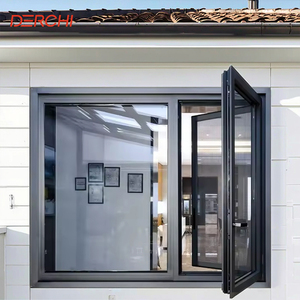
NFRC Hurricane Impact Thermal Break Casement Window
- Profile Depth: 65mm / 75mm
- Thermal U-Value: 1.4 W/m²·K
- Impact Test: ASTM E1886 / E1996
Explore our export-grade insert window solutions featuring precision-milled aluminum extrusions, double/triple insulated glazing, multi-point Euro-groove security locking, and integrated micro-blind insert technologies.
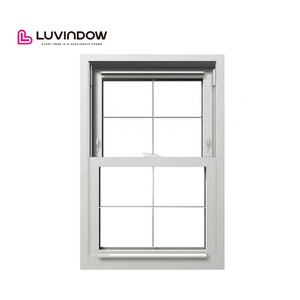
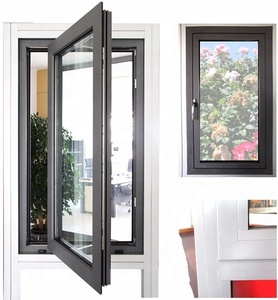
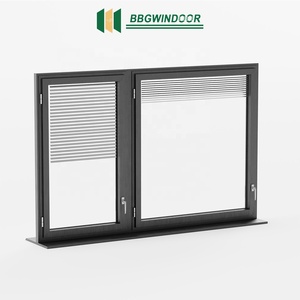
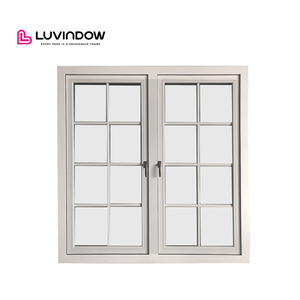
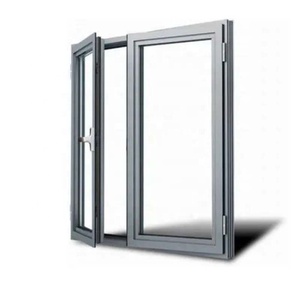
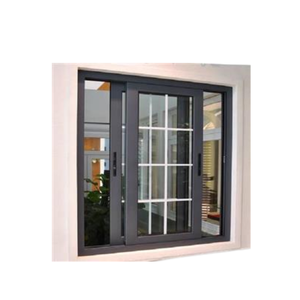
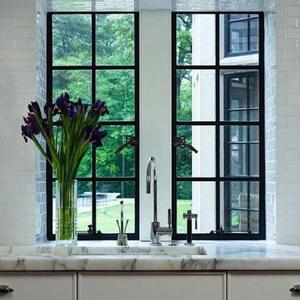
A technical examination of architectural aluminum insert window profile geometries, thermal decoupling principles, and standardized conformity assessment under European Regulation (EU) No 305/2011.
Aluminum's inherent thermal conductivity (approximately 160–200 W/m·K) necessitates multi-chamber thermal breaks. DERCHI insert window profiles integrate low-density PA66 GF25 (25% glass-fiber reinforced polyamide) structural isolators with co-extruded cellular sponge seals. This configuration lowers frame conductance ($U_f$) to sub-1.3 W/m²·K, mitigating interior dew-point condensation under exterior sub-zero gradients while preserving structural shearing resistance against cyclic wind loads.
Our insert casement and awning frames utilize three-stage perimeter gasket barriers featuring continuous vulcanized EPDM corner boots. By equalizing air pressure between the external drainage slot and the central decompression cavity, the system eliminates the hydraulic suction pressure difference ($\Delta P$). Consequently, wind-driven rainwater flows freely through concealed weep slots rather than penetrating interior gasket lines, maintaining absolute water tightness beyond 1,050 Pa.
For cross-border commercial and residential procurement into the European Economic Area (EEA), all DERCHI insert window assemblies conform strictly to EN 14351-1:2006+A2:2016. This framework mandates rigorous factory production control (FPC), type-testing for wind load resistance (Class C5, EN 12210), air permeability (Class 4, EN 12207), acoustic sound reduction ($R_w(C; C_{tr})$ testing via ISO 10140), and verified Declaration of Performance (DoP) marking.
| Test Parameter | EN Standard (CE Mark) | DERCHI Certified Value | Comparative Commercial Benchmark | Architectural Implication |
|---|---|---|---|---|
| Air Permeability | EN 12207 | Class 4 (≤ 3 m³/h·m² at 600 Pa) | Class 2 or 3 (Standard Billet) | Prevents HVAC convective energy loss in net-zero envelopes |
| Watertightness | EN 12208 | Class E1050 (Non-leaking at 1050 Pa) | Class 7A–9A (300 Pa – 600 Pa) | Impervious to severe typhoon and monsoon moisture penetration |
| Wind Resistance | EN 12210 | Class C5 (Frontal Deflection < 1/300) | Class C2 / C3 (1200 Pa – 1800 Pa) | Structural integrity on high-rise oceanfront facades (>50 floors) |
| Thermal Transmittance ($U_w$) | EN ISO 10077-1/2 | 0.92 – 1.35 W/m²·K (Triple Low-E Ar) | 1.8 – 2.4 W/m²·K (Standard Thermal Break) | Exceeds strict European Passivhaus and UK Part L energy codes |
| Acoustic Attenuation | EN ISO 717-1 | $R_w$ = 42 – 47 dB (Laminated Acoustic) | $R_w$ = 30 – 34 dB (Single Cavity IGU) | Eliminates sub-woofer urban traffic and aviation low frequencies |
As commercial developers, institutional general contractors, and facade engineers navigate stringent sustainability mandates, the global specification matrix for insert windows is undergoing fundamental systemic shifts.
Traditional full-frame fenestration replacements require intrusive exterior masonry demolition, disruptive interior drywall patching, and extensive jobsite tenant relocation. Modern commercial procurement mandates equal-leg flush insert subframes that slip directly into existing structural steel or timber apertures. This pre-engineered insert approach slashes field installation hours per rough opening by up to 65%, eliminating perimeter flashing damage while preserving historical perimeter sightlines.
Building envelopes are transforming from static glass surfaces into dynamic climate management systems. Specifiers increasingly reject superficial surface-mounted drapery in favor of magnetically driven or motorized integral micro-venetian louvers permanently sealed within dry argon insulating cavities. Simultaneously, thin-film Building Integrated Photovoltaic (BIPV) glaze inserts are emerging for spandrel panels, generating localized power for autonomous facade motorization without degrading thermal resistance.
ESG procurement guidelines (such as the EU Corporate Sustainability Due Diligence Directive) now require certified Environmental Product Declarations (EPD). Modern tenders demand primary profile extrusion from hydro-powered low-carbon billet stock (<4.0 kg CO₂e per kg of primary aluminum), combined with digital QR passports documenting traceability, recycled post-consumer scrap fractions (>35%), and non-toxic powder coats complying with REACH standards.
Operating under the world-renowned brand DERCHI, Guangdong Dejiyoupin Doors and Windows Co., Ltd. serves as an industrial benchmark for global OEM/ODM architectural systems. Backed by 25+ years of specialized engineering, our Foshan smart production base manages the entire manufacturing continuum—from precision profile extrusions and cryogenic thermal-break crimping to automated CNC five-axis milling and cleanroom glass lamination.
We eliminate supply chain layers by dealing factory-direct with North American, European, and Australasian commercial contractors, architects, and fenestration distributors. Every insert window is backed by free custom CAD shop drawings, structural wind-pressure finite element calculations, and guaranteed compliance certification.

Essential technical, regulatory, and logistics answers for general contractors, facade consultants, and wholesale window importers evaluating our CE certified aluminum insert window lines.
Send your door schedules, CAD rough openings, or tender specifications directly to our engineering department. Our team provides comprehensive quote estimates, thermal modeling, and custom shop drawings tailored to your regional building code requirements.