Security Main
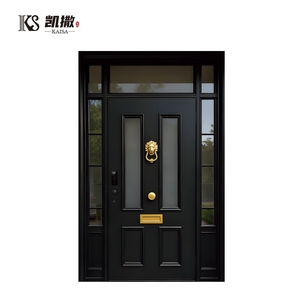
Explore our precision-machined aluminum alloy assemblies. From flush-to-wall pocket configurations and acoustic sliding partitions to storm-rated perimeter entrances, every system undergoes rigorous CE factory production control (FPC) to guarantee structural deflection limits and flawless track rolling cycles.
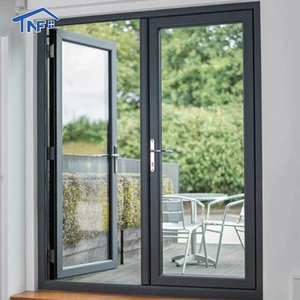
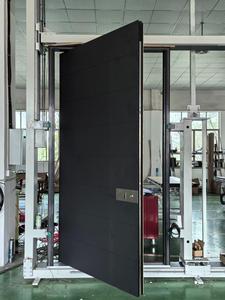
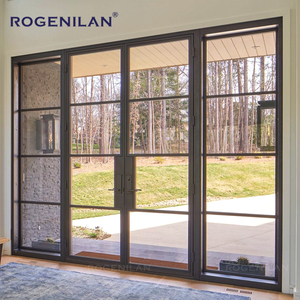
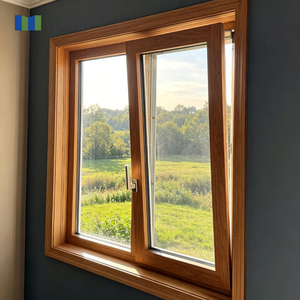
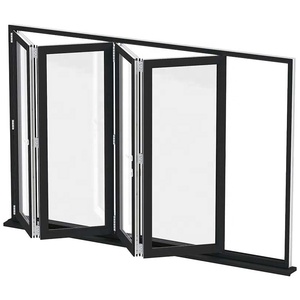
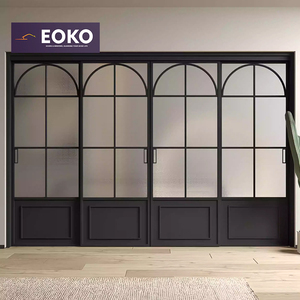
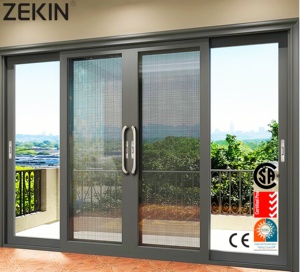
In contemporary high-density architecture and spatial optimization paradigms, aluminium pocket door systems represent a critical evolutionary step over standard surface-mounted sliding or traditional hinged assemblies. Unlike surface barn doors that consume valuable lateral wall space and compromise acoustic containment, an industrial pocket system is embedded directly into the architectural wall cavity. However, embedding sliding mechanisms within drywall or masonry partitions introduces significant engineering challenges: structural deflection of the wall studs, track deflection under dynamic cantilever loads, acoustic leakage through the pocket cavity, and total inaccessibility of running gear once plastered. Sourcing from a verified CE-certified manufacturer ensures that every structural cassette, roller carrier, and perimeter jamb complies strictly with the European Construction Products Regulation CPR (EU) No 305/2011 and harmonized standards EN 14351-1 and EN 1527.
A certified aluminium pocket door framework relies on virgin 6063-T6 or 6005A-T6 architectural grade aluminum extrusions. Primary vertical pocket uprights are formed with reinforced dual-flange hollow chambers that resist lateral drywall deflection (tested to withstand loads exceeding 1500 N/m² without impinging on the internal door clearance). Cheap non-certified alternatives frequently use re-melted scrap aluminum or ultra-thin galvanized sheet profiles (under 0.8 mm) that buckle over time when tiles, stone veneers, or heavy cabinetry are mounted to the pocket wall. Our CE-marked cassettes feature a minimum wall thickness of 2.0 mm to 3.2 mm along the load-bearing header tracks, accompanied by an engineered modular lintel extrusion capable of supporting monolithic single leaf panels weighing up to 250 kg (550 lbs) without micro-sagging.
| Engineering Attribute | CE Certified Standard (Guangdong Dejiyoupin / DERCHI) | Standard Commercial Grade (Uncertified) | Project Safety Implication |
|---|---|---|---|
| Extrusion Alloy & Temper | 6063-T6 / 6005A-T6 High Purity Virgin Billet | Recycled 6063-T4 Scrap Ingot | Guarantees modulus of elasticity (70 GPa) prevents track warping under leaf load. |
| Cyclic Operational Testing | EN 1527 Class 6 Verified (100,000+ Cycles Continuous) | 10,000 to 20,000 Cycles (Untested) | Guarantees 25+ years of daily commercial operation without carriage failure. |
| Carriage Mechanism | Four-Wheel Sealed Stainless Steel Bearings + Delrin Tires | Single Nylon / Carbon Steel Dry Bushings | Eliminates rolling friction; operational sound rating dropped to < 28 dB. |
| Acoustic Attenuation (Rw) | Up to Rw = 38 dB (Perimeter Perimeter Drop Seals + Labyrinth Cavity) | Rw < 18 dB (Open Cavity Drafts) | Meets private executive conference room, suite hotel, and master bathroom standards. |
| Serviceability Architecture | Extractable Patented Top Track via Access Portal | Fixed Riveted Track (Requires Wall Demolition) | Permits damper replacement, sensor adjustments, and track re-leveling without drywall cutting. |
Acoustic insulation represents the newest frontier in CE-certified pocket door engineering. Historic pocket designs acted as resonant echo chambers and air leaks, disqualifying them from premium hospitality and multi-family residential specifications. To combat sound transfer, our pocket cassette systems employ dual continuous magnetic acoustic perimeter gaskets and mechanical automatic drop seals embedded into both the top and bottom rails of the door leaf. When fully closed, the bottom plunger triggers against the concealed striker jamb, projecting a high-density EPDM gasket flush to the sub-floor, terminating room-to-room acoustic flanking transmission while isolating odors and HVAC drafts.
The pocket door sector is transforming rapidly from purely utilitarian space-saving hardware into highly engineered architectural centerpieces characterized by frameless aesthetics, smart motorization, and advanced metallurgical finishes.
The elimination of traditional wooden architraves and casing trim. Our aluminum flush-plaster profile interfaces directly with 12.5 mm or 15 mm drywall boards. Anodized shadow-line grooves provide a crisp 10 mm architectural margin around the opening, allowing the sliding leaf to integrate seamlessly into minimalist interior designs.
Replacing mechanical drive belts and high-friction electric motors with non-contact brushless linear magnetic drives. Maglev pocket systems operate with zero mechanical hum, offering effortless manual glide during power loss and gentle motorized automation compatible with commercial BMS and residential Crestron/KNX protocols.
Advanced multi-stage hydraulic deceleration dampers operating both upon opening (cavity insertion) and final jamb closure. Prevents structural rebound and finger-pinching, rated for over 100,000 cycles with zero oil leakage under temperature swings ranging from -20°C to +60°C.
Extending pocket technology to exterior terrace walls using 34 mm Polyamide (PA66 GF25) thermal breaks. Coupled with low-profile sub-sill multi-chamber drainage and concealed brush seals, these systems achieve thermal transmittance values down to Uw = 1.3 W/m²K, meeting rigid European nZEB mandates.
Traditional protruding handles prevent pocket doors from retracting 100% into the pocket cassette. Modern flush designs integrate flush-mounted magnetic pop-out finger edge pulls and concealed edge locks that sit perfectly coplanar with the leaf stile, enabling complete clear-opening access when opened.
To reduce skilled on-site carpentry errors, our factory supplies pre-tensioned, screw-together extruded aluminium cassettes with integrated click-on corner brackets, reducing job-site installation from 4 hours down to under 35 minutes per opening.
The global specification market for architectural aluminium door systems is experiencing a fundamental structural shift. General contractors, real estate developers, and national architectural distributors are moving away from local, multi-tiered assembly workshops toward direct-from-factory OEM/ODM engagement with large-scale automated manufacturers. Driven by mounting margin pressures, escalating domestic labor costs, and increasingly strict building efficiency legislation across Europe, North America, and Australasia, procurement directors are re-evaluating their sourcing frameworks around four pivotal dynamics:
Specifying structural cassette kits from one vendor, track hardware from another, and glass leaf infills from a third creates immense warranty liability. Forward-looking procurement strategies prioritize single-source responsibility. When Guangdong Dejiyoupin manufactures the entire system—cassette, running track, damper hardware, extrusions, and certified glass panels—interface friction is eliminated, and a single comprehensive warranty protects the general contractor.
Major commercial projects throughout the EU (under the EU Green Deal) and North America (LEED v4.1 certification) now require verified cradle-to-gate Life Cycle Assessments (LCA). Sourcing aluminum pocket systems requires full transparency regarding billet smelting energy sources (hydro vs. coal) and recycled content percentages.
Furthermore, logistical optimization has transitioned from basic container stuffing to palletized pre-machined kit packaging (Flat-Pack Cassettes). By delivering precision CNC-milled pocket framework components in flat-pack modules, oceanic container freight density increases by 320% compared to shipping assembled frames. On-site, installation teams assemble the rigid cassette using patented bolt-interlock corner cleats, dramatically lowering freight expenditure while eliminating the risk of transit racking and dimensional distortion.
With over 25 years of specialized door and window manufacturing, Guangdong Dejiyoupin Doors and Windows Co., Ltd. (DERCHI) represents an elite tier of Chinese architectural manufacturing, deploying advanced robotic fabrication across global commercial, hospitality, and luxury residential sectors.
Our massive Foshan manufacturing campus operates high-precision automated extrusion machining centers, German 5-axis CNC routing equipment, and state-of-the-art horizontal automated powder-coating lines, guaranteeing vast production volume with uncompromising dimensional tolerances.
Supported by a veteran core of 80+ senior fenestration engineers and technical draftsmen, our teams provide fluent English-speaking architectural support across North American, European, and Australian time zones—from initial specification and shop drawing submittals to installation consulting.
Our proprietary pocket cassette geometries, magnetic latch designs, and silent carriage mechanisms are safeguarded by extensive intellectual property. Fully accredited across CE, ISO 9001, Australian AS 2047 (tested to the ultimate N6 cyclone rating), and UL fire-rated standards.
International buyers benefit from full factory transparency. Walk through our profile extruding, machining, tempering, and packaging departments via our interactive 360-degree online VR portal, or request video-inspection sign-offs on critical shop prototypes prior to mass container dispatch.
Exhaustive technical answers addressing structural integration, CE testing thresholds, thermal bridging, and containerized logistics for commercial builders and distributors.
Submit your project schedules, CAD architectural drawings, or performance requirements. Our senior fenestration engineers will provide complimentary structural calculations, custom shop drawings, and competitive direct factory pricing within 24 hours.
Send an Inquiry