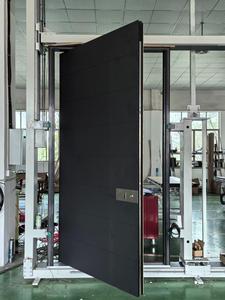
Precision Shutter Portfolio
Engineered Aluminum Shutter & Tambour Configurations
Manufactured to EN 13241-1 standards with structural aluminum extrusions, advanced thermal polyurethanes, and automated planetary drive assemblies.
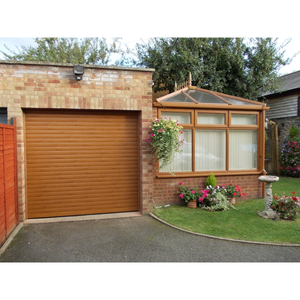
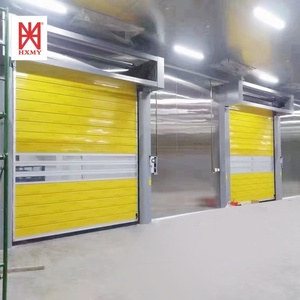
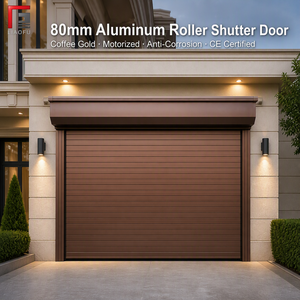
Engineering Specification
Metallurgical Integrity & Structural Architecture of Tambour Doors
Why CE EN 13241-1 certified structural aluminum alloys outclass cold-rolled steel and standard vinyl across mission-critical closures.
6063-T6 Extruded Alloy Core
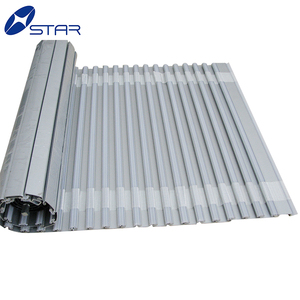
Standard roll-formed steel shutters are prone to corrosion and micro-cracking at interlocking hooks. Our architectural tambour profiles use hot-extruded 6063-T6 aviation-grade aluminum with a tensile strength exceeding 205 MPa. This prevents mechanical sagging over spans as wide as 7.5 meters without supplementary intermediate mullions.
Thermal Performance & Acoustic Barrier
Engineered with high-density polyurethane (PU) thermal breaks and foam injection cavities, these slats reduce thermal conductivity across perimeter building envelopes. Tambour systems mitigate interior air stratification, meeting strict envelope energy codes while delivering sound attenuation ratings up to Rw 28 dB for mechanical equipment isolates.
Cycle Durability & Dynamic Torque Matching
Tambour rolling drums undergo computer-modeled dynamic deflection analysis. Integrated with precision tension springs or planetary helical side-mount drives, the operational torque remains linear throughout door travel. Certified beyond 100,000 duty cycles, making them optimal for logistics distribution, retail storefronts, and emergency bays.
| Performance Indicator | Standard Market Roll-Up | Commercial Steel Shutter | CE Certified Aluminum Tambour (DERCHI) |
|---|---|---|---|
| Primary Base Material | 0.4mm Galvanized Cold-Rolled Strip | 0.8mm - 1.2mm Q235 Carbon Steel | 1.2mm - 2.5mm Extruded 6063-T6 Aluminum |
| Corrosion Resistance (Salt Spray) | < 240 Hours (Zinc peel-off) | < 500 Hours (Rust weepage) | > 3,000 Hours (Fluorocarbon / 25μm Anodized) |
| Deadweight per m² | 6.8 - 8.2 kg/m² | 14.5 - 22.0 kg/m² | 7.5 - 11.2 kg/m² (High Strength-to-Weight) |
| CE Compliance (EN 13241-1) | Self-declared / Incomplete | Occasional Structural Only | Fully Tested: Wind, Impact, Safety Brake, EMC |
| Thermal Transmittance (U-Value) | 5.8 W/(m²·K) (Uninsulated) | 4.5 W/(m²·K) (Basic PU) | 1.4 - 2.1 W/(m²·K) (Dual-Wall Insulated Cavity) |
OEM/ODM Manufacturing Authority
Engineered by Guangdong Dejiyoupin Doors and Windows Co., Ltd.
With 25+ years of production experience, DERCHI operates advanced automated machining lines delivering architectural and industrial openings worldwide.
Single-Source Sourcing
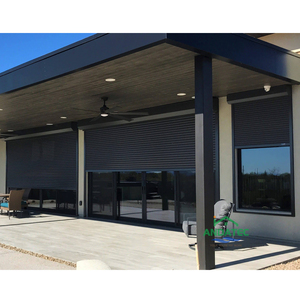
Eliminate vendor fragmentation. Consolidate high-performance tambour roll-ups, massive architectural pivot doors, and specialized acoustic entries in a single optimized container shipment from our Foshan facility.
Free BIM & CAD Approvals
Avoid on-site fit discrepancies. Our internal facade engineering department prepares comprehensive rough-opening shop drawings, track junction details, and motor power schematics tailored directly to your door schedule.
Rigorous Verification
Backed by CE, ISO 9001, AS 2047 N6 (highest wind & water permeability threshold), and UL fire approvals. Our tambour doors undergo mandatory pre-crating cycle testing under full operational load.
Export Engineering Support
Dedicated bilingual engineering managers aligned with European (CET), American (EST/PST), and Australasian time zones ensure quick submittals, factory video audits, and complete container logistics.
Strategic Foresight
Procurement & Technology Trends Shaping Tambour Systems (2025–2030)
Key structural shifts procurement directors, general contractors, and facade engineers must prepare for in upcoming commercial specs.
1. Smart Building IoT & Predictive Maintenance
Modern procurement is moving away from isolated mechanical switches toward Modbus, BACnet, and Zigbee protocol integration. Aluminum tambour systems are increasingly equipped with current-sensing motor telemetry and embedded sensors that predict slat wear, track misalignments, and brake degradation before field failures occur.
2. Micro-Perforated Multi-Function Profiles
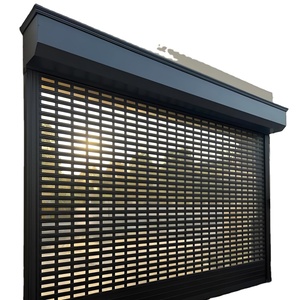
Architects are demanding dual-purpose security barriers that provide natural ventilation and high daylight factor (DF) ratings without sacrificing forced-entry resistance. Laser-punched and micro-perforated aluminum tambour profiles provide 32% free-air flow and interior visibility while maintaining an effective insect barrier and RC2/RC3 forced-entry protection.
3. Circularity & Low-Carbon Aluminum Sourcing
With the implementation of the EU Carbon Border Adjustment Mechanism (CBAM) and strict LEED v4.1 / BREEAM requirements, corporate tenders prioritize certified post-consumer scrap content. Transitioning to renewable-powered hydro-smelted aluminum profiles lowers embodied carbon across facade schedules by up to 64%.
Procurement Clarifications
Frequently Asked Questions by Commercial Buyers
Direct technical responses addressing engineering validation, logistics, compliance, and custom fabrication parameters.
What specific standards must an aluminum tambour door meet for CE certification?
Under European harmonized standard EN 13241-1 (Industrial, commercial, garage doors and gates), certified tambour doors must undergo accredited laboratory testing verifying structural wind load resistance (EN 12424), safe operational opening without drop hazards (anti-drop device / fall safety brake per EN 12604), mechanical durability cycles (EN 12605), and electromagnetic compatibility (EMC) for all drive motors. DERCHI provides factory-issued Declaration of Performance (DoP) documentation and complete third-party test reports for every commercial batch.
How do aluminum tambour doors perform against coastal saltwater corrosion compared to galvanized steel?
Galvanized steel relies on a micron-thin zinc sacrificial layer. Once breached through constant slat interlocking friction, oxidation causes accelerated red rust and track seizure. Our 6063-T6 extruded aluminum features a self-healing natural oxide film, further enhanced by 60–80 micron architectural powder coating (Qualicoat certified) or 25-micron hard-anodizing. In accelerated 5% neutral salt spray tests (ASTM B117), our panels show zero rust creepage past 3,000 hours, making them ideal for coastal resorts and marine installations.
Can DERCHI produce custom curved or horizontal sliding tambour configurations?
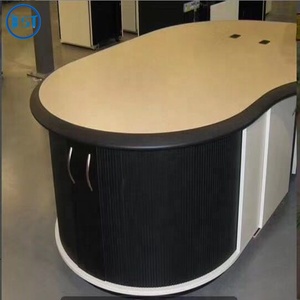
Yes. Beyond vertical overhead winding shafts, our in-house tooling division engineers horizontal sliding track setups (side-coiling shutters) and continuous 90-degree curved overhead tracks. These designs are suited for applications with severe overhead restrictions, curved retail kiosk fronts, or partition closures in luxury campervans and specialty emergency vehicles where drum boxes cannot be vertically ceiling-hung.
What is the standard manufacturing lead time and sea freight packaging methodology?
Standard OEM production lead times range from 15 to 25 business days from final CAD shop drawing sign-off. For secure oceanic transport, individual slat curtains are wrapped in anti-scratch foam film, placed within heavy reinforced multi-layer honeycomb cardboard, and fully enclosed within fumigation-free, IPPC-stamped solid plywood crates. We provide customized container consolidation with structural bracing to prevent transit movement for direct port delivery across the USA, Canada, Europe, Australia, and the Middle East.
Can these tambour doors be integrated with emergency fire trip systems and BMS controls?
Absolutely. Our intelligent automated control boxes feature dedicated dry-contact relays, RS485 communication ports, and 24V fire alarm trigger inputs. Upon receiving a building alarm signal, the system can execute either an emergency gravitational controlled descent (failsafe escape mode) or a high-speed complete lift to clear egress paths. Battery backup uninterruptible power supply (UPS) modules ensure continued operation through complete municipal power failures.
Request Custom Engineering Drawings & Factory Direct Pricing
Submit your opening schedules, profile preferences, and functional performance criteria. Our bilingual engineering specialists will return comprehensive CAD proposals, wind load calculations, and competitive factory-direct quotations within 24 business hours.