Architectural Fenestration Whitepaper 2025

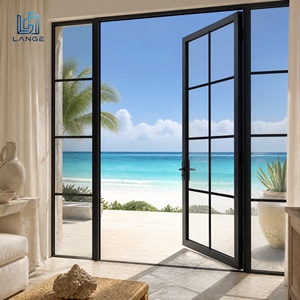
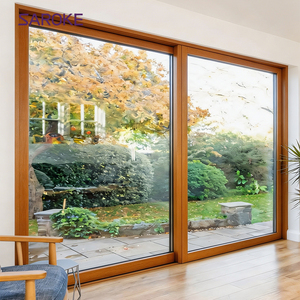
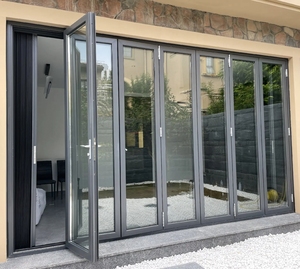
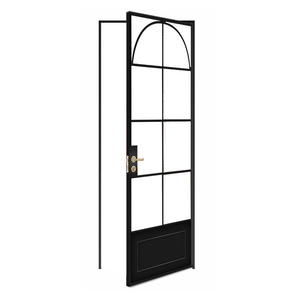
China Best Aluminium Glass Front Door Supplier & Suppliers

Comprehensive engineering intelligence, precision thermal-break extrusions, CE/AS 2047 certification compliance, and global factory-direct supply chains for luxury developers and commercial general contractors.

Engineered Fenestration Systems

Top-Tier Architectural Aluminium & Glass Entry Doors

Manufactured to rigorous North American and European structural benchmarks. Featuring 6063-T6 multi-chambered thermal profiles, Low-E argon insulated glazing, and German multi-point perimeter security hardware.

Engineering Whitepaper

Deconstructing the Modern Aluminium Glass Front Door System

An in-depth metallurgical, thermal, and security review for commercial architects, facade engineers, and volume procurement directors.

In modern architectural design, the exterior entrance has transformed from a merely utilitarian aperture into an intricate, multi-functional fenestration statement. When global property developers specify a China best aluminium glass front door supplier, they are evaluating sophisticated engineering capacity, thermal conductivity management, precision alloy metallurgy, and validated structural testing compliance. Sourcing from premier manufacturing clusters such as Foshan in Guangdong enables international builders to attain uncompromising quality benchmarks at cost efficiencies unattainable within domestic Western supply bases.

At the center of contemporary door design is 6063-T5 and 6063-T6 architectural-grade aluminium alloy. Pristine primary aluminium billet yields tensile strength upwards of 205 MPa and yield strength exceeding 160 MPa, providing dimensional stability and wind-load deflection resistance essential for oversized pivot doors spanning 3 to 4 meters high. Unlike timber, which warps with moisture variations, or untreated carbon steel that succumbs to galvanic corrosion in coastal zones, precision-extruded architectural aluminium offers permanent alignment, airtight perimeter tolerances, and structural longevity that outlasts standard commercial lease terms.

Thermal Barrier Engineering

Utilizing high-performance PA66 GF25 (polyamide reinforced with 25% short glass fiber) thermal break bars. This structurally decouples the outer and inner aluminium profiles, eradicating the thermal bridge. Results in overall frame U-values as low as 1.1 to 1.4 W/m²·K (0.20–0.25 BTU/hr·ft²·°F), satisfying strict energy codes across North America and Northern Europe.

Engineered Glazing Technology

Monolithic or double clear glass is completely obsolete for main entry portals. Modern standards require double- or triple-glazed units filled with 90%+ pure argon gas, integrated with soft-coat Low-Emissivity (Low-E) coatings. Interlayers made of Kuraray SentryGlas (SGP) or acoustic PVB ensure impact resistance against forced entry and hurricane-force winds up to 130 PSF.

Perimeter Defense & Hardware

Integration of heavy-duty concealed multi-point gear systems, locking mushroom cams, and German-engineered pivot systems capable of carrying door leaves weighing up to 500 kilograms. Electronic access interfaces allow seamless wiring for automated motorized latch retractors, biometric scanning, and building management system (BMS) connectivity.

A critical differentiator among global suppliers is surface finishing integrity. Premium Chinese manufacturing facilities incorporate automated vertical fluorocarbon (PVDF) electrostatic spray booths and powder-coating systems that comply with AAMA 2605 and Qualicoat Class 2/3 specifications. By applying 70% Kynar 500 resin coatings across a 3-coat/2-bake process, profiles achieve unmatched defense against ultraviolet degradation, chalking, and coastal marine corrosion—tested to surpass 3,000 to 4,000 hours in continuous ASTM B117 neutral salt spray conditions.
Strategic Sourcing Insights

Future Procurement & Architectural Product Trends (2025–2030)

Where high-end residential engineering, building energy regulations, and overseas supply chain logistics intersect.

Trend Domain Legacy Sourcing Specification Next-Generation Paradigm (2025+) Commercial Value & Jobsite ROI
Scale & Kinematics Standard hinged single leaves (H ≤ 2.4m, W ≤ 1.0m) Oversized Pivot Openings (H up to 4.2m, W up to 2.2m) with balanced floor-spring closers Dramatic architectural impact for villa foyers; premium asset valuation for spec builders.
Thermal Compliance Non-thermally broken frames; standard 5+9A+5 clear double glass Multi-cavity PA66 polyamide breaks; triple Low-E with warm-edge spacers (U-value ≤ 0.95 W/m²K) Effortless compliance with California Title 24, IECC, and European Passive House standards.
Physical Security Single deadbolt or standard 3-point manual throw Electric multi-point locking (5-7 points) with biometric recognition and concealed wiring drop Commercial-grade anti-burglary (PAS 24 / RC3) coupled with smart home automation compatibility.
Supply Packaging Knocked-down (KD) loose profiles requiring on-site glazing and joinery Unitized pre-hung frames with pre-calibrated pivot hardware and factory-glazed cassettes Reduces jobsite installation labor by up to 55%; eliminates field alignment errors.

Pre-Fabricated Pre-Hung Packs

Global labor costs make site glazing prohibitively expensive. General contractors increasingly procure complete entry portals assembled, squared, gasketed, and tested in the factory before export crating.

BIM / Revit Workflow Integration

Leading Chinese manufacturers now supply parametric 3D CAD shop drawings and Revit families, eliminating rough-opening discrepancies between engineering teams in North America/Europe and Asian production lines.

Ultra-Narrow Sightline Profiling

Architectural demand is moving toward maximum glass-to-frame ratios. Reinforced structural alloys allow sightlines under 45mm while retaining wind load deflection resistance exceeding 2,500 Pascals.

Stringent Code Harmonization

Suppliers must supply verifiable testing documentation across AS 2047 (Australian cyclone ratings), CE EN 14351-1, and NFRC / AAMA / CSA certification for seamless passage through municipal building inspections.

Enterprise Manufacturing Authority

World-Class Scale, Precision Engineering & Global Provenance

Backed by Guangdong Dejiyoupin Doors and Windows Co., Ltd. (DERCHI) — Foshan's benchmark fenestration enterprise.

180,000m²
Modern Production Base
600+
Skilled Craftsmen & Engineers
100+
Global Patents & Certifications
25+
Years Manufacturing Excellence

Guangdong Dejiyoupin (DERCHI): An Industrial Giant Serving the World's Demanding Projects

Operating from an expansive 180,000 square meter intelligent manufacturing park in Foshan, Guangdong, our enterprise has consistently set the standard for high-end architectural fenestration for over a quarter of a century. We bridge the gap between design vision and industrial execution, providing factory-direct entry solutions for custom luxury villas, boutique multi-family residential towers, and commercial hospitality developments across the United States, Canada, the United Kingdom, Australia, the Philippines, and the Middle East.

Unlike intermediaries or trading companies, our facility houses full-cycle manufacturing: computerized profile extrusion slicing, multi-axis CNC milling for hardware pocketing, automated double-seal silicone structural glazing, and cleanroom glass tempering lines. Every single door unit undergoes a comprehensive 100% factory trial assembly and calibration before crating, verifying that every reveal is plumb, every locking latch engages effortlessly, and every weather gasket seals hermetically.

CE Certified (EN 14351-1) AS 2047 N6 Cyclone Rated ISO 9001:2015 Quality System UL Fire-Rated Compliance AAMA / NFRC Verified
DERCHI 180,000 square meter factory base in Foshan
Procurement Knowledge Base

Frequently Asked Questions on Importing & Sourcing Aluminium Doors

Essential guidance addressing shipping logistics, structural engineering, field measurements, and international certifications.

How do you guarantee international building code compliance for USA, Canada, and Australia?
Our aluminium door systems are tested by accredited third-party laboratories to global performance standards. For Australia, our systems pass AS 2047 up to the maximum N6 hurricane/cyclone rating. For the North American market, our systems align with AAMA/WDMA/CSA 101/I.S.2/A440 benchmarks, featuring Low-E coatings evaluated for NFRC thermal standards (U-Factor ≤ 0.28 BTU/hr·ft²·°F) and impact laminates meeting ASTM E1886/E1996 missile impact tests. Complete test reports and engineering documentation are provided with every formal quote.
What is the typical lead time from final CAD shop drawing sign-off to port shipping?
Standard production runs for customized thermal-break aluminium glass front doors average 25 to 35 business days following technical CAD approval and hardware specification confirmation. Custom anodized or specialized fluorocarbon PVDF matched to specific RAL codes may require an additional 5 to 7 days. Ocean transit typically takes 14–22 days to US/Canadian West Coast ports and 28–35 days to East Coast or European main ports.
How are oversized glass pivot and bi-fold doors protected against freight damage?
We use multi-layer export crating. Every aluminium profile is wrapped in a 0.08mm electrostatic protective film, corner-guarded with high-density EPE foam, wrapped in heavy heat-shrink polyolefin, and packed in fumigated IPPC-certified solid plywood crates with internal steel strapping. Sensitive oversized glass is cradled in A-frame glass crates fitted with shock-watch and tilt indicators to track ocean container handling.
Can you manufacture bespoke dimensions and integrate third-party smart access systems?
Yes, 100% of our architectural front doors are engineered to project schedules. Our in-house technical team provides free CAD shop drawings based on your rough architectural openings (in inches or millimeters). We routinely machine mortise preps for global smart lock brands such as Dormakaba, Yale, Samsung, and Baldwin, and we engineer hidden conduit channels within the thermal break profile for low-voltage access control power supplies.
Why is a thermally broken aluminium door essential even in warm or tropical climates?
While thermal breaks prevent winter heat loss and internal surface condensation in cold zones, they are equally vital in hot, humid climates. An un-insulated aluminium profile quickly transfers intense solar heat directly into air-conditioned interiors, dramatically inflating cooling HVAC loads and causing interior sweating on profiles that ruins surrounding drywall. Thermal barriers optimize the Solar Heat Gain Coefficient (SHGC) and lower lifetime building energy operating costs.
What is the structural advantage of pivot doors over traditional butt-hinged entrance doors?
Traditional butt hinges place the entire cantilevered door weight on the vertical jamb, creating hinge sag, latch misalignments, and binding when leaf widths exceed 1.1 meters. Heavy-duty pivot systems transfer door weight directly into the reinforced finished floor and concrete foundation slab. This allows door leafs to safely weigh up to 500 kg and span over 2.0 meters wide with ultra-smooth rotation and zero sag over decades of service.

Ready to Engineer Your Project's Signature Entryway?

Submit your architectural elevations, rough opening schedules, or engineering performance specifications. Our technical engineering division delivers detailed CAD drawings, thermal evaluations, and transparent factory-direct pricing within 24 hours.