High-Performance Standard Aluminium Doors & Architectural Systems
Explore our export-certified portfolio, meticulously manufactured to comply with North American, European, and Australian building envelope standards.
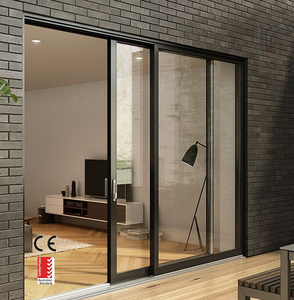
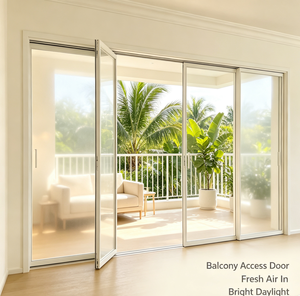
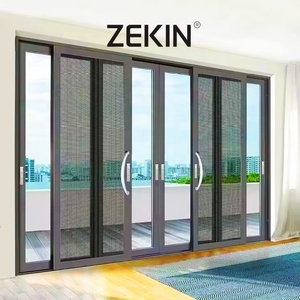
Guangdong Dejiyoupin (DERCHI): Engineering Leadership in Fenestration
Operating as a Top 10 fenestration brand in China, our 180,000 m² smart production base bridges custom architectural complexity with rigorous, factory-controlled standard output.
Stringent Quality Accreditations
Our standard aluminium door systems undergo third-party destructive and cyclical testing, meeting world-class criteria:
- AS2047 & NFRC: Tested to Level N6 for cyclonic wind loads, ultimate air infiltration resistance, and strict thermal conductance thresholds.
- CE & ISO 9001: Fully audited quality management workflows ensuring batch consistency and metallurgical integrity.
- UL Fire Rating: High-specification commercial pivot and entry barriers tested for passive fire containment.
Advanced Extrusion & Thermal Barrier Tech
Standard architectural doors from our Foshan facility utilize primary 6063-T5 and 6063-T6 virgin billets extruded with sub-millimeter tolerances:
- Polyamide PA66 GF25: Multi-cavity glass-fiber reinforced thermal breaks eliminating condensation in extreme freeze-thaw cycles.
- Automated Corner Crimping: Dual-component structural polyurethane injection forming hermetic, torsion-resistant corner joints.
- Surface Resilience: Fluorocarbon PVDF and architectural powder coatings resisting 3,000+ hours of coastal salt spray testing.
B2B Overseas Fulfillment Architecture
We eliminate supply chain bottlenecks for North American, European, and Oceanian project managers through systematic project engineering:
- Complimentary Shop Drawings: Direct translation of architectural schedules into CAD/BIM-ready fabrication drawings.
- Heavy Export Packaging: Fumigated solid-timber crating with multi-layer EPE foam and desiccant buffers for maritime moisture protection.
- DDP & Port Coordination: End-to-end logistics support covering documentation, tariff classification, and terminal customs clearance.
Evolutionary Trajectories in Aluminium Door Engineering
A technical whitepaper examining profile optimization, thermal physics, minimalist structural geometry, and sustainable fabrication systems.
1. Structural Slimness vs. Load Capacity
Architectural demand has decisively migrated toward ultra-narrow sightlines (Crittall-inspired and minimalist sliding barriers). However, standard structural aluminum doors require substantial section modulus (Wx) to withstand lateral wind pressures exceeding 2,500 Pa.
DERCHI addresses this through concealed internal steel reinforcers and engineered web-thickening within 6063-T6 chambers, providing expansive glass exposures without sacrificing structural deflection limits (L/175 or L/250).
2. Deep Thermal Decoupling & Passive Envelopes
Building codes in cold-climate regions (IECC in North America, Part L in the UK, and EnEV in Europe) have lowered whole-door U-factor requirements below 1.4 W/m²·K (U-0.25 BTU/hr·ft²·°F). Traditional thermal breaks of 14.8 mm are rapidly becoming obsolete.
Modern standard doors produced by top Chinese exporters incorporate extended 24 mm to 34 mm multi-chamber polyamides insulated with aerogel or low-density polyolefin foam cores, matching low-emissivity triple glazing with warm-edge spacers.
3. Decarbonized Metallurgy & Circular LCA
Corporate procurement is now heavily governed by Life Cycle Assessment (LCA) and Environmental Product Declarations (EPD). The global push towards low-carbon aluminum relies heavily on hydro-powered smelting and high-recycled scrap ratios.
Export manufacturers are pivoting to certified green aluminum billets (producing fewer than 4.0 kg CO₂ per kg of aluminium), assuring international general contractors that exterior envelopes meet stringent LEED Platinum and BREEAM standards.
| Performance Parameter | Legacy Commercial Aluminium Doors | Standard Non-Thermal Export Range | DERCHI Architectural Thermal-Break System | International Target Code |
|---|---|---|---|---|
| Thermal Transmittance (U-Value) | 5.8 – 6.2 W/m²·K | 3.5 – 4.2 W/m²·K | 1.1 – 1.6 W/m²·K (Triple Glazed Low-E) | NFRC 100 / EN ISO 10077-1 |
| Structural Wind Load (Deflection) | 1,200 Pa (Serviceability) | 1,800 Pa (Commercial Standard) | 3,000 – 4,500 Pa (AS2047 N6 Cyclonic) | ASTM E330 / AS 4055 |
| Water Penetration Resistance | 150 Pa (Static Pressure) | 250 Pa (Standard Sill) | 450 – 700 Pa (Sub-sill drainage & dual EPDM) | AAMA 501.1 / EN 12208 |
| Acoustic Attenuation (Rw / STC) | 25 – 28 dB | 30 – 32 dB | 38 – 44 dB (Acoustic laminated IGU) | ISO 717-1 / ASTM E413 |
| Operational Cycle Durability | 20,000 cycles | 50,000 cycles | 100,000+ continuous cycles | EN 12400 Class 4 / AAMA 910 |
Future Procurement Trends for Global Door Importers (2025–2030)
How foreign property developers, building material stockists, and contractors are de-risking overseas direct factory contracts.
1. Consolidating Multi-System Schedules
Rather than negotiating piecemeal with individual workshops, leading procurement firms consolidate diverse envelope needs under a single large-scale Chinese manufacturer:
- Eliminating cross-trade finish and tint discrepancies across powder-coat lots.
- Single-point submittal approvals for shop drawings across sliding, pivot, stacker, and clad door packages.
- Optimized containerization, reducing ocean freight costs per unit by 22% through mixed profile packing.
2. Digital QA Sign-Off & VR Factory Audits
Geographical distance is no longer an excuse for quality ambiguities. Smart procurement teams enforce stringent digital milestone verification:
- Pre-production 3D BIM integration preventing on-site rough opening discrepancies.
- Virtual reality line inspections and high-definition video tolerance verifications on anodizing micron thickness.
- Standardized third-party factory acceptance testing (FAT) witnessed via live video links prior to crating.
3. Hardware Modularity & Smart Security
Standard architectural doors are increasingly evaluated by hardware modularity. Global buyers now favor Chinese factories that build with universal prep pockets:
- Interchangeability with German (Siegenia, Roto, Hoppe) and American (Schlage, Baldwin) locksets.
- Factory pre-wiring for low-voltage access control, biometric finger scanners, and smart home automation integration.
- Heavy-duty adjustable pivot hinges capable of accommodating oversized 400kg+ leaves effortlessly.
Frequently Asked Questions by Overseas Buyers & Engineers
Authoritative technical answers to common procurement questions encountered by overseas general contractors and importers.
How do Chinese standard aluminium doors ensure compliance with US and Canadian building codes?
Compliance depends entirely on metallurgical alloy grade, glass certification, and thermal break engineering. Leading factories like DERCHI fabricate doors using primary 6063-T5 or T6 aluminium alloys and integrate SGCC-certified tempered or laminated glass according to ANSI Z97.1. For thermal performance, factory-certified assemblies achieve NFRC-compliant U-values and SHGC ratings via multi-chamber polyamide struts and Low-E dual or triple argon-filled IGUs.
What is the typical lead time for custom and standard containerized door orders?
Standard architectural door configurations requiring existing factory extrusion dies typically require 25 to 35 calendar days for production, assembly, and QA inspection. Custom structural extrusions or bespoke finishes (such as specialized woodgrain sublimation or multi-layer PVDF fluorocarbon coatings) typically extend production to 40 to 45 days. Ocean transit varies between 14 to 22 days to the US West Coast and 28 to 35 days to European or US East Coast base ports.
How is oceanic moisture corrosion and surface scratching prevented during shipping?
Export packaging protocols include applying protective low-tack co-extruded PE surface films across all exposed powder-coated and anodized extrusions. Assembled frames or modular knock-down (KD) packages are wrapped with high-density EPE pearl foam, edge-shielded with heavy-gauge corrugated corner guards, and enclosed in heat-treated ISPM 15-compliant non-fumigation plywood crates with desiccant packs to prevent condensation bloom.
Can you provide factory pre-hung assemblies with pre-drilled hardware mortises?
Yes. DERCHI utilizes multi-axis CNC profile machining centers to mill all hinge mortises, lock strike plates, flush bolts, and electronic wire chases directly into profile frames prior to powder coating or final assembly. For large pivot or heavy sliding doors, pre-hanging and testing in the factory ensure squareness, diagonal tolerance within ±1.5 mm, and zero binding before crating.
Connect Directly with Our Fenestration Engineering Group
Request comprehensive product specifications, factory-direct wholesale schedules, or send your architectural CAD drawings for an accurate project assessment and quotation within 24 business hours.