Villa Entry
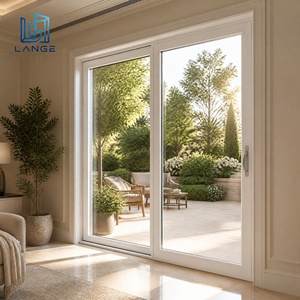
Engineered to exceed international structural deflection, thermal efficiency, and water infiltration standards. Each profile integrates aerospace-grade 6063-T6 aluminum alloys, precision thermal breaks, and multi-point perimeter security hardware.
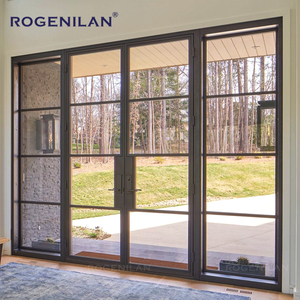
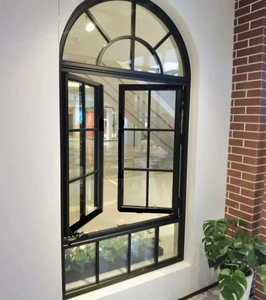
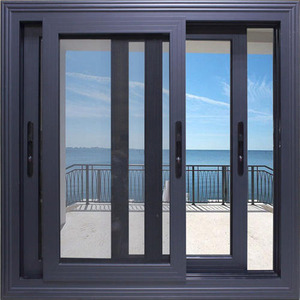
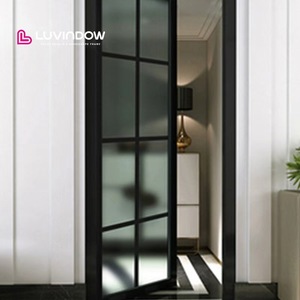
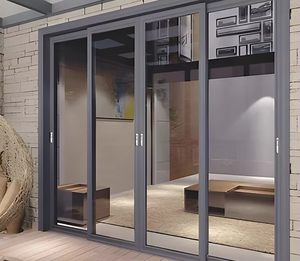
The international fenestration marketplace is undergoing a profound structural evolution. Sourcing decision-makers—encompassing commercial real estate developers, custom residential builders, and architectural glass distribution networks across North America, Australasia, and Europe—are pivoting away from localized assemblage towards integrated direct-from-factory partnerships in China. While historical trade models centered primarily around commodity-grade sliding systems, the architectural imperative for expansive, uninterrupted glass transitions has elevated aluminum bifold patio doors into a core structural specification.
Contemporary procurement mandates no longer hinge purely on landed unit cost. Instead, senior procurement officers evaluate manufacturers using a holistic matrix consisting of metallurgical consistency, structural load engineering under cyclonic pressure profiles, thermal envelope optimization, and logistical resilience. In North America and Australia, stricter building envelope codes—such as ASHRAE 90.1, Canada's National Energy Code for Buildings (NECB), and Australia’s National Construction Code (NCC)—demand exceptional air infiltration metrics and overall fenestration U-factors below 0.30 BTU/(hr·ft²·°F) (or equivalent Uw ≤ 1.6 W/m²K).
"Strategic fenestration sourcing in 2025 and beyond requires an audit of the entire extrusion-to-installation chain. Importers achieve up to 38% total cost reductions not by compromising on materials, but by eliminating regional intermediaries and utilizing advanced engineering pre-fabrication, validated through comprehensive shop-drawing submittals."
Furthermore, geopolitical and trade complexities have necessitated higher contractual sophistication. Elite Chinese manufacturing facilities provide end-to-end containerized logistics, complete traceability of raw aluminum billets (6063-T5 versus 6063-T6), and comprehensive documentation packages that facilitate frictionless customs clearance under specific harmonized tariff schedules. Importers who align directly with primary extrusion-fabrication centers in Foshan gain access to German-level CNC precision machinery while avoiding third-party assembly surcharges.
The traditional perception of bifold doors as thermally vulnerable systems with bulky frame profiles has been dismantled by modern metallurgical and mechanical innovations. Today's leading Chinese manufacturers leverage advanced finite element analysis (FEA) to maximize glazed aperture ratios without sacrificing structural wind-load deflection tolerances. The market has decisively shifted toward specific technological developments:
Multi-chambered glass-fiber reinforced polyamide (PA66 GF25) thermal break strips physically decouple exterior and interior aluminum extrusions, curtailing conductive heat loss and eliminating interior condensation even in extreme sub-zero conditions.
Engineered structural stiles as slim as 48mm to 65mm maximize visible glass area, offering unobstructed panoramic views while supporting triple-glazed IGU configurations weighing up to 120 kg (265 lbs) per individual door leaf.
Heavy-duty bottom-hung carriage assemblies utilizing four-wheel or eight-wheel quad-sealed surgical-grade stainless steel bearings ensure effortless glide resistance (<15N operating force) over 50,000 full operational duty cycles.
Dual-slope sub-sill extrusions paired with pressurized weeping channels and EPDM co-extruded compression gaskets guarantee zero water ingress under severe dynamic pressures exceeding 600 Pascals (Pa).
Concealed magnetic sensors, hidden in-head motorized drive actuators, and smartphone-integrated automation protocols allow multi-panel bifold arrays to slide, fold, and interlock seamlessly at the touch of a button.
Full integration of SentryGlas® ionoplast interlayers, double-laminated warm-edge IGUs, and multipoint shoot-bolt interlocking mechanisms tested against forced entry, coastal salt spray, and ASTM hurricane standards.
To streamline the selection process for specification engineers and international procurement officers, the following matrix benchmarks standard commercial bifold units against architectural thermal-break iterations and high-end European systems:
| Performance Parameter | Standard Non-Thermal Bifold | Architectural High-Performance Thermal Bifold | DERCHI Heavy-Duty Cyclone / AS2047 Grade |
|---|---|---|---|
| Extrusion Alloy & Wall | 6063-T5 | 1.4 mm – 1.6 mm | 6063-T6 | 2.0 mm Profile Wall | Structural 6063-T6 | 2.0 mm – 3.0 mm Reinforced |
| Thermal Break Profile | None (Solid Aluminum) | 14.8 mm – 24 mm PA66 GF25 Polyamide | 34 mm Multi-Chamber Iso-Bar with Aerogel Option |
| Overall U-Factor (Uw) | ≥ 3.8 W/m²K (U ~ 0.67 BTU) | 1.6 – 1.8 W/m²K (U ~ 0.28 – 0.31 BTU) | ≤ 1.1 W/m²K (Triple Glazed Argon, Low-E) |
| Structural Wind Load | 1200 Pa (Serviceability) | 2500 Pa (Standard Commercial) | 4500 Pa to N6 Rating (AS2047 / ASTM E330) |
| Water Penetration Resistance | 150 Pa – 200 Pa | 300 Pa – 450 Pa | ≥ 600 Pa (Pressurized Sub-Sills) |
| Acoustic Attenuation (Rw) | 25 dB – 28 dB | 34 dB – 38 dB | 42 dB – 45 dB (Acoustic Interlayer PVB) |
| Max Leaf Height / Weight | 2400 mm / 70 kg per panel | 3000 mm / 100 kg per panel | Up to 3600 mm / 150 kg per panel |
Headquartered in Foshan, Guangdong—the epicenter of global aluminum extrusion—DERCHI represents 25+ years of unyielding dedication to architectural fenestration. Operating from an expansive 180,000 square meter industrial complex staffed by over 600 skilled technicians, our company integrates CAD/BIM architectural detailing, precision robotic extrusion milling, German automated assembly stations, and strict ISO 9001 quality audits.
Our products regularly compete directly against premier German systems such as Schüco. A prime testament to our manufacturing caliber: a premier British real estate developer with years of Schüco installations successfully transitioned their bespoke luxury villa projects entirely to DERCHI, achieving equivalent dimensional tolerances, superior lead times, and substantial financial return. Furthermore, DERCHI has formally passed AS 2047 N6 certification, the benchmark standard for cyclone-prone building envelopes.
As real estate investments transition toward net-zero embodied carbon and rigorous ESG disclosures, international fenestration sourcing is encountering an expanded audit baseline. Forward-thinking procurement directors are incorporating environmental metrics alongside mechanical tolerances:
DERCHI sources primary billets smelted using renewable hydro-electric power in southwestern China, significantly reducing embodied carbon emissions to under 4.0 kg CO₂ per kg of aluminum, compared to the global coal-fired baseline of 14.0 kg CO₂.
Providing verified Type III Environmental Product Declarations (EPD) that grant LEED v4, BREEAM, and Green Star accreditation points for institutional, commercial, and high-density residential envelope submittals.
Factory-assembled and factory-glazed cassettes slash jobsite labor expenses in high-wage markets (e.g., California, New York, Ontario, Sydney). Our bifold frames arrive pre-hung, square-pinned, and balance-tested prior to ocean containerization.