Precision Fenestration & Architectural Envelope Guide

China Best Aluminum Fixed Glass Windows Factories & Supplier

An engineering-grade supply chain whitepaper on high-performance structural glazed fixed picture windows, thermal efficiency, Passivhaus metrics, and global architectural procurement.

Verified Manufacturing Catalogue

Precision Structural Picture & Fixed Architectural Systems

Engineered to handle extreme structural wind loads while maximizing daylight transmittance. Discover our export-certified architectural product series engineered specifically for North American, European, and Australian project specifications.

180,000 m²

Smart Production Footprint

600+

Engineers & Master Technicians

100+

Global Patents & Certifications

25+ Years

Direct North American Export

Technological Paradigm Shift

The Evolution & Future Dynamics of Aluminum Fixed Glass Windows

Fixed picture windows have transitioned from passive architectural daylight apertures into hyper-engineered structural barriers controlling building thermal envelope physics, structural loads, and indoor environmental quality (IEQ).

Structural Silicone Glazing (SSG) & Slim Sightlines

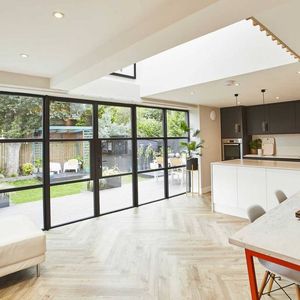
Modern architectural design dictates boundless vision. Leading Chinese factories utilize 4-sided structural silicone glazing (SSG technology) and concealed perimeter framing. By structurally adhering the insulated glass unit directly to extruded 6063-T6 or 6061-T6 aluminum mullions, wind shear loads transfer directly without bulky mechanical retention clips, achieving visible sightlines under 25mm.

Polyamide Thermal Barriers & Aerogel Cores

Aluminum is inherently conductive (thermal conductivity ≈ 205 W/m·K). Future-oriented fenestration utilizes 34mm to 54mm continuous Polyamide PA66 GF25 insulation strips reinforced with multi-chambered structural aerogel fillings. This isolates the exterior aluminum extrusion from interior ambient temperatures, dropping frame U-values (Uf) below 1.1 W/m²K to eradicate winter condensation risks in ASTM / NFRC climate zones 6 to 8.

Vacuum-Insulated Glass (VIG) & Triple IGUs

The global envelope trend is shifting from standard double glazing to advanced warm-edge triple glazing and hybrid Vacuum Insulated Glass (VIG technology). Incorporating double silver or triple silver Low-E coatings with 90%+ argon gas concentrations delivers center-of-glass performance down to Ug = 0.5 W/m²K, pairing net-zero energy compliance with maximum acoustic attenuation (Rw up to 45dB).

Procurement Intelligence

Future Global Procurement Trends in Aluminum Fixed Systems

Evaluating total procurement efficiency: Why international developers, Tier-1 builders, and architectural studios are shifting direct-to-factory supply models in Foshan, China.

BIM Integration & Parametric CAD Sign-Off

Forward-thinking developers no longer source via generic catalog numbers. Sourcing decisions are backed by parametric 3D modeling and Revit/BIM object libraries. Top Chinese manufacturers like Guangdong Dejiyoupin Doors and Windows Co., Ltd. (DERCHI) deploy in-house facade engineers to provide complimentary shop CAD drawings with structural deflection formulas before raw extrusions touch the CNC lines.

Total Envelope Harmonization & Unit Sourcing

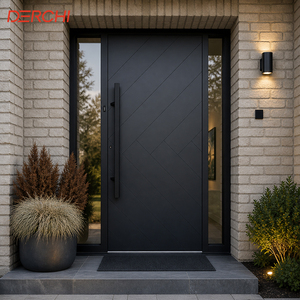
A primary challenge for international developers is color discrepancy and lead-time mismatch across divergent window, entry door, and pivot systems. Procuring from fully integrated suppliers allows one-stop aggregation: standard fixed architectural picture glass, grand entry pivot doors, and patio systems produced under a single anodizing or AkzoNobel powder coating batch code.

Audited Performance & Cyclonic Code Compliance

High-end building codes—such as Florida Building Code (High-Velocity Hurricane Zone / TAS 201/202/203), AS2047 cyclonic testing in Australasia, and NFRC energy performance mandates—require traceable factory metallurgical tests and third-party laboratory verification. Direct procurement partners must demonstrate ISO 9001 quality workflows and traceable glass batch certificates.

Performance Metric Standard Commercial Grade High-Spec Fixed Envelope (DERCHI Spec) Testing / Industry Standard
Frame Alloy & Temper Recycled / Secondary 6063-T5 Primary Virgin Billet 6063-T6 (Web Thickness ≥ 2.0mm) GB 5237 / ASTM B221
Thermal Barrier System PVC / Cold-Poured Polyurethane Polyamide PA66 GF25 Technoform Strut (≥ 34mm) EN 14024 / NFRC 100
Glazing Configuration 5mm + 9A + 5mm Insulated Double 6mm Low-E + 16A Argon + 6mm + 16A + 6mm Triple Laminate ASTM E2190 / AS 1288
Structural Wind Resistance 1500 Pa (Standard Service) Up to 4500 Pa – 5000 Pa (Serviceability / Cyclone N6) AS 2047 / ASTM E330
Air Infiltration Rating 1.5 L/m²·s < 0.1 L/m²·s (Precision Continuous EPDM Seal) ASTM E283 / EN 12207 Class 4
Overall System U-Factor U ≈ 2.8 – 3.2 W/m²K Uw ≈ 0.85 – 1.2 W/m²K (Climate Zone 7/8 Ready) ISO 10077-2 / NFRC 100-2010
Enterprise Authority & Reliability

Guangdong Dejiyoupin Doors & Windows Co., Ltd. (DERCHI)

A Top-10 brand in China’s architectural metal fenestration sector. Backed by 25+ years of continuous engineering innovation, a massive 180,000 m² advanced manufacturing facility, and over 600 skilled technicians.

Integrated One-Stop Manufacturing Facility

One-Stop Manufacturing Scale

From architectural fixed picture glass to pivot doors, commercial curtain wall facades, and garage systems, we consolidate complete building envelopes under one production schedule to lower shipping costs.

Strict Laboratory Fenestration Testing

AS2047 N6 & CE Certified

Certified to international structural benchmarks including CE, ISO 9001, AS 2047 N6 Cyclonic Level, and UL fire standards, supported by 100+ patents for seamless international building inspection approvals.

Engineers Reviewing Project Drawings

Complimentary CAD & Engineering

Our dedicated fenestration structural engineers turn your imperial or metric architectural elevations into high-precision CAD shop drawings, optimizing mullion inertia for project-specific wind pressures.

Bilingual Engineering Sales Support

EST / PST Time-Zone Support

Bilingual project managers handle inquiries in real-time across North American, European, and Australian business hours, guiding projects smoothly from raw profile extrusion to on-site crating delivery.

Panoramic View of DERCHI 180,000 sqm Industrial Park
Procurement Due Diligence

Frequently Asked Questions on Aluminum Fixed Glass Windows

Essential engineering and logistics answers for builders, commercial developers, and procurement professionals sourcing direct from China.

How do Chinese fixed window manufacturers verify compliance with North American and European building codes?
Leading suppliers like Guangdong Dejiyoupin Doors and Windows Co., Ltd. (DERCHI) engineer products to pass rigorous testing: NFRC 100/200/500 thermal testing, ASTM E283/E330/E331 structural benchmarks for the USA, and AS2047 with AS1288 safety glazing mandates for Australia. Factory shop drawings calculate exact deflection factors (L/175 or L/240), backed by traceable mill test certificates for alloy compositions and SGCC-certified tempered glass stamps.
What profile thickness and thermal break designs are required for oversized architectural fixed glass picture windows?
Oversized fixed panes exceeding 3000mm in height or width require a minimum primary structural wall thickness of 2.0mm to 3.0mm using high-tensile 6063-T6 aluminum. To avoid thermal bridging and inner condensation, multi-chambered Polyamide PA66 GF25 thermal breaks (ranging from 34mm to 54mm) must be mechanically rolled into the inner and outer extrusions. This ensures high structural inertia against heavy wind loads while keeping system U-factors below 1.2 W/m²K.
How are fragile oversized fixed glass window assemblies protected during transoceanic shipping?
Export fenestration demands strict packaging standards. Frames and insulated glass units are wrapped in protective PE shrink wrap and high-density corner buffers. Units are then secured in fully enclosed, IPPC-certified ISPM-15 fumigated plywood crates with integrated bottom forklift skids. For heavy jumbo glass, internal rubber shock pads and desiccant packs prevent thermal shock cracks and moisture haze during sea transit.
What is the typical production lead-time from initial architectural CAD approval to FOB/CIF shipping?
Once 2D/3D shop drawings, profile colors, and glass configurations are approved: standard powder-coated extrusions take 25 to 30 days; complex custom anodized or PVDF finishes paired with triple-glazed IGUs take approximately 30 to 35 days. Real-time factory photo and video milestones are shared during pre-assembly, water-tightness chamber testing, and final crating.
Can fixed window mullions structurally integrate with operative entry and sliding doors within the same frame?
Yes. Our multi-functional architectural profiles are modular. Fixed clerestories, transoms, and sidelites integrate with operable casements, large pivot front doors, or sliding multi-stack systems via concealed heavy-duty structural couplers. This modular approach preserves seamless, uniform perimeter sightlines and identical powder-coat finishes across the entire building envelope.

Ready to Engineer Your Project's Glazed Envelope?

Send us your window schedules, elevation plans, or target U-values. Our bilingual engineering team will provide free CAD shop drawings, structural calculations, and a direct factory quotation within 24 hours.

Get a Quote