Factory-Engineered Fenestration Systems
Direct from our precision extrusion and composite fabrication lines. Explore our eight high-performance models engineered for severe weather resilience, thermal efficiency, and contemporary architectural elegance.
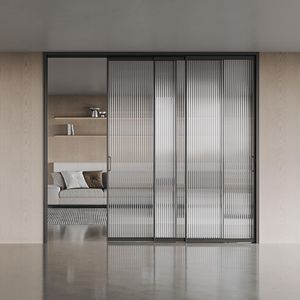
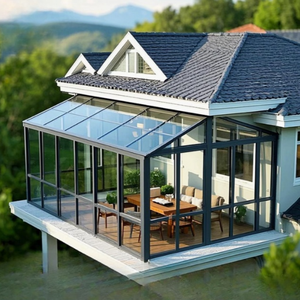
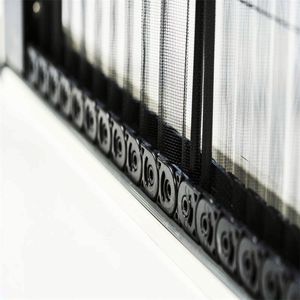
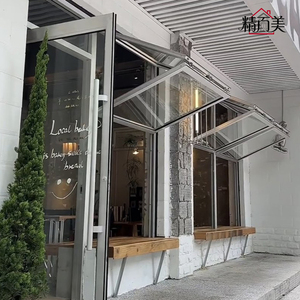
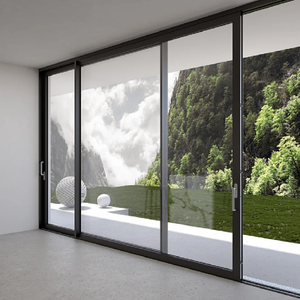
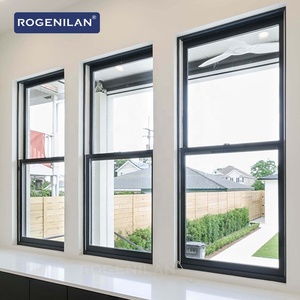
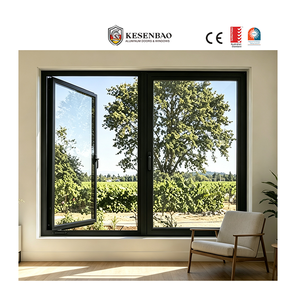
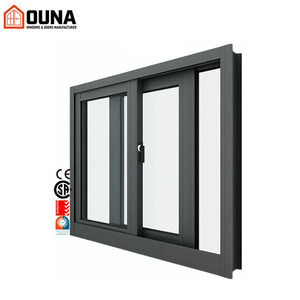
The Metallurgy & Fiber Composite Advantage
Why Tier-1 architectural developers choose 6063-T6 virgin primary aluminum paired with woven continuous-filament fiberglass reinforcement over conventional fenestration profiles.
Modern building envelopes demand unprecedented structural rigidity, uncompromising thermal boundary breaks, and atmospheric oxidation defense. In coastal, sub-tropical hurricane zones and sub-zero northern territories alike, standard UPVC degrades under severe ultraviolet exposure, while untreated timber suffers cyclical hygroscopic warping, swelling, and fungal rot. As China's leading manufacturing powerhouse operating across 180,000 square meters of precision fabrication floor, Guangdong Dejiyoupin Doors and Windows Co., Ltd. (DERCHI) pioneers the synthesis of high-tensile 6063-T5/T6 architectural aluminum alloy with high-modulus fiberglass-reinforced polyamide thermal barriers (PA66-GF25) and micro-fine woven fiberglass mesh cores.
The synergy between high-precision extruded aluminum and high-density fiber weaves addresses the fundamental vulnerabilities of classic entryway systems. Traditional aluminum sections exhibit high thermal conductivity (~160 to 200 W/m·K), which induces rapid indoor heat loss and condensation formation. DERCHI integrates 25% glass-fiber-reinforced polyamides, reducing total window and door system U-values to under 1.1 W/m²·K (meeting European Passive House and North American Energy Star criteria), while maintaining an ultimate tensile strength exceeding 310 MPa.
Alloy Purity & Mechanical Strength
We mandate A00 grade electrolytic primary aluminum ingots. No post-consumer scrap is ever melted into our structural extrusions, preventing micro-voids, brittle phases, and galvanic corrosion.
- Alloy Grade: 6063-T5 / 6063-T6
- Tensile Yield Strength: ≥ 215 MPa
- Webster Hardness: ≥ 12-14 HW
Fiber-Reinforced Thermal Core
Technoform PA66-GF25 thermal struts reinforced with 25% continuous transverse glass fiber mirror the expansion coefficient of aluminum, guaranteeing zero de-crimping under -40°C to +80°C cycles.
- Thermal Transmittance (Uf): 0.9 - 1.4 W/m²·K
- Acoustic Attenuation: STC 38 - 45 dB
- Linear Expansion: 2.3 × 10⁻⁵ / K
Corrosion Shield & Cyclone Barrier
Multi-stage chemical pre-treatments followed by AkzoNobel fluorocarbon (PVDF) electrostatic coatings or Class I architectural anodizing deliver 4,000+ hours of ASTM B117 neutral salt spray endurance.
- Salt Spray Rating: ASTM B117 > 4,000h
- Design Wind Load: AS 2047 N6 (Cyclonic)
- Impact Resistance: ASTM E1886 / E1996 Missiles D
Comprehensive Material Benchmark Matrix
Consult the engineering comparative table below before finalizing rough opening specifications and fenestration submittals for commercial or high-end residential projects.
| Performance Parameter | DERCHI Aluminium Fiber Doors | Standard Thermally Broken Aluminum | Extruded Commercial UPVC | Solid Engineered Hardwood |
|---|---|---|---|---|
| Structural Rigidity (Elastic Modulus) | Extreme (~70 GPa + Fiber Lock) | High (~69 GPa) | Low (~2.8 GPa; creeps over time) | Moderate (~10-12 GPa) |
| Thermal Conductivity (U-Frame) | Optimized: 1.0 – 1.4 W/m²·K | Moderate: 2.2 – 3.0 W/m²·K | Good: 1.3 – 1.8 W/m²·K | Good: 1.4 – 1.9 W/m²·K |
| Extreme Weather & Cyclone Resilience | Certified AS 2047 N6 / ASTM Missile D | Standard wind load compliance | Prone to frame flex under cyclic gusts | Prone to water absorption & frame warp |
| Coastal Salt Air Resistance (ASTM B117) | > 4,000 hours (Fluorocarbon PVDF) | ~1,000 – 1,500 hours (Standard Powder) | High chemical resistance; chalks under UV | Requires regular polyurethane sealing |
| Dimensional Stability (Oversized Pivots) | Flawless to 4,000mm height | Limited to 3,000mm before deflection | Unsuitable for large formats | High risk of seasonal binding |
Global Procurement & Architectural Trends
Analysis of regulatory decarbonization, mega-aperture engineering demands, and factory-direct supply consolidation transforming the global fenestration trade.
Strict Mandates on Embodied Carbon & Whole-Building Life Cycle
International building codes (including LEED v4.1, BREEAM, and the EU Energy Performance of Buildings Directive) are compelling general contractors to transition to aluminum profiles with transparent Environmental Product Declarations (EPDs). The market is moving toward circular aluminum extrusion derived from low-carbon smelting powered by hydroelectric energy, joined with composite thermal barriers that facilitate disassembly and 100% downstream remelt purity.
Demand for Oversized Structural Pivots & Flush Floor Transitions
High-end residential estates in North America, Australia, and the Gulf Corporation Council (GCC) are eliminating traditional divided lites in favor of sweeping structural pivot doors (measuring up to 3 meters wide by 4 meters tall) and concealed-track sliding systems. Fenestration systems must integrate subterranean stainless steel drain troughs with zero-step threshold ADA compliance, engineered without sacrificing air infiltration or water barrier performance.
Consolidated Single-Source Manufacturing Supply Chains
Procuring structural entry doors, automated multi-leaf bi-fold storefronts, acoustic interior wooden elements, and perimeter curtain walls from disparate vendors introduces interface clashes and coordination delays. Forward-looking procurement directors are shifting all external apertures to single-source original equipment manufacturers capable of delivering synchronized CAD shop submittals, matching anodized or PVDF finishes, and unified crating logistics.
Factory Direct Advantages & Engineering Pedigree
Headquartered in the premier manufacturing hub of Foshan, Guangdong, DERCHI delivers industrial-scale capacity, custom CAD precision, and end-to-end export compliance.
180,000 m² Production Base
Equipped with computerized high-speed 5-axis CNC profile machining centers, German dual-head compound miter saws, and high-volume automated electrostatic powder coating lines.
Free CAD & BIM Engineering
Eliminate jobsite fitment errors. Our dedicated facade engineers review your architectural door schedules, generating detailed shop drawings, rough opening specs, and anchorage engineering calculations.
Dedicated Time Zone Alignment
Our multilingual sales engineering divisions provide dedicated communication covering EST, PST, AEST, and GMT business hours, expediting submittals and technical engineering approvals.
Export Fumigated Solid Crating
Full ocean freight preparation. Heavy-duty plywood casing with internal polyethylene shock absorbers, moisture desiccant bags, and corner guards ensures glass and finishes arrive pristine.
Frequently Asked Technical Sourcing Questions
Clear, definitive answers to help procurement managers, commercial builders, and architects navigate custom specification, fabrication timelines, and regulatory submittals.