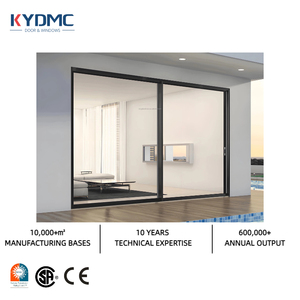
USA Certified NFRC Modern Four Panels Aluminum Alloy Frame Patio Sliding Door Low-E Double Tempered Glass Heat Sound Insulation
- Profile: 6063-T6 Thermal Break
- Glass: Low-E Double Tempered Argon
- Rating: NFRC Certified / Soundproof
Explore our flagship exterior aluminum door configurations, independently verified for strict thermal insulation, acoustic reduction, extreme wind-load resistance, and water tightness.
Over the past two decades, China’s architectural metal fenestration sector has transitioned from volume-driven production to an advanced ecosystem of high-tolerance, precision-engineered building envelope systems. For international commercial developers, facade engineering consultants, and elite custom homebuilders across the United States, Canada, Australia, and the Middle East, finding a verified Tier-1 Chinese aluminum external doors factory is no longer merely a low-cost arbitrage strategy—it is a strategic partnership to secure architectural flexibility, accelerated lead times, and industrial-grade quality control.
Historically, North American and European specifiers turned to domestic fabricators for commercial storefronts, monumental entry pivots, and multi-slide terrace doors, accepting exorbitant cost structures, rigid sizing constraints, and extended 26-week lead times. Today, modern industrial clusters—anchored by specialized manufacturers such as Guangdong Dejiyoupin Doors and Windows Co., Ltd. (DERCHI) in Foshan, Guangdong—utilize automated German 5-axis CNC profile machining centers, multi-zone robotic extrusion crimping, automated vacuum gas-filling insulated glass lines, and micron-accurate surface treatment baths. The result is custom exterior door assemblies that consistently comply with ASTM, AAMA, NFRC, Florida Building Code (High-Velocity Hurricane Zones), AS 2047, and European CE standards at 35% to 50% lower total procurement expenditures.
As building energy conservation codes tighten across the globe—exemplified by ASHRAE 90.1, the California Title 24 Energy Code, and Canada’s National Energy Code for Buildings (NECB)—exterior doors are scrutinized for their total system U-factor, solar heat gain coefficient (SHGC), and condensation resistance. Choosing a supplier capable of engineering multi-chambered, thermally broken profile dies, rather than utilizing generic non-thermal commercial extrusions, represents the critical difference between project approval and costly jobsite inspection failures.
A comprehensive technical analysis of architectural innovations, structural metallurgy, and mechanical performance standards driving specifications in 2025 and beyond.
Standard aluminum exhibits a high thermal conductivity of approximately 160–200 W/m·K. Modern external systems integrate multi-cavity polyhexamethylene adipamide struts reinforced with 25% glass fiber (PA66GF25). These create a thermal isolation plane measuring 24mm to 34mm across the sash and sub-frame, delivering overall door thermal transmittance values below U = 1.2 W/m²·K (0.21 BTU/h·ft²·°F) when paired with warm-edge triple-glazing.
Coastal resilience mandates door assemblies tested under ASTM E1886 and ASTM E1996 for large missile impact resistance (Level D), alongside cyclic static air pressure differentials up to +/- 100 PSF. DERCHI’s commercial entrance profiles utilize heavy wall thicknesses up to 3.0mm, internal structural steel stiffeners, reinforced corner cleat corner injection, and SentryGlas (SGP) laminated glass to withstand severe wind forces.
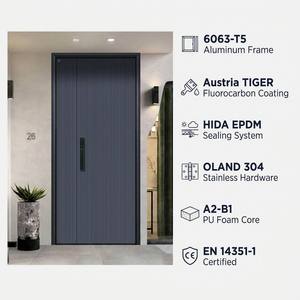
Modern residential and commercial architecture demands grand, uncluttered visual statements. Monumental pivot doors measuring up to 2.5 meters wide by 4.5 meters tall demand specialized engineering: concealed self-closing German FritsJurgens or DormaKaba hydraulic bottom pivots, integrated anti-warp carbon fiber structural tie rods within the leaf core, and adjustable top pivot bearings capable of supporting sash loads exceeding 600 kg.
Exterior doors represent the critical physical entry point of any asset. Current factory production models embed electrified motorized multipoint locks (e.g., KFV Genius, GU-SECURA) directly into the internal profile chase. These mechanisms integrate with 3D facial recognition biometric terminals, Tuya/Zigbee smart building automation protocols, hidden conduit wire transitions, and mechanical emergency bypass cylinders.
External aluminum doors subjected to coastal salt spray, intense ultraviolet degradation, or industrial airborne acid pollutants require superior surface chemistry. Specifying 70% Kynar 500 / Hylar 5000 PVDF (polyvinylidene fluoride) liquid coatings ensures adherence to AAMA 2605 criteria, withstanding over 4,000 hours of continuous ASTM B117 salt spray exposure without chalking, fading, or peeling.
In urban mid-rise developments and luxury airport-adjacent villas, exterior doors must achieve significant acoustic transmission loss. By pairing asymmetrical laminated insulated glass units (e.g., 6mm Low-E + 16A + 4mm + 0.76PVB + 4mm) with dual co-extruded EPDM foam rubber perimeter gaskets, modern factory assemblies achieve Sound Transmission Class (STC) ratings between 38 and 44 dB, blocking ambient noise.
Market dynamics, supply chain digitalizations, and regulatory shifts shaping how developers, general contractors, and trade dealers procure external doors from China.
The traditional supply chain model—involving regional domestic importers, brand re-sellers, and local millwork brokers—often inflates fenestration costs by 80% to 120% while creating a communication bottleneck that leads to drafting errors. Global procurement directors are increasingly bypassing intermediaries to establish direct technical communication with in-house engineering departments at top Chinese production bases. Advanced B2B buyers provide rough opening schedules and REVIT/BIM models directly to factory engineers, receiving certified 2D/3D shop drawings, thermal simulation reports, and anchor clip calculation packages within 72 hours.
With the introduction of the European Carbon Border Adjustment Mechanism (CBAM) and LEED v4.1 / BREEAM sustainability scoring, the carbon footprint of aluminum smelting is under stringent scrutiny. Top Chinese door manufacturers are proactively transitioning from coal-powered electrolytic smelting to hydro-powered virgin billet sourcing and high-percentage post-consumer recycled aluminum alloys (up to 40% certified recycled scrap). Leading manufacturers now furnish verified Environmental Product Declarations (EPDs), enabling commercial projects to earn crucial embodied carbon credits.
Field-glazing large exterior entrance doors and sliding panels on overseas jobsites incurs substantial domestic union labor costs and risks site-induced glass contamination or seal failure. Future-facing procurement agreements mandate that doors leave the Foshan factory fully pre-glazed, shimmed, and cycle-tested. High-tensile structural silicone is factory-applied in humidity-controlled cleanrooms, ensuring optimal seal integrity. When combined with modular nailing fins, unified brick molds, and pre-drilled fixing lugs, site installation times are slashed by up to 60%.
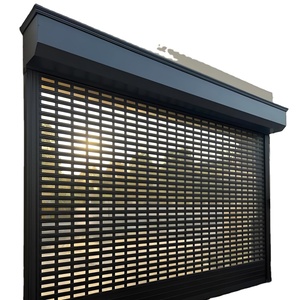
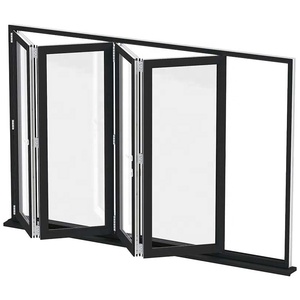
Independent residential and commercial projects require diverse architectural elements: front entrance pivot doors, terrace sliding systems, automatic tambour roller shutters, security casement doors, and curtain wall windows. Sourcing these items from disparate suppliers leads to visual finish mismatches and fractured shipping logistics. Modern buyers leverage fully integrated manufacturing giants like Guangdong Dejiyoupin Doors and Windows Co., Ltd. (DERCHI), which fabricate the entire door schedule across 180,000 square meters of production space, consolidating finished assemblies into heavy-duty fumigated steel-frame plywood crates within a single, optimized sea freight container.
| Door Material Category | Structural Strength & Wind Resistance | Thermal U-Factor (W/m²·K) | Coastal Anti-Corrosion | Ideal Architectural Application | Compliance Credentials |
|---|---|---|---|---|---|
| Thermally Broken Aluminum (6063-T6) | Extreme (Yield Strength > 160 MPa, Deflection < L/175) | 0.9 – 1.4 (With Triple Low-E Glazing) | Exceptional (AAMA 2605 PVDF > 4,000 hrs Salt Spray) | Modern custom estates, multi-family patios, high-rise terraces | NFRCAS 2047CE |
| Architectural Cast Aluminum Armor Doors | Maximum Impact (Resists sledgehammer & mechanical breach) | 1.3 – 1.8 (Aerogel Core Infill) | High (Sealed Multi-Layer Baked Enamel Finish) | Classic luxury estates, grand manor main entrances, secure villas | UL 10CISO 9001 |
| Minimalist Full-Glass Heavy Pivot Doors | High (Engineered SGP Structural Lamination & Floor Spring) | 1.1 – 1.5 (Double Argon Low-E Warm Edge) | Maximum (Marine Anodized 25μm Hardware) | Commercial showrooms, corporate headquarters, ultra-luxury foyers | SGCCEN 12150 |
| Composite Wood-Clad Aluminum Armor Doors | Very High (Internal Multi-Chamber Alloy Skeleton) | 0.85 – 1.2 (Interior Solid Hardwood Insulation) | Moderate (Exterior Face Requires Shielding Overhang) | High-end residential residences requiring interior timber warmth | CEISO 14001 |
Operating as a Top 10 door and window manufacturing brand in China, Guangdong Dejiyoupin Doors and Windows Co., Ltd. (DERCHI) pairs European-standard automated machinery with dedicated export engineering.
Our centralized production hub in Shishan Town, Nanhai District, Foshan, integrates raw billet extrusion storage, powder coating lines, and precision assembly bays.
Certified to CE, ISO 9001, AS 2047 (N6 Cyclonic Rating), and UL fire-rated standards. Each production batch undergoes strict in-line caliper, water penetration, and cycle checks.
Our in-house design engineering department translates your rough openings and architectural door schedules into fully detailed 1:1 CAD and 3D submittal packages for code sign-off.
Operating across North American (EST/PST), Australian, and European operational windows, our bilingual structural engineers provide seamless guidance from RFQ to onsite installation.
A rigorous, transparent process engineered to eliminate sizing errors, specification misalignments, and transit risks for overseas trade partners.
Clients submit rough door schedules, wall section details, target U-values, wind pressure thresholds, and local building code criteria (e.g., Florida FBC, California Title 24, AS 2047).
Factory facade technicians produce dimensionally accurate CAD cross-sections, anchoring schematics, water evacuation pathways, and structural hardware configurations for architect approval.
Automated 5-axis CNC machines cut, rout, and drill virgin 6063-T6 aluminum extrusions. Profiles are treated through AkzoNobel or PPG AAMA 2605 fluorocarbon dipping or architectural anodizing.
Corner joints are hydraulically crimped with injected dual-component structural epoxy. Thermal breaks, triple EPDM gaskets, insulated glass units, and locking gears are installed and cycle-tested.
Each unit is shrink-wrapped with protective peel-coat film, cushioned with dense closed-cell EPE foam, and encased within heavy-gauge, ISPM-15 certified heat-treated plywood crates.
Coordinated ocean freight forwarding to destination ports (DDP/CIF terms). Complete English hardware installation manuals, exploded 3D anchor diagrams, and live remote technical guidance.
Clear, direct answers regarding testing verifications, sizing capabilities, lead times, and jobsite compliance.
Our export doors are engineered specifically to satisfy North American fenestration standards, including AAMA/WDMA/CSA 101/I.S.2/A440, NFRC thermal ratings, and ASTM E283/E330/E331 structural benchmarks. For projects in high-wind regions, we formulate profile sections with up to 3.0mm wall thickness and heavy-gauge steel reinforcements capable of meeting Miami-Dade TAS 201/202/203 testing criteria. Full engineering calculation packages and factory test reports are provided during the shop drawing phase.
Standard custom project production runs between 25 to 35 business days following final CAD shop drawing sign-off and finish sample approval. For complex monumental pivot assemblies or specialized cast aluminum panels requiring dedicated extrusion dies, lead times range between 35 to 45 business days. We operate a streamlined ERP manufacturing scheduling system, providing our overseas commercial partners with weekly video updates and milestone reports throughout the fabrication cycle.
Export protection begins at the factory floor: all finished aluminum profiles are enveloped in static-free protective film, corner-guarded with vulcanized rubber bumpers, and fully shrink-wrapped in moisture-barrier sheeting. Doors are packed upright into reinforced, heavy-duty fumigated plywood crates (certified to ISPM-15) fitted with internal structural timber supports and industrial desiccants to eliminate condensation during transit. Crates are engineered with forklift skid shoes and reinforced lifting straps for safe container destuffing.
Yes. We routinely fabricate doors pre-milled for US-standard mortise locksets (e.g., Schlage, Baldwin, Yale, Adams Rite) as well as European DIN standard cylinders and multipoint locking systems (e.g., KFV, GU, Siegenia, Winkhaus). You can provide physical hardware samples or engineering cutout templates; our CNC machining centers route faceplates, strike plates, handle bores, and wire pass-throughs with sub-millimeter precision prior to surface coating.
Non-thermal aluminum doors possess continuous metal through-paths, causing rapid heat transfer, high HVAC energy losses, and severe interior condensation in cold climates. Single-break systems introduce a basic nylon strut to disrupt conductivity. Our advanced multi-chamber profiles integrate 24mm to 34mm PA66GF25 polyamide barriers incorporating internal hollow insulation chambers and optional aerogel foam filling. This reduces framework U-values below 1.2 W/m²·K, ensuring compliance with strict northern US and Canadian building codes.
Absolutely. We maintain a policy of complete operational transparency and welcome on-site third-party audits (e.g., SGS, TÜV Rheinland, Intertek, Bureau Veritas) across our 180,000 m² Foshan facility. Clients may also inspect our machining lines, corner crimping bays, and quality-testing laboratories via our immersive 360-degree online Factory VR tour or through live scheduled video walkthroughs with senior project engineers.
Connect directly with Guangdong Dejiyoupin's structural fenestration engineering team. Submit your architectural drawings, rough opening schedules, or tender specifications for comprehensive CAD shop drawings and factory-direct volume pricing.