Featured Commercial & Residential Door Systems
Engineered for rigorous wind resistance, water tightness, structural integrity, and contemporary aesthetic distinction.
1. Executive Whitepaper: The Strategic Evolution of Aluminium Fancy Doors in Modern Fenestration
In contemporary architectural engineering, the exterior entrance represents more than an access threshold; it serves as the critical intersection of environmental envelope performance, physical defense, and expressive design semantics. Across high-end residential estates, luxury hospitality developments, and prime commercial developments, the category of "Aluminium Fancy Doors" has evolved from simple decorative barriers into sophisticated, high-performance structural systems. Leading real estate specifiers, facade engineers, and volume building material distributors worldwide increasingly source directly from advanced Chinese manufacturing clusters like Guangdong Dejiyoupin Doors and Windows Co., Ltd. (DERCHI) to achieve unparalleled structural tolerances, bespoke finish articulation, and superior thermal management.
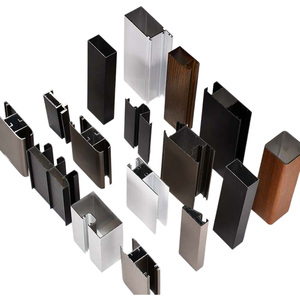
As international energy codes tighten across North America (ASHRAE 90.1, IECC), Australia (NCC Section J), and Europe (EPBD), standard fenestration profiles are no longer viable. Modern aluminium fancy doors combine aerospace-grade 6063-T5/T6 alloy extrusions, glass-fiber reinforced polyamide (PA66GF25) thermal barriers, multi-point servo-actuated locking gear, and high-performance Low-E acoustic insulated glass units. This technical transformation guarantees that oversized entrance structures—such as massive pivot doors exceeding 4 meters in height—deliver superior U-values, exceptional air-tightness, and remarkable wind-load resistance without structural sagging or thermal warpage.
2. Material Science & Structural Engineering Foundations
To meet high international standards, industrial door engineering requires meticulous control over alloy chemistry, extrusion tempering, anodization depth, and surface fluoropolymer coatings. Chinese manufacturing excellence is led by fully integrated production complexes operating CNC extrusion lines, vertical powder coating towers, and automated glass processing lines.
Alloy Metallurgy
Primary 6063-T5 and high-tensile 6063-T6 magnesium-silicon aluminum alloys provide an ultimate tensile strength ≥ 205 MPa and yield strength ≥ 160 MPa, ensuring zero creep under long-term dead loads of triple-pane insulated glass.
Thermal Isolation
Multi-cavity polyamide nylon bars (PA66GF25) reinforced with 25% transverse glass fiber ensure linear thermal expansion matches the aluminum extrusion, lowering system U-values down to 1.1–1.6 W/(m²·K).
Surface Longevity
Qualicoat Class 2 certified electrostatic polyester powder coatings and PVDF (polyvinylidene fluoride) triple-bake systems yield superior resistance against salt spray (ASTM B117 > 3,000 hrs) and severe UV chalking.
Comprehensive Engineering Specification Matrix
When preparing procurement schedules and contract documentation, architectural specifiers can reference the tested performance envelope outlined in the engineering matrix below:
| Performance Characteristic | International Standard | Certified Performance Rating | Engineering Benefit |
|---|---|---|---|
| Wind Load Resistance | AS 2047 / ASTM E330 | Serviceability: 3000 Pa / Ultimate: 4500 Pa (N6 Level) | Resists cyclone and typhoon wind loads without plastic deformation. |
| Water Penetration Resistance | ASTM E331 / EN 12208 | Class 9A (≥ 600 Pa – 900 Pa) | EPDM cascade drainage channels eliminate interior water ingress. |
| Air Infiltration Permeability | EN 12207 / AS 2046 | Class 4 (≤ 0.75 m³/(h·m²)) | Continuous multi-fin EPDM weatherseals minimize HVAC energy leaks. |
| Acoustic Attenuation | ISO 10140-2 / ASTM E90 | Rw = 38 dB – 44 dB | Acoustic PVB/SGP laminated glazing isolates urban decibel intrusion. |
| Forced Entry Prevention | EN 1627 (RC2 / RC3) | Passed multi-point mechanical pry & impact tests | Hardened steel anti-drill plates and concealed structural locks ensure safety. |
| Thermal Transmittance (Uf) | ISO 10077-2 / NFRC 100 | 1.2 – 1.8 W/(m²·K) | Exceeds ENERGY STAR® and Passive House auxiliary criteria. |
3. Future Sourcing Trends: Dynamics Defining the Next Decade (2025–2035)
B2B procurement leaders, builders, and architectural ironmongery distributors are navigating profound disruptions across the construction supply chain. In evaluating global supply agreements with Chinese manufacturers, six core trends define procurement strategies:
A. ESG and Low-Carbon Circular Metallurgy: Scope 3 carbon auditing has become paramount for Tier-1 contractors in the US, Europe, and Australasia. Leading Chinese producers are transitioning toward certified green-electricity smelting and scrap-recycled alloy streams, delivering profiles with certified Environmental Product Declarations (EPD). Hydro-electric extruded aluminum profiles drastically cut embodied carbon from ~16 kg CO2/kg to < 4 kg CO2/kg.
B. Seamless Mechatronics and Biometric Access: The conventional mechanical keyed lock is transitioning into fully integrated smart mechatronics. High-end aluminum fancy doors are pre-milled in the factory with micro-harnessed wireways for 3D face recognition scanners, optical biometric sensors, concealed motorized multipoint drop-bolts, and BACnet/Zigbee building automation interfaces that operate in harmony with whole-home access control systems.
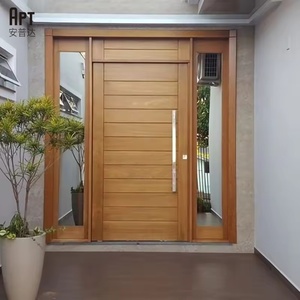
C. The Monolithic Pivot Architecture Trend: Standard hinged doors are giving way to monumental pivot entrance systems measuring 1,800 mm to 2,400 mm in width and up to 4,500 mm in height. Engineering these oversized portals requires heavy-duty oil-bath hydraulic ground pivots with weight ratings up to 600–1000 kg, self-closing velocity adjusters, and magnetic sealing strips that automatically drop to close air gaps once the door aligns with the frame.
D. Parametric Cast Aluminum Customization: While minimalist flush doors appeal to contemporary modernists, villas, private estates, and luxury hotels demand sculpted 3D cast aluminum relief panels. Using vacuum-assisted precision casting and CNC carving, manufacturers produce massive monolithic doors with organic textures, classic patinas, or modern geometric bas-reliefs that are rustproof and structurally impervious to weathering.
4. Manufacturing Capabilities: The Guangdong Dejiyoupin (DERCHI) Industrial Advantage
Operating an expansive manufacturing infrastructure spanning over 180,000 square meters in Shishan Town, Nanhai District, Foshan City—the recognized epicentre of global aluminum profile fabrication—Guangdong Dejiyoupin Doors and Windows Co., Ltd. (DERCHI) exemplifies the industrial capabilities of tier-one Chinese manufacturing. Supported by more than 600 specialized technicians and fenestration engineers, the facility integrates end-to-end processing from raw billet cutting to multi-axis CNC milling, automatic argon-shielded glass sealing, and climate-controlled curing.

One-Stop Door Ecosystem
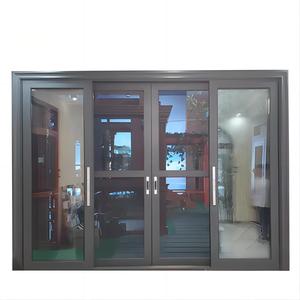
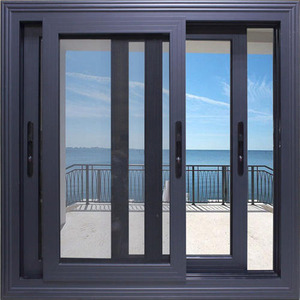
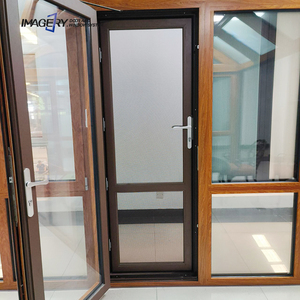
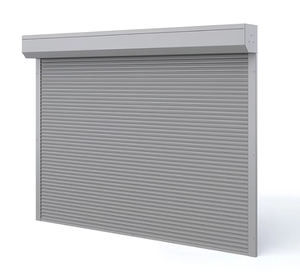
Consolidate custom cast aluminum main doors, thermal break pivot entries, minimalist stained glass sliding doors, and smart rolling shutters into single-origin container shipments.

Certified Rigorous Testing
In-house laboratories conduct continuous testing for air, water, cyclic structural fatigue, and forced entry, guaranteeing zero-defect compliance with CE, ISO 9001, AS 2047, and UL fire standards.

Engineering Shop Drawings
Our dedicated drafting team transforms architectural door schedules into detailed shop drawings and BIM-compatible models, eliminating site framing discrepancies.

Direct OEM / B2B Support
English-fluent fenestration engineers provide direct technical communication from initial takeoff and hardware schedule matching through to maritime export crating.
Verified Global Compliance & Structural Assurance
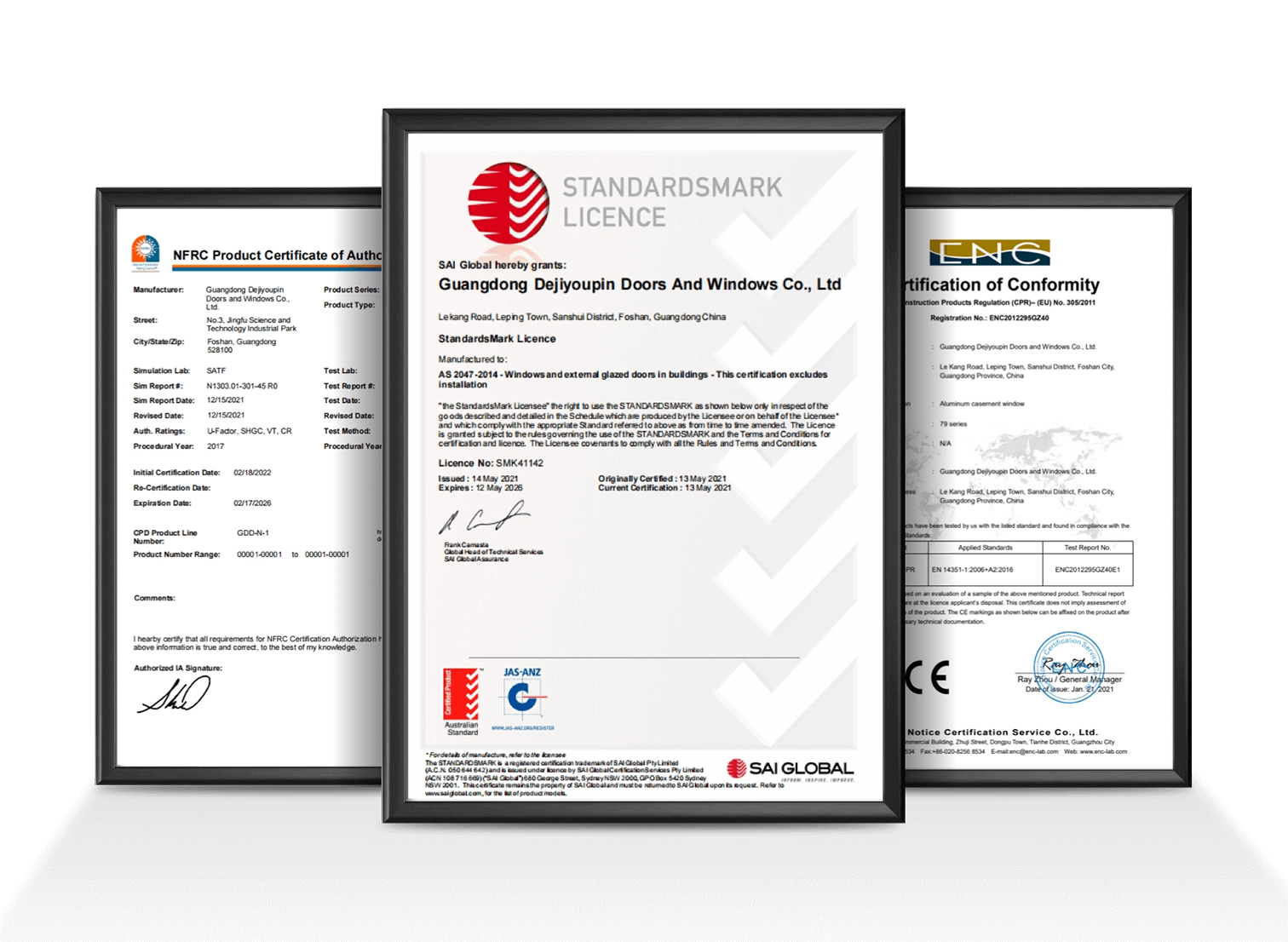
Our fancy doors and architectural window assemblies are engineered to withstand the demanding conditions of cyclone corridors, freezing northern envelopes, and corrosive marine coastal air. With more than 100 patents and international test certificates, our systems meet the strict building control standards of North America, Australasia, and Europe.

5. Complete International Procurement Protocol for B2B Importers
Navigating cross-border fenestration procurement requires systematic risk mitigation at every phase of the project lifecycle. Direct sourcing from experienced manufacturers removes unnecessary intermediaries, yielding 25% to 40% cost advantages alongside dedicated engineering oversight. Below is the standardized procurement workflow engineered for global builders and trade dealers:
Phase 1: Project Scope, Elevation Take-Off, and Climatic Calibration
Procurement begins with the exchange of architectural elevations, door schedules, rough opening dimensions, and local building code performance targets. Our technical team evaluates design wind pressures, solar heat gain coefficient (SHGC) limits, sound transmission class (STC) requirements, and hinge duty cycles. Whether for hurricane-prone coastal regions requiring SentryGlas® laminates or extreme continental cold zones requiring warm-edge Swissspacer spacers, specifications are confirmed early.
Phase 2: Comprehensive CAD / BIM Shop Drawing Approval
To eliminate site framing misalignments, DERCHI drafts comprehensive CAD shop submittals for every customized unit. These drawings detail cross-sectional extrusion profiles, thermal break breaks, reinforcement steel inserts, floor threshold drainage details, perimeter anchoring methods, and rough opening tolerances. Manufacturing begins only after formal sign-off from the project architect or structural contractor.
Phase 3: Material Finishing, Hardware Machining, and Production QC
Upon submittal approval, computer-controlled double-mitre saws cut extrusions to ±0.2 mm tolerances. Multi-axis CNC milling centers route handle mortises, pivot pin sockets, and concealed magnetic wireways. Corner joints undergo high-pressure hydraulic crimping with dual-component structural adhesives to ensure lifelong torsional rigidity. Quality assurance personnel document paint film thickness (DFT), gloss levels, and corner tensile strengths.
Phase 4: Pre-Assembly, Fit Inspection, and Maritime Export Packaging
Every fancy door is fully assembled on industrial test racks to verify perimeter seal compression, latch engagement, keyless biometric function, and swing clearance. Following dimensional sign-off, assemblies are disassembled into modular sets (or shipped fully pre-hung where requested), sealed in peelable protective film, cushioned with corner edge guards, and crated in fully enclosed, IPPC-certified fumigated plywood cases designed for overhead crane and forklift loading.
Frequently Asked Questions: Global Sourcing & Procurement
Practical engineering, manufacturing, and logistics insights for overseas developers, architects, and volume importers.
How do you prevent thermal bridging and condensation on luxury aluminum entrance doors?
Can custom aluminum fancy doors be configured to meet strict hurricane and impact codes?
What custom finishes are available for cast aluminum and modern architectural pivot doors?
How do you support project-specific architectural hardware and access control integrations?
What are your standard manufacturing lead times and maritime export packaging methods?
Engineer Your Next Architectural Entry Masterpiece
Partner directly with China's leading manufacturer of high-end aluminum fancy doors. Request technical specifications, physical material samples, and direct B2B project quotations from our senior engineering team.