High-Performance Wholesale Aluminium Residential Windows
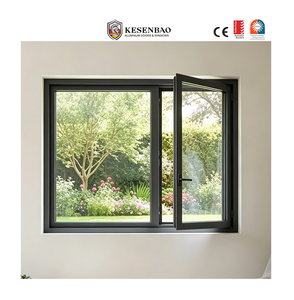
Tested against rigorous international standards including AS2047, CE EN 14351, and NFRC criteria for structural deflection, thermal insulation, acoustic reduction, and cyclonic water penetration resistance.
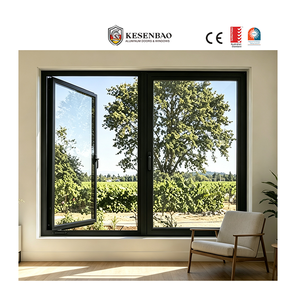
- Profile: 6063-T5 / 2.0mm
- U-Factor: ≤ 1.2 W/m²·K
- Hardware: Multi-Point Locking
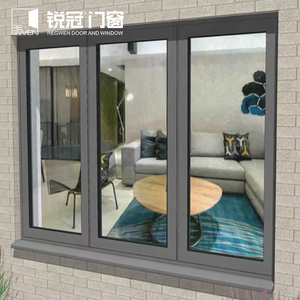
- Frame Depth: 65mm System
- Glass Spec: 5mm+12Ar+5mm Low-E
- Acoustics: Rw 38 dB
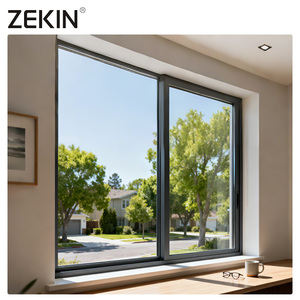
- Wind Load: 4500 Pa (AS2047)
- Interlock: Heavy-Duty Reinforced
- Seals: EPDM Co-extrusion
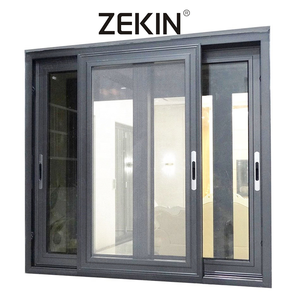
- Track: Stainless Steel Rail
- Polyamide: PA66GF25 Strip
- SHGC: 0.28 Low Solar Heat
- Water Res.: 600 Pa Rating
- Winder: Chain Winder / Cam
- Standard: AS1288 Glazing
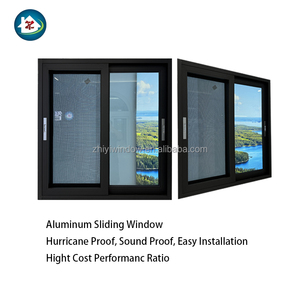
- Security: 304 Stainless Mesh
- Impact: Laminated Safety IGU
- Finish: AkzoNobel Powder Coat
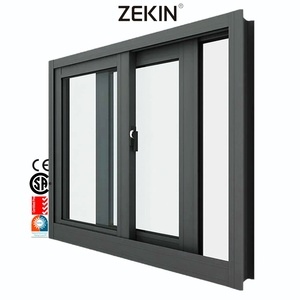
- Sound Rating: STC 42 dB / OITC 34
- Laminate: 0.76 / 1.52 Acoustic PVB
- Application: Master Bedrooms
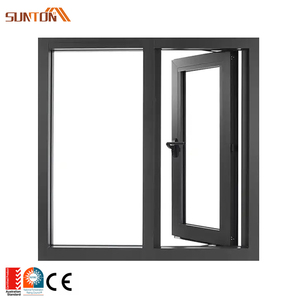
- Testing: AS 2047 N6 Ultimate
- Alloy: Primary 6063-T6
- Finish: AAMA 2604 / 2605
Wholesale Aluminium Fenestration Engineering: Metallurgy, Precision Extrusions, and Thermal Isolation
Direct wholesale procurement of architectural aluminium windows from China is no longer merely a cost-arbitrage maneuver; it has evolved into a strategic alignment with high-precision engineering and supply-chain integration. In global commercial and high-end residential construction, aluminium windows are evaluated strictly through thermodynamic compliance, structural deflection envelopes, cycle fatigue resilience, and metallurgical purity.
Our production facilities in Foshan, Guangdong utilize virgin 6063-T5 and 6063-T6 architectural aluminium alloy billets, strictly excluding contaminated scrap-melt matrices. Virgin billet extrusions ensure uncompromised tensile yield strengths (≥ 160 MPa for T5, ≥ 215 MPa for T6) and microstructural density, which prevents micro-cracking during deep milling and high-wind structural loading. This metallurgical foundation is critical when fabricating oversized panoramic casements and heavy sliding systems subjected to coastal wind forces exceeding 4500 Pa.
Polyamide Thermal Barriers vs. Conventional Pour-and-Debridge Systems
Thermal bridging in metallic window assemblies historically compromised residential energy budgets. Our systems employ multi-cavity, continuous mechanical crimping of PA66GF25 (polyamide 66 reinforced with 25% chopped glass fiber) thermal break struts. Unlike obsolete resin-poured polyurethanes that degrade, shrink, or separate over disparate temperature cycles, PA66GF25 exhibits an identical linear coefficient of thermal expansion (≈ 2.4 × 10⁻⁵ / K) to structural aluminium. This ensures zero shear failure under thermal shocking from -30°C Canadian winters to 45°C Australian coastal summers, maintaining whole-window U-factors down to 0.8 – 1.3 W/m²·K when paired with argon-charged triple Low-E insulating glass units (IGU).
Structural Integrity (AS2047 N6)
Rigid outer frame wall thicknesses ranging from 1.6mm to 3.0mm accommodate severe structural loads, meeting high-velocity cyclonic benchmarks with negligible deflection under dynamic pressure.
Multi-Tier EPDM Gasketing
Triple-barrier automotive-grade vulcanized EPDM weatherstripping creates an airtight chamber, stopping air leakage (< 0.1 m³/h·m) and moisture capillary migration completely.
Acoustic Decoupling Chamber
Asymmetrical pane configurations combined with PVB/SGP acoustic interlayers attenuate ambient urban noise frequencies, achieving Sound Transmission Class (STC) ratings up to 45 dB.
Comparative Performance Standards for North American, European & Australasian Compliance
Navigating fenestration procurement across varying jurisdictional mandates requires strict adherence to disparate engineering tests. When sourcing residential and light commercial aluminium windows, general contractors and architectural teams must cross-reference testing data sheets to guarantee compliance with regional building codes.
| Performance Vector | Australian Standard (AS 2047 / AS 1288) | North American Standard (AAMA/WDMA/CSA 101) | European Norm (EN 14351-1 / CE) |
|---|---|---|---|
| Structural Wind Load | Tested to N1 through N6 cyclonic (up to 4500 Pa Serviceability, 6000 Pa Ultimate) | Design Pressure (DP 30 to DP 100+), High Velocity Hurricane Zone (HVHZ) | Class 1 to Class 5 (up to 2000 Pa dynamic, Class E exceedance) |
| Water Penetration | Exceeds 600 Pa under cyclic pulsating water spray | Minimum 15% of DP rating, ASTM E547 / ASTM E331 test bench | Class 1A through Class 9A (600 Pa) up to Class Exxx custom testing |
| Air Infiltration Control | Level: ≤ 1.0 L/s·m² (Air-conditioned criteria) | Infiltration ≤ 0.3 cfm/ft² (0.1 cfm/ft² architectural tier) | Class 1 to Class 4 (≤ 3 m³/h·m² at 100 Pa reference) |
| Thermal Transmittance | NatHERS & WERS certified Total Window U-value (≤ 1.6 - 2.2 W/m²·K) | NFRC 100/200 certified U-factor ≤ 0.22 - 0.28 BTU/hr·ft²·°F | Passive House Institute certified Uw ≤ 0.80 W/m²·K |
| Finish Durability | AAMA 2604 / AAMA 2605 Powder Coating ≥ 10 Years Coastal Warranty | AAMA 2605 10-year South Florida weathering / PVDF fluoropolymer | Qualicoat Class 1, 2, or 3 seaside anodizing / powder systems |
Our integrated manufacturing facilities deploy rigorous internal quality inspection stations aligned with these international testing standards. Profiles undergo continuous salt-spray immersion (ASTM B117), QUV accelerated weathering tests, and automated robotic corner weld/crimp tensile failure validations prior to mass extrusion cut-offs.
Technological & Procurement Roadmaps: Next-Gen Fenestration Evolution
The international window wholesale procurement paradigm is encountering structural shifts driven by stringent net-zero operational carbon mandates, extreme climate events, and automated building management systems. B2B buyers must account for three pivotal design trajectories shaping project specifications over the coming decade:
1. Vacuum Insulated Glass (VIG) & Warm-Edge Hybrid Glazing Matrices
While triple-glazed IGUs have long served as the benchmark for cold-climate insulation, their physical weight (exceeding 35 kg/m²) introduces mechanical strain on operable sashes, hardware pivots, and installation labor. The industry is rapidly shifting toward Hybrid VIG configurations—integrating a 0.15mm high-vacuum gap with a low-E coated outer lite and warm-edge Swisspacer technology. This breakthrough yields central glass U-values down to 0.45 W/m²·K in an ultra-slim 24mm overall profile, reducing deadweight loads on our heavy-duty concealed hinges while drastically reducing perimeter envelope heat dissipation.
2. Low-Carbon Primary Aluminium & Circular Metallurgy
With corporate ESG auditing taking center stage in commercial tenders across the US, Canada, and the EU, embodied carbon in building facades is under intense scrutiny. Traditional aluminium smelting incurs up to 14-16 kg of CO² per kg of raw metal when coal-fired grids are utilized. We partner with clean-energy smelters utilizing hydroelectric power generation to deliver low-carbon aluminium extrusions with an embodied carbon footprint below 4.0 kg CO² per kg. Full Environmental Product Declarations (EPD) are provided to secure LEED v4.1 and BREEAM fenestration credits for international institutional developments.
3. Concealed Motorization & Building Automation Integration
Modern luxury residences and smart commercial offices demand completely concealed motorized actuators concealed within the window frame profile. Our engineering team integrates 24V brushless DC micro-drives within the thermal break cavity, interfacing directly with KNX, BACnet, and Crestron building automation protocols. These smart awning and casement apertures automate night-purge cooling, indoor air quality regulation (IAQ), and sensor-driven wind-and-rain closure protocols without interrupting sightlines.
Industrial Manufacturing Capabilities & OEM/ODM Engineering Services
Guangdong Dejiyoupin Doors and Windows Co., Ltd. (DERCHI) represents the premier manufacturing echelon of Chinese fenestration. Operating from our expansive 180,000-square-meter modern production campus in Foshan, Guangdong, we bridge the gap between heavy industrial scale and bespoke architectural craftsmanship.
With over 25 years of specialized door and window engineering, our 600+ dedicated professionals handle everything from complex custom extrusion die tooling to complete factory-assembled curtain walls and residential packages. Having delivered certified, zero-defect projects across North America, Australia, the Philippines, and the Middle East, our technical teams speak the language of professional specifiers.
Full CAD/BIM Shop Drawings
Every commercial order includes dedicated submittal packages: shop drawings, mullion load calculations, glass deflection analysis, and installation anchorage details prepared by certified structural engineers.
Export Fumigated Steel Crating
All finished assemblies are encased in moisture-proof vacuum film, protected with high-density EPE foam corner guards, and bolted inside heavy fumigated steel-frame crates to prevent transit flexure.
Western Time-Zone Engineering Desk
Dedicated project managers provide synchronous technical communication during North American and Australian business hours, expediting submittals, variation reviews, and site technical assistance.
Architectural Fenestration Procurement FAQ: Engineering, Logistics & Compliance
Direct responses to critical inquiries raised by foreign structural engineers, facade consultants, and general contractors during the pre-tender and technical submittal phases:
How do you guarantee profile structural compliance for high-wind coastal applications?
What surface treatment standards are deployed to counteract severe coastal salt-spray erosion?
How are insulating glass units (IGUs) certified for condensation and gas retention?
Can you manufacture to North American fractional inch schedules and custom rough openings?
What is the standard production cycle and logistics containerization workflow?
Access Full Architectural BIM Models & Technical Catalogs
Download our complete comprehensive 2026/2027 fenestration product catalogs, testing laboratory performance certificates, structural mullion load charts, and standard CAD profile DWG blocks.