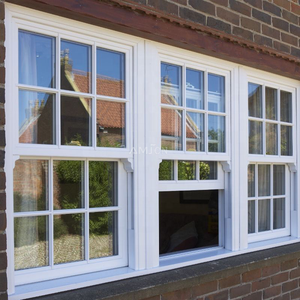
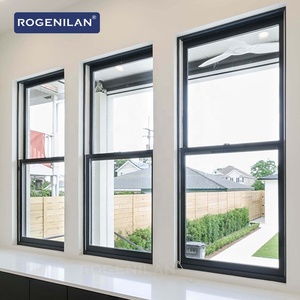
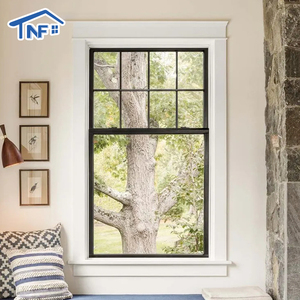
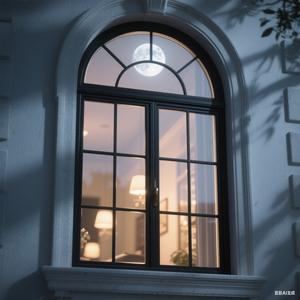
China Wholesale Aluminium Sash Windows Factory & Exporter
Engineered Fenestration Systems, Precision Thermal Barriers, and Comprehensive OEM/ODM Architectural Solutions for Global Commercial and Residential Developments.
180,000m²
Production Infrastructure
25+
Years Engineering Expertise
100+
Global Patents & Certifications
600+
Master Craftsmen & Engineers
Precision Fenestration Portfolio
Featured Commercial & Residential Aluminium Sash Windows
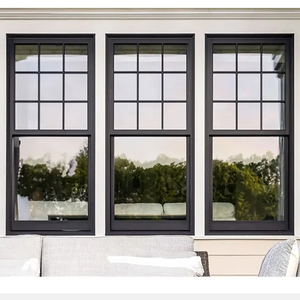
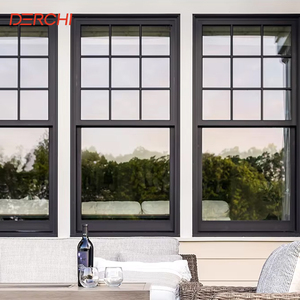
Manufactured directly in our Guangdong facility, each sash window configuration undergoes rigorous structural testing, balancing refined sightlines with high thermal and acoustic performance.
An engineering brief for developers, architects, and quantity surveyors evaluating China fenestration manufacturing capabilities against strict international envelope codes.
Standard architectural aluminium profiles exhibit high thermal conductivity (~205 W/m·K). In high-latitude climates (such as Canada and Northern USA) and regions with stringent energy guidelines (IECC / Title 24 / NCC), unchecked fenestration leads to interior condensation, perimeter thermal bridging, and severe HVAC cycling.
Our export sash window profiles implement precision-extruded PA66 GF25 (polyamide reinforced with 25% glass fiber) thermal barrier strips. This configuration drops whole-window U-factors down to U ≤ 1.4 W/(m²·K) (approx. 0.25 BTU/h·ft²·°F) when paired with argon-filled, warm-edge spacer warm-light IGU configurations. The expansion coefficient of PA66 GF25 perfectly mirrors that of 6063-T5/T6 architectural aluminum alloy, preventing structural separation across extreme diurnal temperature fluctuations.
Traditional sash systems frequently succumb to counter-weight cord degradation, spring fatigue, or operational binding caused by cross-corner frame distortion. In commercial deployments, maintenance cycle intervals are a primary determinant of total lifecycle cost.
DERCHI sash window configurations integrate high-durability stainless-steel constant-force spiral balances and heavy-duty block-and-tackle balances calibrated precisely to calculated dead loads of double and triple IGUs (sash weights up to 65 kg per operable leaf). Coupled with precision-machined cam pivot bars and extruded tilt latches, our sashes maintain an operational actuation effort of under 18 Newtons, ensuring ADA compliance and reliable tilt-in operation for multi-story interior maintenance.
Strategic Sourcing Analysis
Future Procurement & Manufacturing Trends in Aluminium Fenestration
Key technological trajectories shaping global imports, regulatory requirements, and project specifications over the next decade.
Embodied Carbon Transparency & Recycled Billets
Global procurement teams in North America, Europe, and Oceania increasingly demand Environmental Product Declarations (EPDs). The move toward low-carbon billets smelted with renewable hydro/solar energy is shifting how China's Tier-1 exporters source secondary aluminum, cutting embodied carbon emissions while preserving 6063-T6 tensile performance.
Cyclonic & Hurricane Resistance Integration
Extreme climate events dictate more stringent impact resistance criteria (such as Florida TAS 201/202/203 and Australian AS 2047 N6 cyclonic testing). Modern sash window frames feature internal structural reinforcing chambers, marine-grade PVDF coatings, and multi-laminate SentryGlas (SGP) makeups to withstand debris impact and cyclic pressures.
BIM Integration & Parametric Prefabrication
Contractors now bypass standard catalog sizes, providing detailed door schedules and direct CAD/Revit model handoffs. Export leaders are shifting toward parametric automated fabrication links, ensuring factory-built sash systems match rough openings to within ±1mm tolerances, reducing site retrofitting labor costs.
Guangdong Dejiyoupin Doors & Windows Co., Ltd.Foshan High-Tech Production Base • 180,000 m²
Enterprise Strength & Proven Reliability
Why Leading Overseas Contractors Choose DERCHI
As a Top 10 Door & Window enterprise in Foshan, China, DERCHI brings over 25 years of specialized manufacturing experience, maintaining full vertical integration across profile extrusion, precision machining, surface finishing, and double/triple glazed IGU assembly.
Comprehensive Global Code Compliance: Systems certified to AS 2047 (N6 Structural Rating), CE Mark, ISO 9001, and UL Fire-rated standards.
Engineered In-House CAD Shop Drawings: Free bilingual drafting services validating structural wind loads, sill pan drainage, and sub-frame anchoring.
Heavy Export Plywood Crating: Heavy-duty non-fumigation plywood crates with internal EPE foam corner guards designed for secure container transit.
Practical engineering, quality assurance, logistics, and code compliance queries answered by our senior technical export staff.
How do you verify structural air, water, and wind load compliance (AS2047, NFRC, ASTM)?
Our products undergo full-scale third-party testing in accredited national laboratories. For example, our systems comply with Australian Standard AS 2047, achieving the ultimate N6 cyclone-rated wind pressure verification (deflection, air infiltration at positive/negative pressure, and water penetration resistance up to 450+ Pa). Complete test certificates and performance matrices are provided with preliminary CAD submittals.
What aluminium alloy grades, wall thicknesses, and surface finishes do you utilize?
We exclusively process primary high-grade 6063-T5 and 6063-T6 architectural aluminium extrusions with wall thicknesses ranging from 1.4mm to 2.0mm for commercial structural integrity. Surface finish options include AkzoNobel/PPG architectural powder coatings (2604/2605 compliant), 15–25 micron fluorocarbon (PVDF) triple-spray systems for severe coastal corrosion environments, and high-micron anodized finishes.
How do you prevent glass damage and structural distortion during ocean transit?
Risk mitigation begins on the assembly line: all glass units utilize edge-protection clips and glass cork pads to absorb vibration shocks. Windows are fully assembled, factory-glazed, sealed, wrapped in multi-layer moisture-proof stretch film, protected with high-density EPE shock foam, and packed inside fully enclosed steel-strapped solid plywood crates engineered for multi-tiered container stacking.
What is the typical manufacturing lead time, and what is your Minimum Order Quantity (MOQ)?
Standard production schedules range between 25 to 35 business days following final CAD shop drawing sign-off and color chip verification. Because we support high-end residential, multi-family, and institutional developers, our typical project minimum begins at 30 square meters, but we frequently accommodate sample mock-up orders for testing and site approval on large commercial bids.
Can you manufacture bespoke imperial sash sizes according to custom architectural door schedules?
Yes. Over 70% of our production volume is engineered to custom dimensions. Our engineering department accepts plans in DWG/DXF, PDF, or Revit formats and prepares detailed shop drawings indicating exact frame deductions, nailing flange profiles, drywall return channels, and anchorage schedules for your general contractor's review.
Initiate Your Commercial Sash Window Specification
Connect with our technical engineering department to review project schedules, request comprehensive test reports, or receive a fast, detailed quotation tailored to your architectural window schedules.