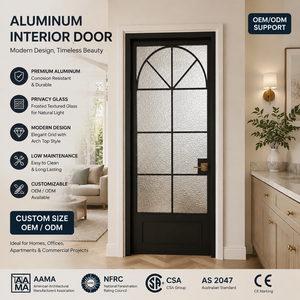
Product Engineering
High-Performance Washroom & Interior Fenestration Systems
Engineered to mitigate relative humidity (RH 95%+), acoustic leakage, and cyclic stress. Every assembly complies with AS 2047, CE, and ISO 9001 performance criteria.
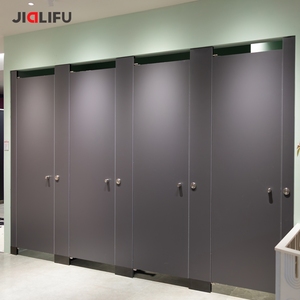
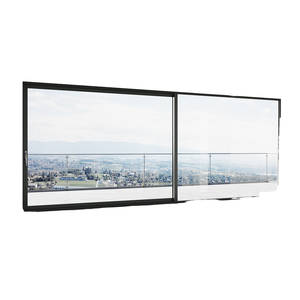
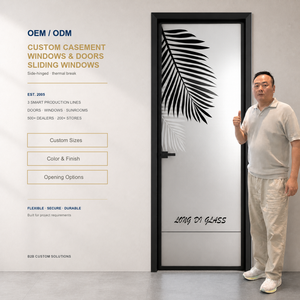
180,000m²
Integrated Production Facility
25+
Years Engineering Heritage
100+
Certificates & Utility Patents
600+
Master Craftsmen & Engineers
Manufacturing Rigor
Direct-from-Factory Engineering & Export Infrastructure
DERCHI (Guangdong Dejiyoupin Doors and Windows Co., Ltd.) eliminates tier-two intermediaries by operating specialized extrusion, CNC machining, finishing, and unitized assembly under one verified management envelope.
Integrated 180,000 m² Footprint
Full manufacturing independence spanning primary alloy melting, precision profile extrusion, automated electrostatic fluorocarbon coating, CNC mortising, and double-barrier packaging.
AS 2047, CE & ISO 9001 Compliance
Our fenestration and washroom partition assemblies pass stringent air infiltration, cyclic pressure loading, water penetration resistance, and structural deflection tests verified by accredited bodies.
Bespoke CAD/BIM Shop Drawings
Zero fabrication ambiguity. In-house facade and interior fenestration engineers translate architectural schedules, rough openings, and floor elevations into millimeter-accurate shop drawings before metal cutting.
Global Export Logistics Network
Proven execution across North America, Australasia, Europe, and the Middle East. High-density OSB export crates, desiccated anti-fog packaging, and comprehensive CIF/DDP freight tracking minimize site handling risks.
Complete Wet-Area Architectural Systems
Consolidate your procurement bill of quantities. From ultra-slim pocket sliding washroom doors to commercial-grade shower cubicles and tilt-turn transom vents, order coordinated hardware finishes from one factory.
Structural Comparison: Aluminium vs. Alternative Washroom Core Materials
In humid interior environments, the specification of door core materials determines life-cycle costs, sanitization resilience, and facility downtime. Traditional timber composites (MDF, HDF, and solid wood) suffer from hydroscopic expansion, leading to frame binding, adhesive delamination, and microbial cultivation. PVC and WPC assemblies, while moisture inert, lack mechanical rigidity across large spans, exhibiting significant thermal deflection and hardware pull-out failure over high cyclic counts.
Architectural 6063-T5/T6 Grade Aluminium provides a chemically stable matrix. When treated with anodic oxidation (layer thickness ≥ 15μm) or electrostatic polyester powder coatings (film thickness ≥ 60μm), the substrate creates an impermeable barrier against pressurized steam, chlorine-based cleaning detergents, and airborne salts.
| Engineering Metric | Aluminium (6063-T5) | Solid Wood Core | WPC / Engineered PVC | HPL Compact Laminate |
|---|---|---|---|---|
| Moisture Absorption Rate | 0.00% (Absolute Barrier) | 8.0% - 16.0% (Risk of Swell) | 0.5% - 2.0% | < 1.0% |
| Modulus of Elasticity | ~69 GPa (High Rigidity) | ~10 - 12 GPa | ~2 - 4 GPa (Creep Prone) | ~9 GPa |
| VOC & Formaldehyde Emission | Zero (Inorganic Metal) | Variable (Adhesive Dependent) | Low to Moderate | Low (Phenolic Resin) |
| Hardware Fastener Retention | Machine Screw Threading (>3.5kN) | Degrades with cyclic humidity | Requires internal steel ribs | Good pull-out resistance |
| Fire Reaction Classification | Class A1 Non-Combustible | Class C / D (Untreated) | Class B / C (Smoke Generation) | Class B-s1, d0 |
Future Procurement Trends: The Shift to Circularity, Slim Sightlines, and Acoustic Partitioning
Commercial developers, hospitality groups, and multi-family builders are recalibrating procurement parameters based on three primary technical advancements:
1. Ultra-Minimalist Sightlines with Concealed Gravity Hardware: Architectural interior trends have shifted away from bulky 80mm face frames toward 16mm-25mm visible sightline systems. Achieving this requires structural alloy wall thicknesses of 2.0mm to 3.0mm at stress nodes to prevent door sag, coupled with integrated floor pivot hinges or soft-close overhead carriages that withstand 150,000+ continuous operating cycles.
2. Acoustic Decoupling in Wet Zones (Sound Transmission Class - STC): Historically, washroom doors neglected acoustic performance due to ventilation requirements. Modern specifications require composite perimeter EPDM compression gaskets, magnetic drop-down acoustic bottom seals, and laminated privacy glass (e.g., 5mm+0.76PVB+5mm Fluted/Frosted configuration) delivering sound transmission ratings above STC 32 without moisture entrapment.
3. Prefabricated Unitized Deliveries: Labor shortages across North America, Europe, and Australia have transformed washroom door sourcing from loose components to pre-hung, sub-assembled cassettes. Factory-machined lock pockets, pre-installed split-jamb frames, and snap-in casing trims reduce on-site installation labor by up to 65% per opening.
Procurement Intelligence
Frequently Asked Questions by Global Buyers & Estimators
Key technical, structural, and logistics insights for specifiers sourcing washroom door systems from China.
What alloy grade and temper do you use for wet-area washroom frames?
We exclusively specify 6063-T5 and structural 6063-T6 virgin aluminium extrusions with controlled magnesium-silicon ratios. This prevents stress-corrosion cracking and ensures high tensile yield strength under continuous commercial traffic.
How do you guarantee finish durability against high humidity and cleaning chemicals?
Our profiles receive either Qualicoat-certified electrostatic polyester powder coating or architectural-grade anodizing (Class I, 18-20 microns). Both treatments exceed 1,000 hours in neutral salt spray (ASTM B117) and resist common acid/alkali surface disinfectants.
Can your systems accommodate project-specific door schedules and wall thicknesses?
Yes. We supply adjustable telescopic sub-frames (two-piece split jambs) that calibrate to varying finished wall depths (e.g., 90mm to 280mm, accommodating drywall, CMU, and heavy ceramic tile buildups) with integrated snap-on architraves.
What safety glazing configurations are supplied for hotel and public washroom doors?
Glazing options include SGCC and CE-marked fully tempered glass (4mm to 10mm) or laminated safety glass (e.g., 5mm+0.76EVA/PVB+5mm) with acid-etched, fluted (Moru), or privacy ceramic frit patterns. Impact safety complies with EN 12600 and ANSI Z97.1.
How are large volume orders crated to prevent edge damage and moisture ingress in transit?
Products are individually wrapped in 0.08mm PE surface protective film, fitted with corner impact absorbers, wrapped in corrugated wrap, and locked into ISPM-15 compliant, fumigation-free solid plywood crating with internal steel banding.
What is your typical production lead time for full container loads (FCL)?
Upon final CAD shop drawing sign-off and color sample approval, manufacturing runs typically take 25 to 35 calendar days for standard finishes (black, bronze, white, anthracite), and 35 to 40 days for specialized PVDF or custom metallic anodizing.
Accelerate Your Project Specification & Sourcing
Submit your architectural elevations, rough opening schedules, or material finishes. Our engineering department prepares comprehensive structural assessments and cost estimation within 24 hours.