AAMA & NFRC Spec
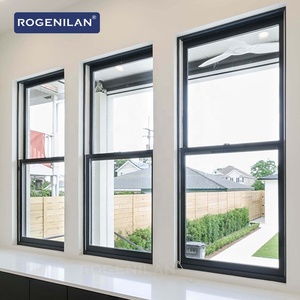
Engineered for high-humidity residential kitchens, outdoor servery bars, and passive-grade building envelopes. Built with European-standard polyamide thermal breaks, multi-point locksets, and marine-spec anodized finishes.
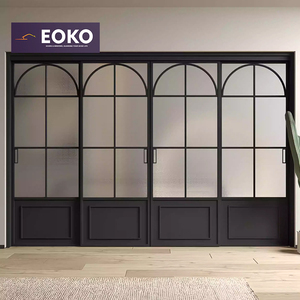
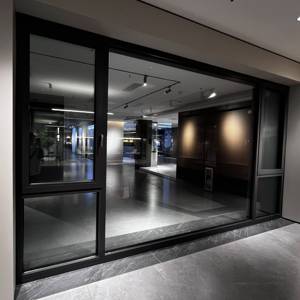
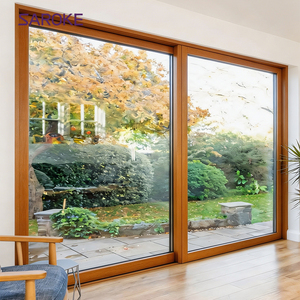
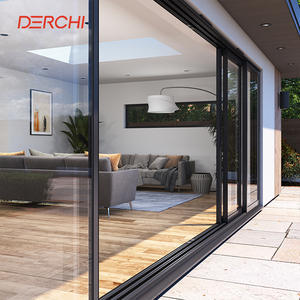
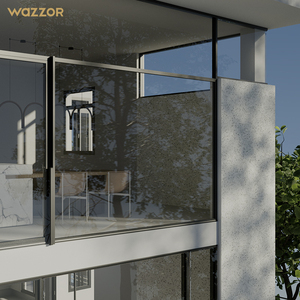
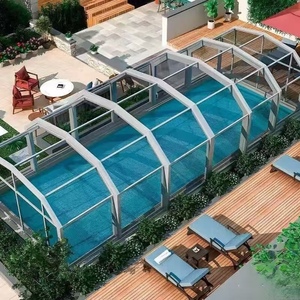
In modern architectural spatial design, the kitchen has transitioned from an isolated utility station into the social nucleus of residential estates, commercial hospitality facilities, and multi-family residential towers. Consequently, fenestration systems deployed within kitchen environments face an extraordinarily harsh set of operational demands. Unlike standard living area fenestration, aluminum kitchen windows must resist continuous aerosolized cooking fats, cyclic vapor condensation, dramatic localized temperature swings, and chemical cleaning agents—all while providing effortless egress, rapid natural ventilation, and maximum daylight exposure.
As premier Chinese exporters and ISO 9001-certified fenestration manufacturers, our production base bridges advanced metallurgy, precision multi-chamber thermal engineering, and international structural compliance (AS 2047, NFRC, CSA, and CE). This architectural whitepaper establishes baseline specification metrics, thermal break innovations, and supply chain efficiencies for international commercial contractors, real estate developers, and building product distributors sourcing custom architectural aluminum kitchen windows directly from China.
The microclimate surrounding kitchen fenestration is prone to severe surface dew-point crossing. Boiling liquids, dishwashing heat output, and steam exhaust drive relative interior humidity (RH) beyond 75%. In cold climates across North America and Northern Europe, uninsulated aluminum framing rapidly transmits external winter temperatures, triggering interior condensation pooling that damages timber countertops, promotes black mold (Stachybotrys chartarum), and degrades siliconized seals.
To eliminate thermal bridging, our export-grade kitchen window assemblies implement continuous PA66-GF25 (polyamide 6.6 reinforced with 25% glass fiber) thermal break bars inserted mechanically into high-strength 6063-T6 aluminum extrusions. This achieves structural composite shear strength while plummeting frame heat conductivities. Paired with triple-glazed warm-edge insulated glass units (IGUs) filled with 90% Argon gas and dual Low-E pyrolytic coatings, our Passive-House-certified tilt-and-turn kitchen windows reach overall assembly U-factors as low as 0.14 BTU/(h·ft²·°F) (0.80 W/m²K), exceeding the strictest IECC (International Energy Conservation Code) standards.
A primary friction point in residential kitchen design is operational clearance. Traditional inward-swinging casements collide with high-arc gooseneck sink faucets, countertop dish racks, and pendant downlights. Consequently, our engineering facility has pioneered high-load, balanced glide systems:
| Window Typology | Frame Profile & Alloy | Standard Glazing Config | Thermal / Acoustic Rating | Optimal Kitchen Application |
|---|---|---|---|---|
| Tilt & Turn (German Spec) | 75mm Multi-Chamber 6063-T6 with PA66 Break | 6mm Low-E + 16Ar + 6mm + 16Ar + 6mm Triple | U-value: 0.79 W/m²K | STC: 44 dB | Cold climate luxury villas, continuous draft-free micro-ventilation over counters. |
| Servery Gas-Strut Awning | 2.0mm Heavy-Duty Wall Section, Reinforced Corner Keys | 5mm + 12A + 5mm Dual Tempered Safety Glass | Water Tightness: 600 Pa | Wind Load: 3500 Pa | Indoor/Outdoor entertainment bars, commercial bistro servery counters. |
| Vertical Sliding Sash (American) | Thermally Broken Extrusions with Built-in Water Weep Holes | 5mm Low-E + 9Ar + 5mm Double Tempered | Air Leakage: < 0.1 cfm/ft² | AAMA 101 Tested | Over-sink installations where inward sash swing is obstructed by faucets. |
| Narrow-Frame Multi-Slide | Minimalist 20mm Visible Sightline, SS316 Rollers | 6mm Tempered + 12Ar + 6mm Low-E Insulated | Deflection: L/250 | Cycle Life: 100,000 cycles | Modern open-concept architectural residences demanding boundless garden views. |
How international building codes, sustainability mandates, and logistical shifts are restructuring wholesale purchasing behaviors among top-tier architectural contractors.
Global developers in North America and Western Europe increasingly stipulate low-carbon primary aluminum (processed using renewable hydro-electric power) and ≥40% recycled post-consumer scrap. Our manufacturing facility complies with Cradle-to-Cradle (C2C) tracking, assisting overseas developers in fulfilling LEED v4.1 and BREEAM certification prerequisites while shielding against upcoming carbon boundary adjustments.
Procurement volumes for electrochromic glass (switchable PDLC privacy smart glass) and automated linear motorized sash drives integrated into building management systems (BMS) are rising by 28% year-over-year. In high-end kitchens, smart windows adjust tint automatically to block solar heat gain coefficients (SHGC) during peak culinary hours without obstructing exterior visibility.
Leading contractors no longer accept generic PDF brochures. Precision procurement requires full BIM (Building Information Modeling) Revit and IFC object files with localized wind load calculations and shop-ready shop drawings. Our in-house engineering team provides complete 3D models and CAD submittals within 48 hours to streamline architectural project review.
Direct from our CNC robotic machining centers: the architectural innovations delivering unprecedented air tightness, slim sightlines, and ultra-durable chemical resistance.
Standard architectural powder coats quickly dull and discolor when exposed to high-heat animal lipids and aerosolized salt sprays. Our export kitchen profiles receive AkzoNobel or PPG 3-coat fluorocarbon PVDF electrostatic coatings baked at 230°C, offering complete chemical inertness, UV resistance, and hydrophobic ease-of-cleaning.
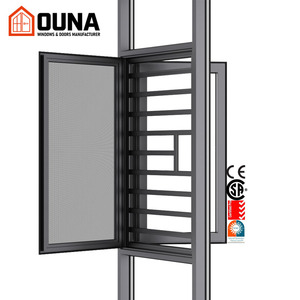
Kitchen building codes globally require sustained passive fresh air exchange without allowing pest ingress. Our hybrid casement designs incorporate high-tensile 304 marine stainless steel diamond wire mesh screens alongside multi-stage tilt gearboxes that permit 3mm continuous micro-draft ventilation while preserving forced-entry burglary resistance.
Heavy storm events frequently cause window sills over kitchen counters to back up. Our patented multi-stage weep system incorporates stepped differential-pressure chambers with hidden one-way flap valves, achieving up to 600 Pa water tightness without unappealing exterior drain holes that invite dust and insect blockage.
With an expansive 180,000 square meter industrial base, more than 25 years of engineering mastery, and over 600 skilled technicians, we eliminate intermediate trading markup while ensuring uncompromising delivery schedules.
Our massive modern manufacturing complex in Foshan, Guangdong houses automated Italian CNC profile machining lines, robotic sealing stations, and high-capacity insulated glass autoclave laminating lines to output over 500,000 square meters of fenestration annually.
Recognized as an industry-leading fenestration brand, Guangdong Dejiyoupin Doors and Windows Co., Ltd. has delivered verified architectural excellence across the United States, Canada, the UK, Australia, the Philippines, and the Middle East for over a quarter of a century.
Backed by over 100 invention patents and accredited test reports. We achieved Australia's highest AS 2047 N6 structural certification, ISO 9001 total quality compliance, CE European safety marks, and UL fire-rated verifications—guaranteeing smooth municipal building inspections.
Overseas developers work directly with dedicated, English-speaking fenestration engineers operating along EST/PST and GMT business hours. From custom imperial door schedules to 3D CAD fabrication approvals, we ensure transparent, delay-free communication.
Clear, technical, and regulatory answers addressing common procurement hurdles when sourcing aluminum windows and doors from China.