Featured Aluminum Lanai Doors & Architectural Openings
Manufactured to rigorous international architectural standards, our structural aluminum patio, balcony, and lanai systems offer high wind-load ratings, superior thermal separation, and ultra-smooth glide engineering.
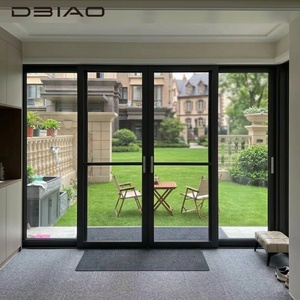
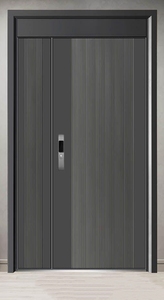
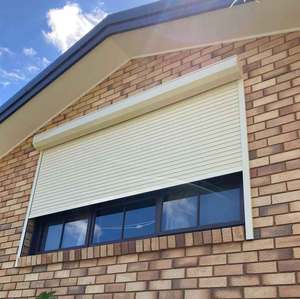

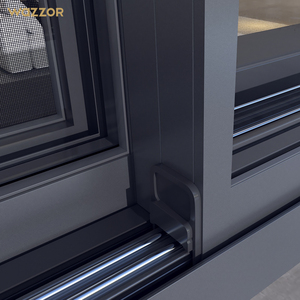
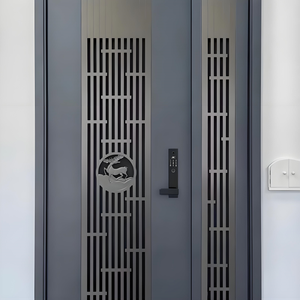
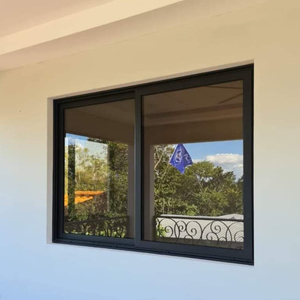
Engineering Overview: Architectural Lanai Door Systems from China
A Lanai door serves as an expansive structural gateway connecting high-end indoor living environments to shaded outdoor living spaces, pool decks, patios, and tropical verandas. Rooted originally in Hawaiian architectural vernacular, the modern Lanai door system has evolved across Florida, California, coastal Australia, and the Caribbean into an engineered, multi-track, multi-panel movable glass facade.
When sourcing from an established China wholesale aluminum lanai doors exporter, developers, commercial general contractors, and glazing fabricators expect far more than simple residential sliding glass. A true architectural-grade Lanai system requires primary structural 6063-T6 or 6061-T5 extruded aluminum framing profiles capable of carrying immense wind load pressures, dead weight from triple-laminated insulated glass units (IGUs), and thermal stress induced by intense solar exposure.
Guangdong Dejiyoupin Doors and Windows Co., Ltd. (DERCHI) leads the industry by combining high-precision automated German extrusion machining with proprietary multi-chamber thermal breaks. Our wholesale systems solve the traditional paradox of expansive opening architecture: offering ultra-narrow structural sightlines (interlocks as slim as 20mm to 25mm) while guaranteeing dynamic water tightness exceeding 600 Pascals and ultimate wind load resistance reaching up to 4500 Pascals (equivalent to AS 2047 cyclonic N6 design pressures).
Polyamide PA66 Thermal Separation
Multi-cavity structural nylon strips reinforced with 25% fiberglass eliminate thermal bridging, preventing interior condensation and optimizing U-values for ASHRAE 90.1 climate zones.
Large Missile Impact Defense
Engineered structural frames hold heavy laminated SentryGlas® (SG) or 0.090" PVB interlayers capable of withstanding severe hurricane impact pressures and missile testing protocols.
Precision CNC-Machined Rollers
Heavy-duty, dual-tandem stainless steel quad rollers engineered to support individual panel weights up to 550kg (1,212 lbs), verified across 100,000 cycle durability testing.
Future Sourcing Trends in Wholesale Lanai Fenestration (2025–2030)
Procurement directors and architectural specifiers managing hospitality developments, beachfront villas, and luxury multi-family communities are adjusting their supplier evaluations. Over the next five to ten years, four macro design and structural engineering vectors will govern the export market for aluminum lanai and patio door systems:
1. Concealed Thresholds and Sub-Floor Linear Drainage Dynamics
The boundary between indoor porcelain slabs and exterior lanai decking is disappearing. Traditional raised sill tracks of 50mm–70mm are unacceptable in modern high-end architectural programs. The future belongs to completely flush, zero-barrier threshold transitions that comply with international accessibility standards without compromising water ingress resistance. DERCHI accomplishes this through advanced subterranean multi-stage cascading drainage channels integrated with external linear gutters, preventing water backflow even during wind-driven monsoonal storms.
2. Ultra-Narrow Interlocks Combined with High Deflection Resistance
While the architectural appetite demands frameless, full-vision views with vertical mullions dropping below 25mm, climate realities demand immense resistance against lateral wind deflection (L/175 or L/240 deflection criteria). The resolution lies in internal structural stiffeners—inserting high-tensile carbon steel or aircraft-grade 6061-T6 reinforcement fins inside the slim interlock cavities. This allows single-sash heights up to 4.5 meters (nearly 15 feet) without bowing or whistling under gale conditions.
3. Low-E Coatings, Solar Heat Gain Coefficient (SHGC) Optimization, and Acoustic Decoupling
In resort regions like Florida, Hawaii, Queensland, and the Mediterranean, radiant solar control is the primary driver of building operating costs. Lanai door systems are transitioning from standard double glazing to triple-insulated, double-silver or triple-silver Low-E glass combinations filled with 90% Argon gas. Concurrently, sound transmission class (STC) ratings are pushed above 40 dB using asymmetric glass thicknesses (e.g., 6mm tempered outer + 16Ar + 8.76mm acoustic laminated inner), effectively isolating residential interiors from exterior wind and ambient coastal noise.
4. Brushless DC Motor Automation & Smart Building Integration
As panel weights exceed 300kg, manual sliding becomes cumbersome for end occupants. Wholesale exporters in China are standardizing integrated, belt-driven or magnetic-levitation concealed motor tracks. These can be interfaced with whole-home automation protocols (Crestron, Control4, KNX), responding automatically to building fire alarms, internal CO2 sensors, or external wind and rain anemometers.
Engineering Benchmark: DERCHI vs. Generic Commercial Exporters
Understanding the metallurgical, mechanical, and sealing differences between standard export fabricators and tier-one certified manufacturers is vital for procurement risk management. The following engineering comparison illustrates why Guangdong Dejiyoupin Co., Ltd. (DERCHI) is specified by North American and international builders:
| Performance Parameter | DERCHI Heavy-Duty Lanai System | Standard Wholesale Exporter | Architectural Impact |
|---|---|---|---|
| Alloy Metallurgy & Wall Thickness | Primary Virgin 6063-T6 Aluminum; 2.2mm – 3.0mm structural wall thickness | Recycled billet mixture; 1.4mm – 1.6mm thickness | Prevents structural fatigue, corner rupture, and panel sagging over 25+ years |
| Surface Finish & Corrosion Resistance | PPG / AkzoNobel Fluorocarbon PVDF (AAMA 2605 compliant, 30-yr finish warranty) | Standard domestic powder coat; non-UV stabilized | Resists intense ocean salt-spray, UV chalking, fading, and chemical atmospheric pitting |
| Water Tightness Under Dynamic Wind | Cascading multi-cavity drainage rated to 600 Pa – 900 Pa | Surface weep holes rated to 150 Pa – 250 Pa | Eliminates catastrophic flooring damage from driven rain across high-exposure balconies |
| Thermal Transmittance (U-Factor) | Polyamide PA66 GF25 thermal breaks; U-Factor down to 0.28 BTU/(h·ft²·°F) [1.6 W/m²K] | Non-thermal break or cheap PVC strips; U-Factor > 0.85 | Dramatically reduces HVAC loads; satisfies IECC, Title 24, and Canadian energy codes |
| Gasketing & Weather-Sealing | Continuous EPDM co-extruded automotive gaskets with vulcanized corner vulcanization | Generic PVC brush seals or low-grade adhesive strips | Maintains hermetic air-tight seal, preventing whistling and draft degradation over time |
| Certification Documentation | CE, ISO 9001, AS 2047 N6, UL Fire-Rated, Project-Specific CAD & Structural Calcs | Self-declared factory test sheet; lacks accredited third-party validation | Guarantees rapid municipal permit clearance, building inspection sign-off, and insurance approvals |
DERCHI Enterprise Advantages: Foshan's 180,000 m² Manufacturing Titan
Guangdong Dejiyoupin Doors and Windows Co., Ltd. (DERCHI) stands as a recognized Top 10 fenestration brand in China, anchoring over 25 years of engineering mastery from our industrial base in Shishan Town, Nanhai District, Foshan. For overseas procurement managers, working with DERCHI eliminates intermediary brokerage risks, offering factory-direct access to one of Asia's most sophisticated door and window manufacturing complexes.
180,000 m² Production Ecosystem
Equipped with 5-axis CNC machining centers, automated computerized sizing saws, and precision corner crimping lines, our 600+ personnel ensure millimeter accuracy on custom rough openings.
Complimentary CAD Shop Drawings
Our dedicated bilingual engineering team generates complete 2D and 3D architectural shop drawings, profile cross-sections, structural load calculations, and anchor plans prior to fabrication.
Heavy-Duty Export Crating
Doors are sealed with protective anti-scratch films, buffered with high-density EPE foam, and encased in fully enclosed IPPC-certified fumigated plywood crates with integrated desiccant packs.
Whether you require standard 8-foot lanai configurations or custom multi-panel pocketing systems where massive glass panels tuck invisibly into perimeter walls, DERCHI guarantees absolute alignment with project schedules. Our team has delivered landmark residential and commercial projects across California, Florida, Vancouver, Manila, Sydney, and Dubai.
Comprehensive Procurement FAQs for Wholesale Buyers
We employ a multi-layered export packing regime: profiles and sash frames are wrapped in non-residue surface-protection film, corners receive molded high-density corner guards, and panels are crated in custom reinforced fumigated solid plywood cases designed with internal lifting eyes and fork pockets for secure jobsite handling.
Yes. We engineer impact-resistant aluminum patio and lanai doors tested against ASTM E1886 and ASTM E1996 large missile impact criteria (Missile Level D, 50 ft/sec 2x4 lumber impact) and cyclic pressure testing equivalent to Florida Building Code High-Velocity Hurricane Zone (HVHZ) requirements.
Standard extrusion colors (Black, Anodized Silver, Architectural Charcoal) require approximately 25 to 30 working days from the final sign-off of CAD shop drawings. Fully custom finishes, including custom RAL color-matched fluorocarbon coatings or specialized woodgrain sublimation, require 35 to 40 days.
Yes. Our engineering department specializes in postless 90-degree open corner Lanai sliding doors, where two panels meet at a motorized or manually latched mitred glass-to-glass interface, as well as multi-panel wall-pocketing configurations where sashes slide completely out of sight into wall cavities.
We partner with premier hardware manufacturers including German Siegenia, Hoppe, GU, and Sobinco, alongside our proprietary DERCHI heavy-duty stainless-steel multi-point hook locks. All locks undergo salt-spray chamber testing exceeding 1,000 hours to ensure flawless anti-corrosion performance.
Before production commences, our project team works directly with your construction management staff to review actual rough opening dimensions. We provide engineered sub-frame fixing methods, expansion gap tolerances (typically 10-15mm perimeter clearance), and perimeter flashing recommendations.
Ready to Engineer Your Wholesale Lanai Door Project?
Connect directly with our Foshan fenestration engineering headquarters. Receive comprehensive architectural shop drawings, profile sample kits, and an itemized factory-direct quote within 24 hours.
Inquire Now