Impact Rated
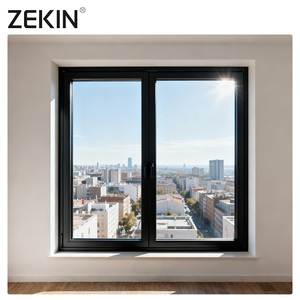
ZEKIN NFRC AS2047 Hurricane Proof Wind Resistant Outward Casement Window
AS2047 Certified
Double Glazed
Hurricane Defier
Direct manufacturer supply for commercial developers, luxury custom homebuilders, and global distributors. Engineered to meet demanding seismic, hurricane, and thermal insulation criteria.
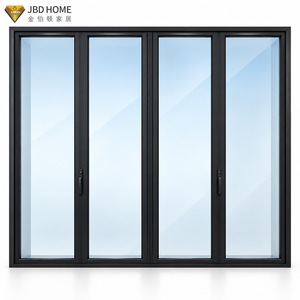
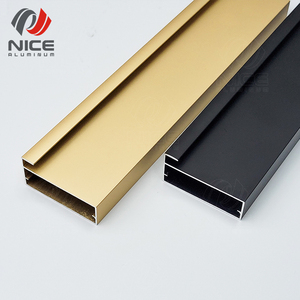
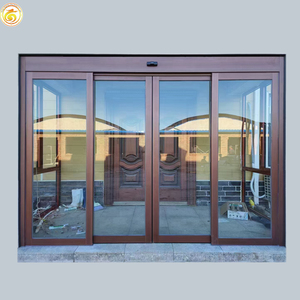
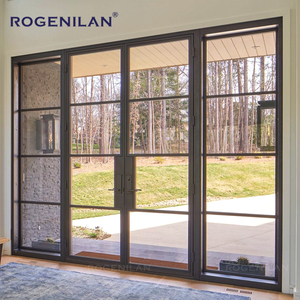
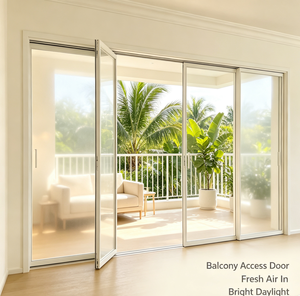
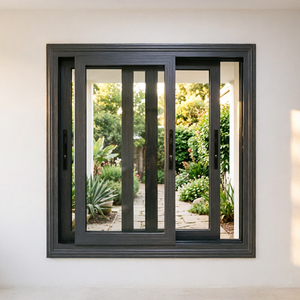
As the international manufacturing facility of Guangdong Dejiyoupin Doors and Windows Co., Ltd. (DERCHI), our automated manufacturing base provides true factory-direct engineering for luxury residences, commercial storefronts, and multi-family architectural projects across North America, Europe, Australia, and the Middle East.
Every aluminum entry door, pivot door, and high-performance window system is engineered from virgin 6063-T5 or 6063-T6 architectural grade aluminum alloys. Unlike fabricators who rely on outsourced profiling and subcontracted finishing, our comprehensive in-house ecosystem encompasses everything from billet extrusion, thermal barrier polyamide strip (PA66GF25) insertion, and multi-axis CNC mortising, to fluorocarbon (PVDF) electrostatic spraying and European multi-point locking assembly.
B2B Specification Guarantee: Free custom structural CAD shop drawings are prepared within 48 hours for every architectural schedule, ensuring zero-error alignment with rough openings before mass fabrication begins.
Our products have satisfied rigorous wind-loading and cyclic water penetration testing across North American and Australian standards (including AS 2047 N6 rating and NFRC energy certification), offering foreign procurement partners absolute peace of mind during municipal building code inspections.

Verified testing certifications including AS 2047 cyclone resilience, NFRC thermal insulation metrics, ISO 9001 quality audits, and UL fire door standards for effortless North American code sign-off.
Our dedicated engineering office converts architect sketches, structural elevations, and imperial door schedules into verifiable submittal drawings with complete jamb, sill, and anchor detailing.
Fluent technical English project managers coordinate directly with general contractors and commercial developers across EST, CST, and PST business hours to prevent overseas miscommunication.
Engineered logistics crates made of solid fumigation-free engineered timber, interior high-density EPE shock absorption, moisture desiccant, and anti-scratch electrostatic protective films.
Key macroeconomic, environmental, and technological shifts directing commercial and high-end residential fenestration procurement over the next decade.
Energy codes across North America (ASHRAE 90.1, IECC 2024) and Europe are mandating aggressive reductions in building envelope heat flux. Procurement is shifting dramatically from standard hollow aluminum frames to multi-cavity thermal break extrusions integrated with 34mm+ reinforced polyamide (PA66GF25) strips and aerogel inserts. Aluminum entrance systems must now routinely hit U-factors below 0.26 BTU/(h·ft²·°F) (Uw ≤ 1.4 W/m²K) via argon-filled triple insulating glass units.
Modern luxury architecture is replacing conventional residential entry doors with monolithic, oversized pivot structures reaching heights of 3.5 to 5.0 meters and widths up to 2.2 meters. Sourcing these units requires extreme structural deflection calculations (retaining L/175 criteria under severe positive and negative wind pressure). Importers require heavy-duty floor spring pivots capable of carrying leaf loads exceeding 500kg while maintaining silent, frictionless hydraulic closing cycles.
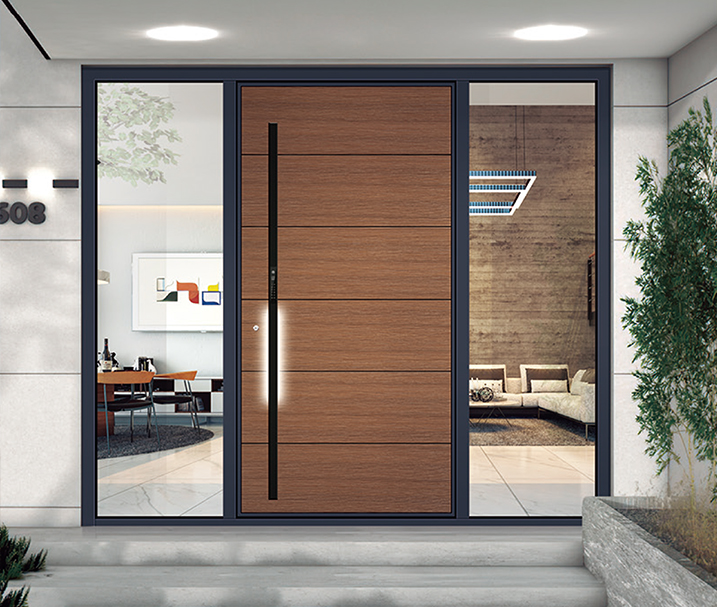
Specifiers no longer accept surface-mounted auxiliary smart locks on luxury main entrances. The procurement standard has pivoted toward factory-embedded mechatronic systems. These feature motorized multi-point German mortise locks, hidden biometric fingerprint scanners flush with vertical architectural pull bars, face-recognition infrared lenses, and encrypted dry-contact relays wired for automated smart-home automation backbones (Crestron, Control4, KNX).
With massive development along oceanfront zones (e.g., Florida, coastal California, Hawaii, Caribbean, and the Gulf Coast), standard anodizing and baseline powder paints fail within 3 to 5 years. Sourcing demands have pivoted toward AAMA 2605 and Qualicoat Class 2/3 fluoropolymer PVDF systems offering 30-year resistance to salt spray, Florida UV weathering, and chalking. Marine-grade 316 stainless steel interior core supports are replacing galvanized structural inserts.
Corporate ESG procurement standards and LEED v4.1 certification requirements require architectural aluminum fabricators to document the provenance of raw materials. Tier-1 exporters in China are adopting hydro-powered smelting billets, scrap recycling circular loops (up to 40% post-consumer scrap without metallurgical degradation), and certified Environmental Product Declarations (EPDs) with documented low cradle-to-gate carbon footprints.
Developers and general contractors increasingly avoid splitting procurement across multiple single-line vendors (e.g., buying pivot doors from one supplier, patio bi-folds from another, and interior sliding systems from a third). Consolidated manufacturing under a unified quality assurance regime—such as the DERCHI ecosystem—drastically optimizes overseas container packing density, harmonizes finish tones across systems, and eliminates site integration conflicts.
Objective physical, metallurgical, and lifecycle cost comparisons evaluating high-performance entrance systems in commercial and residential developments.
| Evaluation Parameter | Architectural Thermal Aluminum (DERCHI) | Solid Hardwood (Oak / Teak) | Structural Carbon Steel | Fiberglass Composite |
|---|---|---|---|---|
| Structural Rigidity / Modulus | High (69 GPa) Resists oversized deflection; stable up to 5m height. | Medium; subject to grain warpage, moisture twist, and expansion. | Very High (205 GPa); extreme weight requires reinforced framing. | Moderate; flexes under high cyclic wind loading without steel core. |
| Corrosion & Weather Defiance | Exceptional with PVDF / Fluorocarbon / 25μm Anodized layers. | Poor in wet or coastal zones; prone to rot, termite attack, and varnish degradation. | High rust vulnerability; requires frequent galvanizing maintenance. | Good chemical resilience; paint can fade and chalk under harsh UV exposure. |
| Thermal Efficiency (U-Factor) | 0.22 - 0.28 BTU/(h·ft²·°F) using multi-cavity PA66GF25 breaks. | 0.30 - 0.38 BTU/(h·ft²·°F); prone to air leakages at warped perimeter seals. | Poor (>0.65 BTU/(h·ft²·°F)) unless complex thermal disconnects are engineered. | 0.24 - 0.32 BTU/(h·ft²·°F) with polyurethane foam-filled cores. |
| Dimensional Stability | Thermal expansion coefficient: 23×10⁻⁶/K. Zero seasonal swelling. | Unstable; expands across grain by 2-5% with seasonal ambient humidity. | Thermal expansion coefficient: 12×10⁻⁶/K. High heat retention. | Thermal expansion coefficient: 30×10⁻⁶/K. Risk of delamination over time. |
| Security & Intrusion Rating | Class RC3 / RC4 with multi-point hook locks & armored strike boxes. | Class RC1 / RC2; vulnerable to hydraulic prying and perimeter jamb splitting. | Class RC4 / RC5; highly resistant to physical and ballistic penetration. | Class RC2; outer skins can be fractured with heavy impact tools. |
| 30-Year Lifecycle Cost | Lowest Maintenance-free; wipe-down cleaning with neutral detergents. | High; requires biennial sanding, staining, resealing, and weatherstrip rework. | Medium-High; recurring rust remediation and structural hinge greasing. | Moderate; recoating required when gel-coat degrades under intense UV. |
In standard architectural door manufacturing, aluminum sheets are simply folded around honeycombed paper or polyurethane insulation. While suitable for lightweight interior doors, this construction technique cannot guarantee security, flatness, or acoustic comfort for high-traffic villa main entrances.
Our flagship Cast Aluminum Series integrates heavy-duty 8mm to 12mm solid cast alloy front panels featuring sculptural three-dimensional relief patterns. These panels are pressure-bonded to an internal aircraft-grade structural framework of welded tubular aluminum ribs filled with non-combustible ceramic rockwool insulation (density 120kg/m³). The result is an entrance system providing over 42 dB of acoustic transmission loss (STC 42), uncompromising forced-entry resistance, and perpetual resistance against surface oil-canning or thermal bowing.
Factory Testing Protocol: Every custom main door leaf undergoes 100,000 cycle swing tests, 720-hour accelerated salt fog exposure, and rigorous laser planar scanning to ensure surface flatness variance remains under 0.8mm per meter.
Clear, direct technical and operational answers to address common challenges when importing custom architectural doors from our Chinese manufacturing facility.
Send our senior engineering team your architectural blueprints, rough opening schedules, or custom design specifications. We deliver detailed commercial proposals, thermal analysis, and CAD shop drawings within 24 to 48 hours.