Engineered Exterior Product Lines
Explore commercial shopfronts, lift-and-slide hurricane systems, bi-folding patio units, and coastal architectural doors manufactured in our 180,000 m² automated production facility.
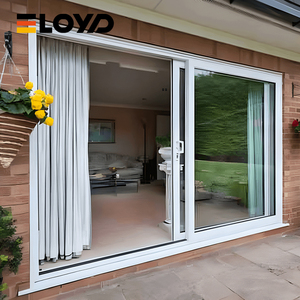
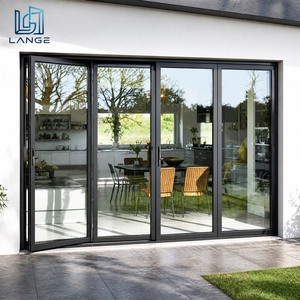
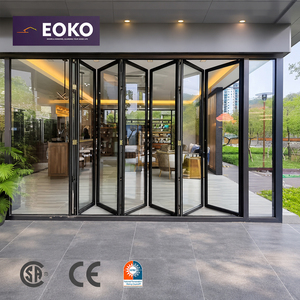
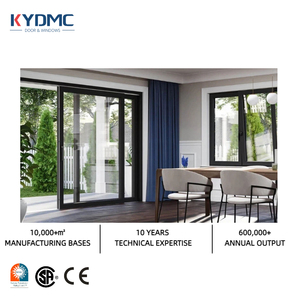
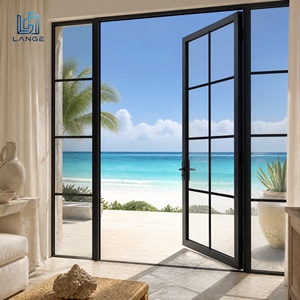
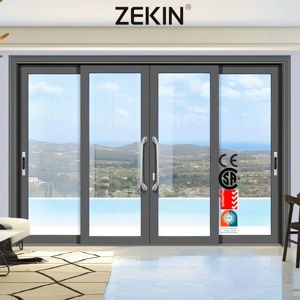
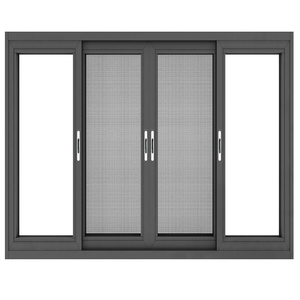
Engineering Integrity: Aluminum Fenestration for Harsh Environments
A technical whitepaper examining structural metallurgy, thermodynamic barrier optimization, and wind-load resistance for B2B procurement professionals.
Global commercial developers, fenestration distributors, and architectural contractors face increasing challenges driven by climatic volatility, heightened building energy codes, and stringent regional certification criteria. Sourcing wholesale aluminum outdoor doors directly from Tier-1 Chinese manufacturers requires deep insight into structural metallurgy, profile wall thicknesses, surface treatment chemistry, and hardware engineering.
At the center of contemporary outdoor aluminum door manufacturing lies the alloy chemistry. Primary architectural profiles utilize high-purity extruded aluminum alloy 6063-T5 or 6063-T6, engineered to achieve ultimate tensile strengths exceeding 205 MPa and yield strengths beyond 170 MPa. For expansive, oversized patio sliders and commercial pivot portals subject to severe wind pressures, high-tensile 6061-T6 structural alloys are integrated into vertical mullions and load-bearing stiles. This metallurgical precision eliminates structural deflection while maintaining ultra-narrow sightlines demanded by contemporary biophilic and minimalist architecture.
Thermal transmission mitigation remains the single most critical performance indicator in North American, Australian, and European building standards. Non-thermally broken aluminum sections act as thermal conductors, precipitating condensation, frost bridging, and excessive HVAC system cycling. Modern manufacturing deploys polyamide PA66 GF25 thermal breaks (polyamide 6.6 reinforced with 25% short glass fibers). This material matches the thermal expansion coefficient of aluminum (2.3 × 10⁻⁵ K⁻¹), preventing profile distortion, delamination, and shear failure under extreme diurnal thermal fluctuations from -40°C in Canadian winters to +55°C in Gulf State deserts.
| System Classification | Primary Alloy & Wall Spec | Thermal Transmission (U-Value) | Max Design Wind Load | Water Tightness Threshold | Target Compliance Standards |
|---|---|---|---|---|---|
| Hurricane Impact Lift & Slide | 6063-T6 Al / 2.5 mm – 3.0 mm | 1.4 – 1.8 W/(m²·K) (Low-E Argon) | ±5000 Pa (ASTM E1300 / TAS 202) | 700 Pa (Static & Cyclic) | AAMA/WDMA/CSA 101/I.S.2/A440, NFRC |
| Architectural Thermal Bi-Fold | 6063-T5 Al / 2.0 mm Profile | 1.2 – 1.6 W/(m²·K) (Triple Glaze) | ±3600 Pa (AS 4055 Class N5) | 450 Pa (Sill Weep Drainage) | CE EN 14351-1, AS 2047 N5 Standard |
| Heavy-Duty Commercial Pivot | 6061-T6 + Cast Aluminum 4.0 mm | 1.5 – 1.9 W/(m²·K) Polyurethane Core | ±4500 Pa Structural Infiltration | 600 Pa Magnetic Gasket Seal | UL 10C (Fire), ADA Accessibility, CE |
| Coastal Marine Swing Door | 6063-T6 Marine Grade Anodized | 1.3 – 1.7 W/(m²·K) Dual Low-E | ±4800 Pa (Cyclonic N6 / Category 5) | 600 Pa Stepped Double Rebate | AS 2047 N6, Qualicoat Class 3, ISO 9227 |
Global Sourcing & Procurement Trends
Key strategic indicators shaping international contract volume, raw material sourcing, and compliance requirements through 2026–2030.
Low-Carbon & CBAM Verification
Institutional developers demand Environmental Product Declarations (EPDs). Sourcing from facilities utilizing hydroelectric-smelted low-carbon primary aluminum billets mitigates Carbon Border Adjustment Mechanism (CBAM) fiscal exposure across the EU and North America.
Pre-Glazed Unitized Shipments
To circumvent escalating jobsite labor overhead in target destinations, over 65% of contract procurement orders now require factory-calibrated, unitized pre-glazed doors. Sub-assemblies arrive pre-fitted with multi-point perimeter locking hardware and precision gaskets.
Severe Coastal Weather Auditing
Insurance underwriting demands enhanced hurricane impact verification (ASTM E1886/E1996 Large Missile D and AS 2047 cyclonic tests). Importers systematically audit factory testing chambers for static water pressure penetration and structural racking.
Factory-Direct Digital CAD/BIM
Direct communication between structural architectural designers and Chinese manufacturing engineers via live BIM modeling, automated CNC milling file exports (.DXF/.STEP), and real-time digital assembly sign-offs reduces shop drawing review lead times from months to 72 hours.
Technological Evolution in Outdoor Door Manufacturing
The progression of robotic machining, nano-surface finishing, and automated kinetic hardware systems.
The exterior fenestration sector has undergone radical transformation over the past five years. Traditional manual fabrication workflows have been superseded by 5-axis CNC profile machining centers featuring automated profile feeding, compound angle cutting, and robotic gasket insertion. These advancements drive dimensional tolerances down to ±0.2 mm, ensuring air infiltration metrics conform to stringent Passive House requirements.
Surface treatment represents another major technical differentiator. Conventional electro-anodizing and standard architectural powder coatings frequently experience chalking, micro-fissuring, and filiform corrosion within 24 to 36 months when installed in high-salinity marine or tropical environments. High-end Chinese manufacturers have pivoted to Fluorocarbon PVDF liquid spray systems (exceeding 70% Kynar 500 / Hylar 5000 resin contents) and Qualicoat Class 2 & Class 3 super-durable architectural powder coatings. These specialized coatings endure 3,000+ hours of continuous ASTM B117 neutral salt spray testing and ASTM G154 accelerated UV weathering without visible gloss deterioration or chromatic shift.
Simultaneously, the convergence of building automation systems (BAS) and structural access hardware has spurred the rise of smart motorized pivot systems. High-capacity floor pivots capable of sustaining individual sash weights exceeding 800 kg are paired with hidden brushless electromagnetic drive motors, concealed biometric fingerprint scanning conduits, and multi-point perimeter electromechanical deadbolts. These systems merge architectural luxury with physical intrusion resistance rated up to European RC3 and RC4 security levels.
Factory Scale, Verified Capacity & Engineering Credentials
Powered by Guangdong Dejiyoupin Doors and Windows Co., Ltd. (DERCHI) — delivering end-to-end custom production for international general contractors, builders, and high-volume dealers.
AS 2047 N6 & Severe Storm Certifications
Our engineered systems have successfully passed the rigorous Australian AS 2047 N6 testing regime — the benchmark cyclonic storm certification. Our assemblies are structurally certified to CE, ISO 9001, NFRC, and UL Fire-rated standards, ensuring compliance during strict municipal building code audits.
Bespoke Shop Drawings & Parametric CAD
Our dedicated bilingual structural fenestration engineering unit reviews structural architectural schedules and delivers shop submittal packages, static wind-load deflection calculations, and thermal analysis reports prior to line production, eliminating site-fitment revisions.
Consolidated Ocean-Freight Export Crating
Every order is pre-assembled, cycle-tested through 100,000 opening sequences, tagged with building schedule barcodes, and packed in fumigated plywood maritime crates with EPE foam buffer zones. We provide seamless FCL/LCL ocean transit direct to major North American, European, and Australasian ports.
International Procurement & Engineering FAQ
Direct technical answers addressing tariff codes, structural design pressures, maritime logistics, and warranty terms.
What Harmonized System (HS) codes and export document sets are standard?
Aluminum outdoor doors are classified under HS Code 7610.10.00 (Doors, windows and their frames and thresholds for doors, of aluminum). Every international consignment includes authenticated Commercial Invoices, Packing Lists, Ocean Bills of Lading, Certificate of Origin (Form A/COO/RCEP where applicable), and Mill Test Certificates (MTC) documenting profile chemistry and glass temper audits.
How does your production meet North American NFRC and Australian AS 2047 codes?
Our manufacturing facility operates calibrated in-house air/water/structural pressure test chambers built to ASTM E283, ASTM E330, ASTM E331, and AS 4420 standards. We submit product configurations to third-party NATA (Australia) and Intertek/NFRC (North America) test laboratories to verify cyclical wind resistance, water penetration limits up to 700 Pa, and SHGC/U-factor values.
What glazing builds are integrated for acoustic insulation and impact resistance?
Glazing options span from dual-pane 6mm+12A+6mm tempered insulated glass to heavy impact-laminated IGUs composed of 6mm tempered + 1.52mm SentryGlas (SGP) / PVB + 6mm tempered glass with warm-edge composite spacers and 95% argon gas fill. Acoustic configurations achieve Sound Transmission Class (STC) ratings exceeding 42 dB and Outdoor-Indoor Transmission Class (OITC) ratings above 36 dB.
What are the standard factory lead times, MOQ thresholds, and project sampling cycles?
Standard architectural customization requires a minimum order quantity (MOQ) of a single project schedule or container lot. Project prototypes and custom mock-up samples are manufactured and delivered within 15–20 calendar days following full parametric CAD sign-off. Bulk commercial contract production cycles typically clear factory dispatch in 30–35 calendar days.
How do you prevent galvanic corrosion and maritime transit degradation?
All stainless steel hardware integration utilizes austenitic grade 304 or marine-grade 316 screws, bolts, and tracking wheels. Fastener interfaces are isolated from aluminum frame profiles via vulcanized EPDM gaskets or non-conductive nylon sleeves, eliminating galvanic cell formation. Furthermore, crates include industrial desiccant matrices to avert condensation during multi-climate ocean shipments.
What warranty terms and technical jobsite support are provided to overseas developers?
We provide a comprehensive 10-year structural aluminum frame warranty alongside a 5-year warranty on surface powder coating/fluorocarbon finishes and operating hardware mechanisms. We support international installation crews with precision shop manuals, anchor placement diagrams, BIM integration files, and direct video conferencing with our senior fenestration project engineers.
Accelerate Your Commercial Fenestration Schedule
Submit your architectural drawings, rough opening schedules, or tender specifications. Our senior engineering team will generate detailed CAD submittals, structural wind-load validations, and transparent factory-direct commercial estimates within 24 business hours.
Send an Inquiry