Engineered Window & Glazing Assemblies for Jali Integration
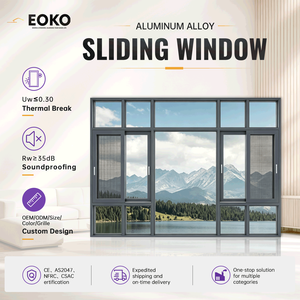
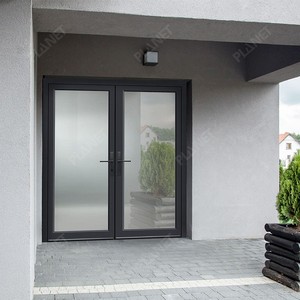
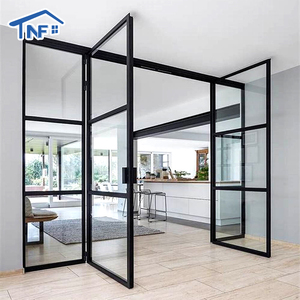
Explore our factory-direct architectural window profiles, thermal sliding assemblies, and heavy-duty structural entrance frameworks engineered to seamlessly host bespoke CNC aluminum jali grilles.
Executive Technical Overview: The Evolution of Aluminium Jali in Modern Fenestration
In high-performance architectural engineering, the traditional perforated screen has transcended its roots as purely ornamental masonry to become a cornerstone of sustainable, high-efficiency building envelopes. Modern OEM/ODM Aluminium Jali for Window systems represents a sophisticated convergence of solar control, microclimate management, acoustic buffering, and forced-entry deterrence. As global building codes across North America, Australia, Europe, and the Middle East enforce stringent Solar Heat Gain Coefficients (SHGC) and envelope lifecycle parameters, window manufacturers and structural façade consultants are increasingly turning to specialized aluminum alloy jali screens to meet dynamic environmental metrics without sacrificing design integrity.
Unlike conventional external louver systems or roll-down fabric shutters, engineered architectural aluminium jali panels are integrated directly into window frame sub-chassis, sliding tracks, or curtain wall mullions. Through advanced CNC turret punching, multi-axis fiber laser cutting, and precision high-tonnage die-casting, aluminum jali panels achieve perforated open-area ratios ranging from 18% to 65%. This tailored porosity balances daylight illumination with calculated shading coefficients, dramatically reducing solar radiation loads on double-glazed and triple-glazed units while ensuring natural airflow patterns that align with biophilic architectural standards.
Material Science, Alloy Selection, and Fabrication Metallurgy
A successful OEM/ODM architectural jali program relies fundamentally on aluminum alloy chemistry and temper designations. The mechanical behavior of perforated or patterned metal sheets under sustained wind loads is vastly different from solid sheet metals. During the perforation process, tensile residual stresses and material yield limits must be meticulously controlled to eliminate edge curling, thermal warping, and localized micro-fractures.
Alloy 6063-T5 / T6 Extrusions
Engineered for perimeter framework integration, structural border interlocking, and mullion load transfer. Offers superior surface smoothness, optimal weldability, and exceptional receptivity to architectural anodizing and fluorocarbon treatments.
Alloy 5052-H32 Marine-Grade Sheets
The gold standard for CNC laser-cut intricate lattice screens. Possesses superior magnesium alloying for coastal salt-spray resistance, exceptional fatigue strength, and zero susceptibility to stress-corrosion cracking.
A380 / ADC12 Cast Aluminum Jali
Utilized for deep-relief 3D decorative latticework in luxury entryways and classic villas. Combines structural mass, heavy impact resistance, and monolithic casting integrity to eliminate mechanical seam vulnerabilities.
Comparative Technical Matrix: Architectural Jali Fabrication Methods
Procuring window systems with integrated jali panels requires selecting the appropriate manufacturing process for the project's structural span, wind-load envelope, and design aesthetic. The table below delineates the key engineering criteria evaluated by façade consultants and window fabricators:
| Fabrication Methodology | Primary Alloy Base | Standard Thickness Range | Perforation Precision (Tolerance) | Wind Load Suitability (ASCE 7 / AS 2047) | Optimal Architectural Use Case |
|---|---|---|---|---|---|
| CNC Fiber Laser Cutting | AA5052-H32 / AA3003-H14 | 2.0mm – 6.0mm | ± 0.05 mm | High (Engineered with stiffener ribs) | Bespoke geometric designs, parametric façades, custom branding screens |
| CNC Turret Punching | AA1100 / AA3003-H14 | 1.5mm – 3.0mm | ± 0.10 mm | Moderate to High | Repetitive perforation grids, acoustic louver baffles, mass housing projects |
| Cast Aluminum Monolithic | ADC12 / A380 Alloy | 8.0mm – 25.0mm | ± 0.50 mm (Net-shape) | Extreme (Solid structural resistance) | Estate entry doors, high-security villa barriers, luxury heritage restorations |
| Extruded Modular Interlock | AA6063-T6 / AA6061-T6 | 1.8mm – 4.5mm | ± 0.15 mm | Extreme (Engineered for cyclone conditions) | High-rise residential sliding window screens, integrated security grilles |
Future Procurement Trends in Architectural Window Jali (2025–2035)
The global architectural fenestration sector is experiencing significant shifts driven by environmental accountability, computational architecture, and industrialized prefabrication. Forward-thinking window suppliers and developers must navigate four major procurement trends:
1. Computational Daylighting Optimization & Parametric Porosity
Static decorative grilles are rapidly being superseded by parametrically modeled solar screens. Utilizing environmental analysis engines (such as Ladybug and Radiance), modern window suppliers engineer jali patterns where the open-area ratio dynamically varies across the window surface—denser perforations at the top to reject peak summer solar angles, and wider perforations at the lower quadrant to optimize interior views and natural diffuse daylighting.
2. Bioclimatic Natural Ventilation & Acoustic Decoupling
In dense urban centers, opening a window often exposes residents to unacceptable noise pollution and wind gusts. Advanced OEM/ODM jali designs now integrate acoustic damping chambers within dual-layer perforated screens. By setting offset hole centers and lining internal framework pockets with hydrophobic acoustic fleece, high-frequency sound energy is attenuated by 6dB to 12dB while still allowing continuous passive air exchange.
3. Cyclone-Rated & Forced-Entry Structural Resilience
In regions susceptible to severe weather—such as the American Gulf Coast (Miami-Dade NOA standards) and Northern Australia (AS 2047 cyclonic impact standards)—jali panels are no longer viewed merely as visual elements. When fabricated from 4mm+ high-tensile 5052-H32 alloys and mounted with tamper-proof 316 stainless steel fasteners directly into reinforced window extrusions, these jali screens serve as primary missile-impact and burglary barriers, eliminating the need for storm shutters.
4. Super-Durable PVDF and Hyper-Durable Powder Coating Formulations
Window frames and exterior jali screens face extreme UV exposure and micro-abrasion from airborne particulates. Modern specifications mandate 3-coat AAMA 2605-compliant PVDF coatings (70% Kynar 500 resin base) or Qualicoat Class 2 hyper-durable architectural powder coatings. These specialized surface finishes guarantee minimum 20-year color retention, non-chalking performance, and resistance to chemical industrial fallout.
Enterprise Manufacturing Strengths: The Guangdong Dejiyoupin (DERCHI) Advantage
Behind every precision fenestration installation lies an industrial base capable of translating complex CAD/BIM shop drawings into high-volume reality. As an industry leader with over 25 years of specialized door and window manufacturing excellence, Guangdong Dejiyoupin Doors and Windows Co., Ltd. (DERCHI) operates as a fully integrated OEM/ODM manufacturing partner for North American, European, and Australian project markets.
180,000 m² Manufacturing Facility
Our expansive intelligent manufacturing park features multi-station CNC profile machining centers, automated cutting saws, and dedicated robotic laser processing bays to handle large-scale commercial contracts smoothly.
Verified Compliance
Products undergo rigorous international laboratory testing, holding CE, ISO 9001, Australian AS 2047 (up to Cyclonic N6 performance), NFRC thermal ratings, and UL fire-rated door certifications.
Bespoke Shop Drawings
Our 600+ personnel include over 40 structural and fenestration design engineers who provide free, comprehensive CAD shop drawings, structural calculations, and thermal modeling for your specific project schedules.
Direct North American Logistics
Full ocean-freight wood-crated export protection, unified documentation management, and English-speaking project engineers who align with EST/PST business hours to streamline client communications.
Comprehensive OEM/ODM Window Jali Procurement FAQ
To assist architects, structural engineers, and commercial fenestration contractors in developing accurate project specifications, our engineering team has addressed the most critical technical questions encountered during procurement:
How is wind load deflection calculated for large-format laser-cut aluminium jali screens?
Can custom laser-cut jali grilles be integrated with operable sliding and casement windows?
What surface finishing process provides the longest service life in coastal marine environments?
How does an exterior aluminum jali affect the thermal performance (SHGC and U-factor) of the window?
What is the standard OEM/ODM sample turnaround and production lead time for custom patterns?
How are galvanic corrosion risks mitigated when installing aluminum jali on steel window sub-structures?
Partner with a Proven Architectural Fenestration & Jali Manufacturer
Whether you are developing a luxury residential community, engineering a high-rise commercial façade, or distributing precision architectural windows across North America, our engineering group will review your drawings and provide full technical submittals.