Industry Executive Brief: The Modernization of the Architectural Jali
In modern commercial, luxury residential, and hurricane-resilient civil design, the architectural "Jali" (lattice or perforated security grille) has transitioned from an ornate artisanal feature into a highly engineered, precision-manufactured building envelope component. Modern OEM/ODM aluminum Jali doors resolve a historical conflict in architectural fenestration: simultaneously achieving high volumetric natural ventilation, zero-compromise physical forced-entry resistance, insect micro-filtration, and dynamic solar heat gain mitigation.
As international tier-one building projects demand strict conformity to building codes—such as Florida Hurricane Impact test standards, Australian AS 2047 fenestration standards, and CE/UL fire ratings—traditional ornamental iron or unreinforced timber Jali systems have become obsolete due to oxidative degradation, structural sagging, and maintenance liabilities. Guangdong Dejiyoupin Doors and Windows Co., Ltd. (DERCHI) leverages its 180,000 m² primary fabrication complex to advance 6063-T6 multi-chambered aluminum extrusion frameworks integrated with structural stainless steel mesh (Jali systems), CNC precision perforation lattices, and cast aluminum sculptural door assemblies for global contractors, architects, and high-volume dealers.
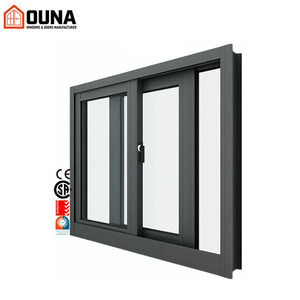
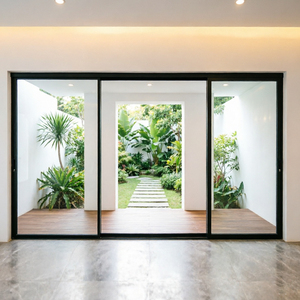
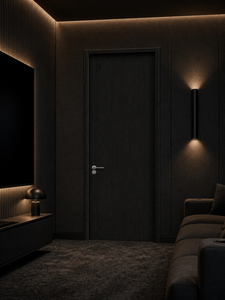
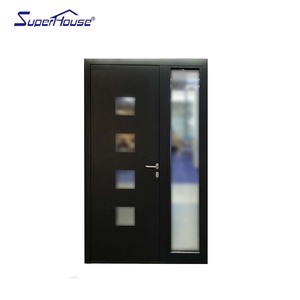
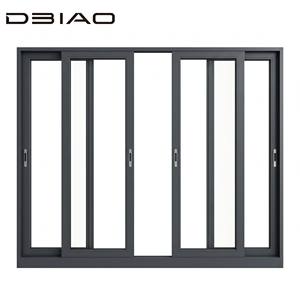
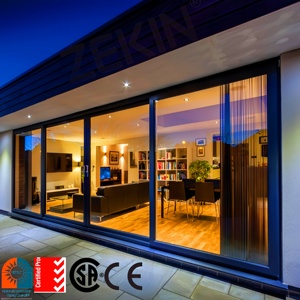
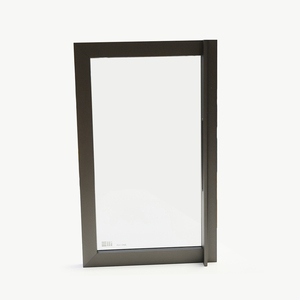
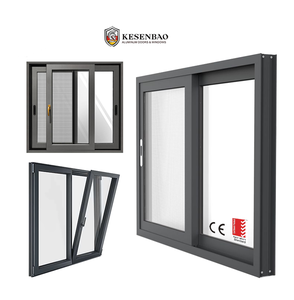
Engineered Fenestration & Aluminum Door Systems
Explore our factory-machined product series configured for harsh ambient environments, structural impact resistance, and customized spatial aesthetics. Every profile accommodates bespoke OEM/ODM dimension schedules.
Next-Generation Procurement Trends for Aluminum Jali Door Systems
Procurement teams for residential subdivisions, hospitality retreats, and upscale villa communities across North America, Australia, and the Middle East are re-evaluating baseline architectural specifications for entry and perimeter doors. The market has shifted away from standalone lightweight screen sashes toward integrated Tri-Hybrid Envelopes (Structural Thermal-Break Frame + Insulated Glazing + High-Tensile Jali Mesh). The major sourcing dynamics shaping current procurement cycles include:
1. Material Grade Shift: 6063-T6 & Stainless 316
Procurement audits now mandate minimum 2.0mm to 3.0mm primary wall thickness in extruded aluminum frames. For maritime and high-salinity zones, secondary screens must feature 0.8mm to 1.0mm woven 316 marine-grade stainless wire with knife-shear resistance certifications (AS 5039/5041).
2. Smart Access & Multi-Point Interlocking
Traditional handle latches are superseded by integrated concealed multi-point locking rods. High-end residential tenders now require smart electronic mortises (biometric, RFID, Apple HomeKit) integrated directly within the Jali frame extrusion without weakening structural integrity.
3. Architectural Passive Cooling Compliance
To reduce HVAC loads in tropical and temperate zones, architects leverage custom CNC perforation profiles to achieve calculated open-area ratios (typically 38% to 52%), optimizing indoor cross-ventilation while blocking direct solar radiation.
Engineering Specification Reference Matrix
| System Component | Standard Commercial Grade | DERCHI Heavy-Duty Architectural Grade | Performance Benefit |
|---|---|---|---|
| Aluminum Alloy | 6063-T5 (1.2mm - 1.4mm wall) | 6063-T6 Primary Ingot (2.0mm - 3.2mm) | Eliminates frame flexure; resists cyclonic torsional shear. |
| Jali Security Screen | Aluminum Stamped Mesh / 304 SS | High-Tensile 316 Marine Stainless (0.9mm wire) | Passes dynamic impact, knife-shear, and 1,000-hr salt spray tests. |
| Surface Protection | Standard Powder Coating (40-60µm) | AkzoNobel PVDF Fluorocarbon (3-Coat, >80µm) | Resists UV degradation, chalking, and coastal micro-pitting for 20+ years. |
| Thermal Insulation | Non-thermally broken sections | Polyamide PA66 GF25 Thermal Barriers | Prevents thermal bridging; lowers overall envelope U-values significantly. |
Technological Trajectories: CNC Laser Piercing vs. Structural Casting
The manufacturing architecture of aluminum Jali door panels has experienced a technological split into two distinct high-performance methodologies, both supported comprehensively in our Foshan industrial complex:
Precision CNC Continuous Fiber Laser Cutting
Utilizing high-power multi-axis fiber lasers operating on solid 5052-H32 aluminum plates (4.0mm to 8.0mm), our manufacturing lines execute complex geometric, parametric, and Islamic arabesque Jali motifs with tolerances within ±0.05mm. The post-cut deburring and automated surface smoothing phases eliminate structural stress nodes, guaranteeing flawless adhesion of fluorocarbon coatings even along internal edge radiuses.
Monolithic High-Pressure Cast Aluminum Alloy Panels
For palatial residences, institutional gates, and luxury entries, DERCHI deploys heavy-tonnage casting dies to create monolithic relief panels with deep 3D topography. Unlike assembled hollow tubing, cast aluminum Jali door leaves provide extreme acoustic attenuation, thermal mass dampening, and inherent ballistic/forced-entry resistance without visible seam joints.
Why Tier-1 Contractors Rely on Guangdong Dejiyoupin (DERCHI)
Eliminate supply-chain middlemen. By coordinating directly with our engineering division, foreign buyers gain verifiable manufacturing accountability, custom CAD processing, and internationally certified fenestration hardware.
AS 2047 N6 & CE Verified
Our window and door assemblies hold CE, ISO 9001, and UL fire-rated certifications, along with passing AS 2047 N6 cyclonic testing—the highest benchmark for wind pressure and water tightness.
Complimentary CAD Shop Drawings
Submit your raw architectural door schedules and elevations. Our engineering bureau provides full CAD cross-sections, structural load calculations, and hardware coordination submittals at no charge.
Dedicated Time-Zone Engineering
Our project engineers provide real-time coordination aligned with North American (EST/PST), European, and Australasian operating hours to resolve technical questions without lag.
Export-Grade Protective Packaging
All assemblies are sealed in multi-layer shockproof PE film, corner-guarded with structural polymers, and crated in fumigated OSB timber cages optimized for ocean container loading.
Frequently Asked Technical Questions (FAQ)
Critical considerations for international procurement officers, facade consultants, and general contractors sourcing OEM/ODM aluminum Jali door systems.
Can you manufacture aluminum Jali doors strictly according to US/Imperial door schedules?
How do aluminum Jali doors perform regarding forced entry and cutting attacks?
What surface treatment is specified to ensure Jali door grilles do not corrode in coastal air?
What certifications support your door and window manufacturing capabilities?
Can I verify your production lines and factory capacity before placing an order?
What is the standard production lead time and export container packing workflow?
Initiate Your OEM/ODM Project Consultation
Send your architectural elevations, door schedules, or concept sketches. Our bilingual fenestration engineers will provide technical feasibility feedback, CAD shop drawings, and competitive direct-factory pricing within 24 hours.
Send an Inquiry