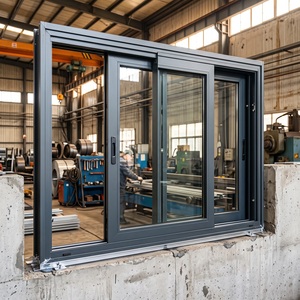
Export Portfolio
High-Performance Fenestration & Entry Systems
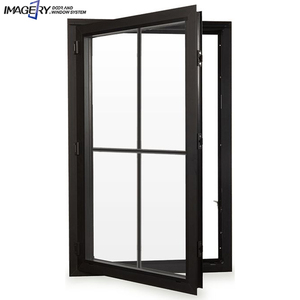
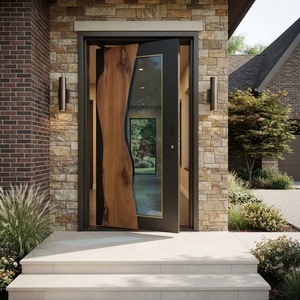
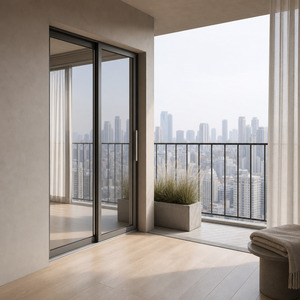
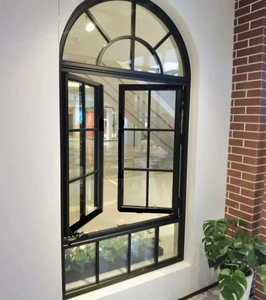
Engineered architectural casements, thermal break patio solutions, and precision-machined heavy-duty entrance doors exported globally across North America, Europe, Oceania, and the Middle East.
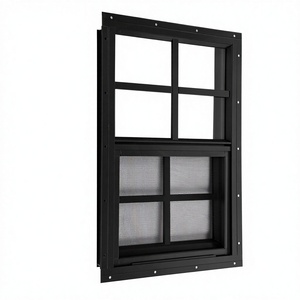
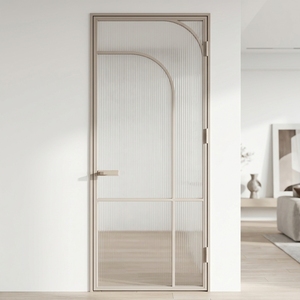
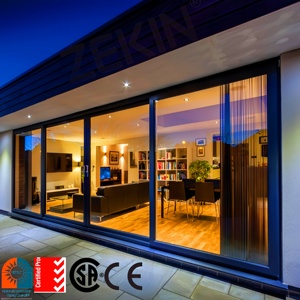
Industry Benchmarking Report
Global Aluminium Casement Door Manufacturing: The B2B Landscape
Aluminium casement doors represent one of the most critical structural components in modern envelope architecture. Unlike residential sliding patio panels or light-duty interior dividers, casement systems rely on a compression-seal perimeter gasket. This mechanical compression against the sub-frame ensures superior water penetration resistance, airtightness (ASTM E283), and structural wind-load performance (ASTM E330). For major commercial developers, general contractors, and fenestration distributors in North America, Europe, and Australasia, selecting the correct supplier requires evaluating thermodynamic profiling, extrusion alloy metallurgy (6063-T5 vs. 6063-T6), multipoint locking hardware reliability, and automated manufacturing scale.
The global aluminium architectural fenestration market is estimated to reach over USD $235 billion by 2030, driven by strict green building energy codes (such as IECC 2024, California Title 24, and European EN 14351-1). To assist procurement teams in identifying reliable fabrication partners, this whitepaper evaluates the Top 10 Aluminium Casement Door Manufacturers & Exporters based on factory footprint, certification compliance (CE, AS2047, UL, ISO 9001), testing performance, and international supply chain stability.
#1 Global Featured OEM/ODM
Guangdong Dejiyoupin Doors and Windows Co., Ltd. (DERCHI)
Holding over 25 years of specialized engineering, DERCHI stands as an elite manufacturer delivering custom luxury aluminium casement doors, oversized architectural pivot doors, and certified thermal break systems. DERCHI features dedicated North American and Oceania export divisions, offering free in-house CAD shop drawings, verified AS2047 N6 structural certification, UL fire ratings, and CE compliance directly to builders, architects, and volume importers.
- Core Specialization: High-wind hurricane casements, PA66 thermal barriers, bespoke pivot & entrance doors.
- Testing & Compliance: AS 2047 N6 (highest wind rating), ISO 9001, CE, UL fire-rated.
#2 European Systems Specialist
Schüco International KG
Schüco is recognized worldwide for establishing the benchmark in high-end structural engineering, passive house aluminium systems, and building automation. Their casement systems utilize advanced multichamber polyamide thermal struts to achieve class-leading U-values down to 0.8 W/(m²K).
- Core Specialization: Modular aluminium system profiles and smart building automation.
- Testing & Compliance: DIN EN 14351-1, Passive House Institute Certified.
#3 Engineered System House
Reynaers Aluminium
Reynaers designs highly durable aluminium casement profiles for demanding residential towers and commercial curtain-wall integrations. Known for their MasterLine series, Reynaers casement doors achieve maximum thermal insulation and air permeability without compromising sightlines.
- Core Specialization: MasterLine architectural casements, high acoustic-rated systems.
- Testing & Compliance: Cradle to Cradle (C2C) Certified, CE, Qualicoat powder coatings.
#4 Commercial Engineering Leader
YKK AP Inc.
Operating massive extrusion lines throughout Japan and North America, YKK AP manufactures commercial-grade storefront and heavy-duty outswing casement doors engineered to resist intense seismic and cyclonic conditions with structural anodized alloys.
- Core Specialization: High-traffic commercial casement entrances and storefronts.
- Testing & Compliance: AAMA/WDMA/CSA 101/I.S.2/A440, Miami-Dade NOA approvals.
#5 North American Commercial Standard
Kawneer (An Arconic Company)
Kawneer is an industry pillar for commercial aluminium entrance doors, heavy-wall casements, and blast-resistant systems. Widely specified by North American architectural firms for educational, institutional, and Class-A commercial towers.
- Core Specialization: Heavy-wall 500 Wide Stile entrance doors and structural casements.
- Testing & Compliance: AAMA Certified, LEED v4 documentation, ASTM blast standards.
#6 Southeast Europe Powerhouse
Alumil S.A.
One of Europe’s largest independent aluminium extruders, Alumil develops advanced insulated casement systems (SMARTIA and SUPREME lines). Their manufacturing plants utilize green secondary smelting technologies with minimal carbon footprints.
- Core Specialization: Minimal-sightline casements and bioclimatic building envelopes.
- Testing & Compliance: IFT Rosenheim verified, CE, Qualanod/Qualicoat standard.
#7 Sustainable Hydro Brand
Wicona (Hydro Building Systems)
A division of Norsk Hydro, Wicona fabricates aluminium casement door systems made with at least 75% post-consumer recycled scrap, drastically cutting embodied carbon without sacrificing structural tensile strength.
- Core Specialization: Ultra-low carbon profiles (CIRCAL), Wicstyle entrance solutions.
- Testing & Compliance: ISO 14001, CE, German Passive House components.
#8 Iberian Fabrication Giant
Cortizo Sistemas
Cortizo provides fully integrated extrusion, lacquering, anodizing, and CNC machining operations across European production sites. Their Millennium casement door series is widely utilized in modern boutique hotels and multi-family residential projects.
- Core Specialization: Millennium hinged doors, hidden hinge technology.
- Testing & Compliance: AENOR certified, CE EN 14351-1, ISO 9001.
#9 West Coast Luxury Specialist
Fleetwood Windows & Doors
Fleetwood engineers heavy-duty aluminium hinged doors and casement combinations featuring thick-gauge 6063-T6 extrusions and crisp, minimalist lines, widely specified across California and the Pacific Northwest.
- Core Specialization: Westwood and Norwood architectural hinged door lines.
- Testing & Compliance: NFRC thermal ratings, AAMA coastal standards.
#10 Precision Consumer & Trade Brand
Origin Global (Origin Frames)
Origin focuses exclusively on bespoke aluminium fenestration manufacturing. Their casement and French doors feature premium 8-point multipoint locking gear, marine-grade powder coatings, and rapid lead-time manufacturing systems.
- Core Specialization: Residential French casement doors, finger-safe gaskets.
- Testing & Compliance: Secured by Design (UK Police approved), PAS 24, BSI ISO 9001.
Market Forecast & Technology Shifts
Key Procurement & Engineering Trends (2025–2030)
Strategic fenestration procurement is moving beyond aesthetic considerations. Sourcing directors now align procurement choices with strict environmental metrics, automated fabrication tolerances, and multi-climate engineering.
1. Polyamide 66 Thermal Breaks & Aerogel Cores
Standard non-thermal or pour-and-debridge profiles are being phased out in export markets. High-performance casement doors now integrate multi-chamber PA66 GF25 (25% glass fiber reinforced polyamide) thermal barriers, frequently injected with aerogel or polyurethane insulation foams to meet U-value targets lower than 1.1 W/(m²K) for extreme winter performance.
2. Severe Weather, Hurricane & Seismic Deflection
Increasing extreme weather events require casement door assemblies capable of resisting severe dynamic wind pressures. Sourcing demands heavy-gauge 6063-T6 or 6061 aluminium extrusion profiles combined with laminated SentryGlas (SG) impact interlayers tested to meet AS 2047 N6 cyclonic requirements and ASTM E1886/E1996 missile-impact standards.
3. Smart Concealed Multipoint Hardware
Exposed butt hinges and perimeter mortise locks are shifting toward 3D adjustable concealed hinges and motorized multi-point perimeter compression gearboxes. These mechanisms seamlessly integrate into commercial building management systems (BMS), facial recognition access controls, and automated air purge ventilation cycles.
4. Embodied Carbon & Recycled Billet Audits
Developers targeting LEED Platinum, BREEAM Outstanding, or zero-carbon certifications now mandate Environmental Product Declarations (EPD). Aluminium casement manufacturers must verify smelting using renewable hydroelectric power and document certified post-consumer scrap content to guarantee minimal life-cycle carbon footprints.
5. Direct Factory CAD Engineering Integration
Global procurement eliminates middle-tier brokers. Modern general contractors send building information modeling (BIM) files and door schedules directly to manufacturing facilities. In-house engineering teams produce structural calculations, shop submittals, and CNC machining codes within 48 hours to accelerate lead times.
6. Extended Coastal Warranty Surface Treatments
Standard architectural powder coats quickly degrade under coastal salt-spray exposure. Casement door exports now systematically specify Qualicoat Class 2 / Class 3 fluorocarbon (PVDF) architectural coatings or hard-anodized Class 1 finishes (25+ microns) backed by certified 3,000+ hour neutral salt spray testing.
Enterprise Strength & Engineering Authority
DERCHI: Precision Manufacturing & Global Supply Chain Control
Backed by Guangdong Dejiyoupin Doors and Windows Co., Ltd., DERCHI combines 25+ years of fenestration manufacturing experience with direct-to-jobsite export logistics for residential estates and commercial developments.
180,000
Square Meter Production Base
600+
Trained Craftsmen & Engineers
100+
International Patents & Certs
25+
Years Engineering Heritage
Direct Factory Engineering
No intermediaries, markups, or agent delays. North American and international developers work directly with our senior fenestration engineers, ensuring structural integrity, clear budget control, and complete fabrication accountability.
Free CAD Shop Submittals
Every casement door schedule is thoroughly verified. Our design team provides comprehensive architectural CAD elevations, section details, thermal simulation models, and structural anchor calculations before initiating extrusion cutting.
Comprehensive Certifications
DERCHI doors are fully certified under CE, ISO 9001, AS 2047 N6 cyclonic testing, and UL fire standards. All documentation is prepared to expedite building inspections and local municipal approvals.
Time Zone Aligned Support
Dedicated English-speaking technical project managers operate across North American business hours (EST to PST), ensuring prompt coordination across RFI questions, production updates, and logistics tracking.
One-Stop Project Sourcing
Consolidate your entire fenestration package. In addition to exterior casement doors, DERCHI fabricates matching thermal break windows, cast aluminium gates, large pivot entrance doors, and automatic garage systems within the same facility.
Custom Ocean Export Crating
Every frame and sash undergoes strict multi-layer protective film masking, protective edge guards, and is packed inside IPPC-certified ISPM-15 fumigated solid plywood crates to ensure zero-defect ocean arrival.
Engineering Specifications
Architectural Casement Door Specification Matrix
Detailed performance parameters comparing standard commercial grade against DERCHI’s extreme architectural grade fenestration systems.
| Performance Metric | Standard Commercial Grade | DERCHI Architectural Heavy-Duty | Compliance Test Standard |
|---|---|---|---|
| Aluminium Alloy & Wall Thickness | 6063-T5 | 1.4 mm – 1.6 mm | Primary 6063-T6 | 2.0 mm – 3.0 mm Reinforced | GB 5237 / ASTM B221 |
| Thermal Barrier Technology | Standard PVC Strut / Non-Thermal | Multi-Chamber Technoform PA66 GF25 Strip | DIN EN ISO 10077-2 |
| Thermal Transmittance (U-Value) | 2.4 – 3.2 W/(m²K) | 0.95 – 1.4 W/(m²K) (with Argon Triple Low-E) | NFRC 100 / EN ISO 12567-1 |
| Airtightness Performance | Class 2 (Air leakage < 2.5 m³/h·m) | Class 4 / ASTM E283 Level (< 0.1 cfm/ft²) | ASTM E283 / EN 12207 |
| Water Penetration Resistance | 300 Pa Static | 900 Pa – 1200 Pa Static & Dynamic Water Head | ASTM E331 / AS 2047 |
| Wind Load Resistance | 2000 Pa Serviceability | Up to 4500 Pa (AS 2047 N6 Highest Rating) | ASTM E330 / AS 4055 |
| Acoustic Attenuation (STC/Rw) | Rw 28 – 32 dB | Rw 38 – 45 dB (with Laminated PVB Glazing) | ASTM E90 / ISO 717-1 |
| Locking Security Classification | Single/Dual Point Lock | Concealed 5 to 7-Point European Multi-Drive Lock | PAS 24 / RC2 / RC3 European Grade |
Strategic Sourcing FAQ
Frequently Asked Questions by Commercial Buyers
Essential guidance addressing international logistics, custom dimensions, structural certifications, and warranty terms.
What are the key technical differences between casement doors and sliding patio doors? +
Casement doors operate on a swinging hinge mechanism that compresses the continuous perimeter EPDM gasket against the structural frame when locked. This provides significantly superior airtightness (ASTM E283) and water resistance (ASTM E331) compared to sliding doors, which rely on sliding brush seals. For high-wind coastal environments and harsh freeze-thaw cycles, casement doors represent the optimal engineering choice.
Do your custom aluminium casement doors meet U.S., Canadian, and Australian building codes? +
Yes. DERCHI fenestration products hold full international testing certifications including CE (EN 14351-1), ISO 9001 quality management, AS 2047 N6 cyclonic testing for Australia, and UL fire ratings. For North American projects, we match local door schedules, AAMA structural standards, and NFRC energy ratings specified by your structural engineers.
Can we order custom sizing, custom hardware prep, and specialized finishes? +
Every door is custom manufactured to order. We accommodate imperial (inches) and metric rough openings, custom transom and sidelight configurations, custom hardware mortises (compatible with Baldwin, Yale, or European multi-point gearboxes), and provide powder coating (AkzoNobel, PPG) in any RAL color or wood-grain thermal transfer finish.
What is the average production lead time and ocean shipping duration? +
Standard production lead time is 25 to 35 working days following signed CAD shop drawing and finish approvals. Ocean freight to North American West Coast ports typically takes 14–18 days, East Coast ports 25–30 days, Australian ports 12–16 days, and Western European ports 25–32 days. We coordinate full export documentation (ISF, Bill of Lading, Certificate of Origin).
How does the factory prevent damage during international ocean transport? +
Our multi-tier protective packaging system includes: (1) low-tack surface film on all exposed metal profiles, (2) shock-absorbing corner caps, (3) foam-wrapped outer sashes, and (4) fully enclosed solid plywood crates with interior reinforcing timber and desiccant packs. Crates comply with ISPM-15 export regulations to ensure safe transport.
Can developers and architects audit the manufacturing facility before ordering? +
We welcome direct factory verification. You can take an interactive 360-degree online Factory VR tour, schedule real-time video audits with technical project engineers, or visit our 180,000 square meter production complex in Foshan, Guangdong by appointment.