180,000 m²
Smart Manufacturing Base
25+
Years Engineering Heritage
100+
Patents & Global Certifications
AS 2047 N6
Peak Hurricane Load Rating
Factory Direct Portfolio
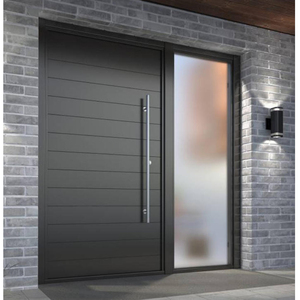
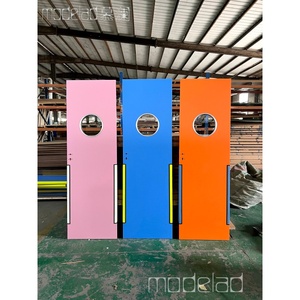
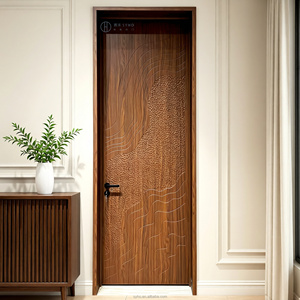
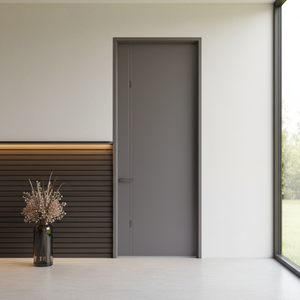
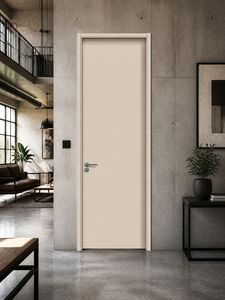
Engineered Aluminium Composite Entrance & Interior Systems
Combining primary high-grade 6063-T6 architectural aluminium alloys, multidirectional internal steel reinforcements, acoustic multi-cavities, and bio-mimetic solid wood veneers for ultra-luxury residential and commercial projects.
Technical Whitepaper
Structural Anatomy of High-Performance Aluminium Composite Doors
Why modern structural engineers and architectural specifiers favor composite configurations over monolithic timber or hollow sheet metal systems in extreme environments.
Thermal Barrier Decoupling
Monolithic metals conduct thermal energy rapidly, producing severe condensation and energy loss. Composite assemblies introduce high-density polyamide (PA66 GF25) thermal breaks between exterior fluoropolymer-coated cast aluminium skins and interior wooden leaves, slashing U-values down to < 0.85 W/m²K to meet rigorous Passive House criteria.
Differential Coefficient Mitigation
Exterior climates exhibit severe thermal expansion, while interior spaces remain air-conditioned. Our patented floating composite interlock systems allow differential movement between the outer aluminium envelope and internal hardwood panels, eliminating the structural bowing, latch misalignment, and perimeter gasket failure typical of single-core doors.
Acoustic & Nano-Core Integration
Integrating 50mm door leaves insulated with graphene aerogel matrices and multipoint EPDM acoustic compression seals decouples airborne vibrational frequencies. Standard laboratory test reports achieve sound reduction indexes surpassing 42 dB (Rw), shielding luxury interiors from severe urban and aircraft noise.
Specifier's Selection Guide
Material Specification Matrix for Global Projects
Comprehensive engineering performance comparison across core entrance materials, prepared by DERCHI engineering division for North American and European building codes.
| Door Leaf Core System | Wind Load (AS 2047) | Thermal Transmittance (U-Value) | Sound Isolation (Rw) | Maintenance Frequency | Corrosion Resistance |
|---|---|---|---|---|---|
| Cast Aluminium + Thermal Break Wood | Class N6 (> 4500 Pa) | 0.78 - 1.1 W/(m²·K) | 42 dB | Zero maintenance (30-yr finish) | Class 5 Marine / Salt Spray Pass |
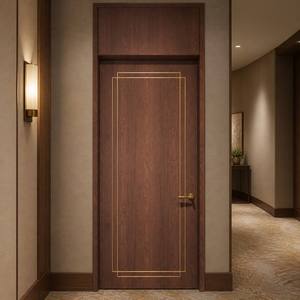
| Aluminium-Clad Solid Wood Composite | Class N4 (2500 - 3000 Pa) | 1.0 - 1.3 W/(m²·K) | 38 dB | Exterior: Nil / Interior: 5 yrs | High (Anodized / PVDF) |
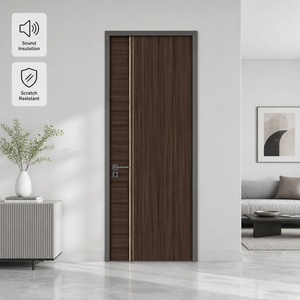
| Graphene-Core Minimalist Flush Leaf | Interior / Semi-Sheltered | 0.65 - 0.9 W/(m²·K) | 45 dB | Maintenance-free | Optimal for Coastal Condos |
| Conventional Solid Hardwood | Class N2 (Variable) | 1.6 - 2.2 W/(m²·K) | 30 dB | Annual varnishing & seal rework | Susceptible to rot, warping & termites |
Forward-Looking Intelligence
Future Sourcing & Architectural Trends: 2026-2030
Strategic analysis of changing building directives, procurement logistics, and evolving design typologies across high-growth international markets.
1. Super-Scaled Monolithic Pivot Typologies
Luxury residential designs increasingly demand dramatic architectural entrances exceeding 3.5 meters in height and 2 meters in width. Conventional hinges sag under these mechanical forces. Next-generation composite engineering relies on integrated bottom floor springs, hydraulic dampening, and concealed counter-balancing pivots capable of handling panel loads up to 1,200 kg with feather-light operation.
2. Biometric and Smart Building Management Mesh
Global procurement teams are shifting away from standalone smart locks toward factory-integrated electrified architectural systems. Hidden multi-locking hardware with mechanical multi-bolt deadlocks, motor-driven retraction, 3D face recognition, and secure RS485/KNX protocol ties directly into whole-home automation without requiring disruptive site wiring.
3. Stringent Embodied Carbon & Circularity Mandates
Architectural compliance in the EU, USA, and Canada now mandates detailed Environmental Product Declarations (EPD). Future supply chains favor suppliers capable of utilizing certified low-carbon recycled aluminium billets (billet production powered by hydro or solar), coupled with non-toxic, VOC-free structural adhesives and sustainably forested inner cores.
Manufacturing Authority
Why Global Specifiers Partner with DERCHI (Dejiyoupin)
Operating as a Top 10 Door & Window enterprise in China, Guangdong Dejiyoupin Doors and Windows Co., Ltd. provides factory-direct custom systems eliminating third-party markups and miscommunications.
180,000 m² Automated Manufacturing
High-capacity CNC profile machining centers, fully dust-free powder coating and fluorocarbon paint lines, combined with rigorous automated precision assembly assure repeatable tolerances within ±0.5mm across bulk development runs.
Pre-Engineering & Free CAD Shop Drawings
North American and global door schedules are translated by dedicated in-house structural engineers. We provide imperial and metric shop drawings, structural wind-load deflection calculations, and rough opening installation details prior to metal cutting.
Cross-Time Zone Engineering Support
Eliminate project delays. Our international sales engineering team provides seamless project consultations across EST, PST, GMT, and AEST hours, supporting architects, general contractors, and developers through each milestone.
Procurement Knowledge Base
Frequently Asked Questions for Sourcing & Specification
Everything procurement heads, site engineers, and commercial developers need to verify before executing contract manufacturing agreements.
Q1: How does an aluminium composite door prevent condensation in sub-zero climates?
Condensation occurs when warm, humid indoor air strikes an uninsulated cold profile. Our doors feature polyamide thermal break barriers (PA66 reinforced with 25% fiberglass) that mechanically isolate the exterior cold aluminium shell from the indoor leaf. This design elevates internal surface temperatures well above the dew point, preventing sweating, frost build-up, and wall damage in severe zones like Canada or Northern Europe.
Q2: What certifications are provided to guarantee building code compliance?
Our composite doors comply with CE directives, ISO 9001 quality systems, Warnock Hersey (WH) and UL fire endurance certifications, and Australian AS 2047 cyclonic testing (passing N6 level wind load exceeding 4500 Pa). Full laboratory test reports and mill certificates are supplied with submittal packages to ensure seamless passing of local architectural inspections.
Q3: Can custom doors accommodate oversized rough openings and custom hardware?
Yes. As an OEM/ODM direct manufacturer, over 80% of our production is fully bespoke. We manufacture pivot leaves up to 4,000mm in height and integrate customized locking solutions—from German Winkhaus multipoint lock systems to dormakaba concealed heavy-duty overhead pivots and smart biometric escutcheons engineered directly to your door schedule.
Q4: How is damage prevented during overseas ocean shipping?
International exports require industrial protection. Every door unit is sealed in peelable protective film, wrapped in heavy-duty EPE pearl cotton, corner-guarded with high-density impact buffers, and secured within custom fumigation-free, steel-banded plywood crates. Crates are balance-engineered for forklift handling and ocean container transshipment.
Ready to Engineer Custom Entrance Systems for Your Project?
Send your drawings, rough opening dimensions, or schedule an engineering consultation. Our technical team delivers free CAD submittals and factory-direct export proposals within 24 hours.