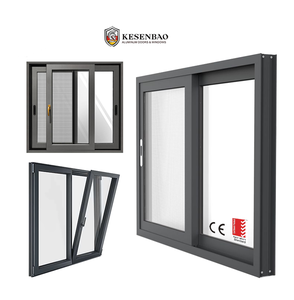
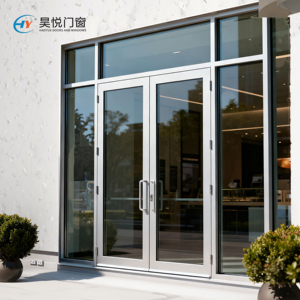
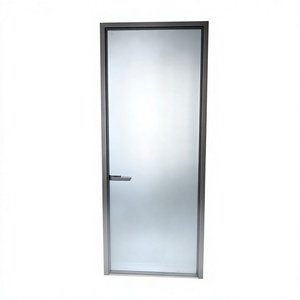
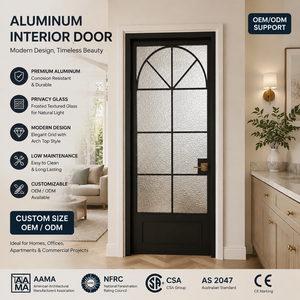
- High-durability stainless mesh pocket integration
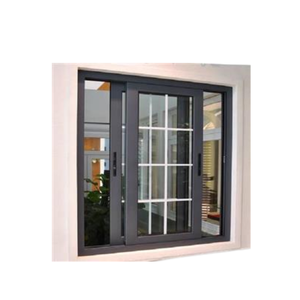
- Multi-track architectural sliding mechanism
- Acoustic rating up to STC 38dB
Engineered for severe climatic resistance, anti-intrusion security, and seamless architectural integration. Fully certified to Australian AS2047, European CE, and North American energy codes.
A critical engineering breakdown for project architects, multi-family developers, and façade engineers sourcing high-reliability screening systems across global manufacturing hubs.
First-tier exporters utilize continuous mechanical wedging and interlocking PVC clamping systems rather than direct screw fastenings. Screw retention induces galvanic corrosion between stainless steel mesh and aluminium extrusions, creating failure points under hurricane-force wind loads.
Premier exporters exclusively fabricate framing systems using primary billet 6063-T5 or 6060-T6 architectural aluminium. Impure recycled scrap aluminium compromises tensile strength and leads to micro-cracking during deep profile punching for multi-point lock mechanisms.
The international distinction among the top 10 exporters lies in electro-deposition and architectural powder-coating pre-treatments. Non-chromate zirconium pre-treatment ensures superior adhesion, withstanding 3,000+ hours of continuous neutral salt spray without filiform degradation.
| Evaluation Parameter | Commercial Grade (Low-End Exporters) | Architectural Grade (Tier 1 Global Standard) | DERCHI High-Security Specification |
|---|---|---|---|
| Aluminium Extrusion | Recycled billet, variable wall (1.0 - 1.2mm) | Primary 6063-T5 (1.4 - 1.8mm) | Heavy-Duty 6063-T5/T6 (2.0 - 2.5mm structural) |
| Mesh Specification | Fiberglass / Standard 201 Stainless Wire | Woven 304 Stainless Steel (0.7mm wire) | Marine-Grade 316 High-Tensile (0.8 - 0.9mm wire, 900+ MPa) |
| Fixation Mechanism | Riveted directly or self-tapping perimeter screws | Continuous aluminium retaining bead | Patented Wedge-Lock Clamping (No galvanic corrosion) |
| Impact Resistance | < 50 Joules dynamic load | Dynamic impact tested up to 100 Joules | Passes AS5041 Dynamic Impact (5 blows @ 100J) |
| Salt Spray Resistance | < 500 Hours ASTM B117 | 1,000 Hours ASTM B117 | 3,500+ Hours ASTM B117 / AAMA 2605 Compliant |
Where international building specifications, sustainability regulations, and smart façade technologies are heading over the next five to ten years.
Modern building envelope regulations, including California Title 24, IECC 2024, and European nZEB mandates, are transforming mesh door engineering. Future procurement requires thermally broken outer frames with continuous polyamide (PA66) insulation barriers to stop thermal bridging while maintaining complete insect exclusion and free airflow.
The market is actively transitioning away from bulky mechanical latch handles toward motorized concealed multipoint systems. Global developers are prioritizing mesh doors pre-wired for low-voltage power conduits, embedded Zigbee/Matter communication nodes, and optical biometric authentication integrated flush into the aluminium stile.
B2B procurement contracts in North America and Western Europe increasingly demand third-party Environmental Product Declarations (EPD). Exporters must provide certified proof of low-carbon smelting (utilizing hydroelectric power) along with modular hardware designs that permit rapid end-of-life material disassembly and recycling.
The international architectural fenestration sector has passed through distinct evolutionary phases. Below is the operational trajectory driving Tier-1 procurement requirements:
Guangdong Dejiyoupin Doors and Windows Co., Ltd. (DERCHI) operates one of Asia's most advanced fenestration manufacturing hubs, integrating design, extrusion finishing, and ISO-controlled assembly under one roof.
Our engineering team provides complimentary, millimeter-accurate CAD shop drawings and BIM parametric models matching architectural elevations and door schedules before tooling or cutting begins.
Products hold AS 2047 N6 cyclonic testing credentials, CE compliance markings, ISO 9001 quality audit validations, and UL fire-rated certifications, ensuring uninterrupted local site inspections across the USA, Canada, and Australia.
All aluminium screen assemblies are individually enveloped in non-marking protective film, corner-guarded with EPE foam, and encased within fully enclosed ISPM 15 heat-treated fumigated plywood crates to ensure zero-defect ocean shipping.
Direct technical clarifications addressing the real-world operational challenges encountered by overseas procurement directors, developers, and facade consultants.
We utilize non-conductive Santoprene or virgin EPDM isolation gaskets along with patented insulating PVC clamping beads. This creates a complete dielectric separation barrier between the stainless steel wire mesh and the 6063-T5 aluminium profile, entirely eliminating electrolytic cell formation in high-humidity or coastal marine environments.
Yes. When engineered with 0.9mm 316 high-tensile wire (minimum 900 MPa tensile strength) and paired with structural heavy-duty outer framing (wall thickness > 2.2mm), our security screen assemblies pass AS 5041 dynamic impact benchmarks and satisfy North American large missile impact criteria (ASTM E1886/E1996).
Because our 180,000 m² factory controls dedicated extrusion finishing and fabrication lines, standard bespoke lead time is 25 to 35 calendar days following CAD shop drawing approval. We accommodate mixed-container prototype runs and multi-unit containerized procurement schedules without prohibitive minimum orders.
Our engineering division works natively with imperial (fractional inch) and metric architectural schedules. We translate rough opening dimensions into detailed net-frame fabrication schematics, calculating appropriate clearance margins (e.g., 1/4" to 3/8" perimeter shimming gaps) documented explicitly in signed shop drawings.
We apply architectural-grade super-durable fluoropolymer and triglycidyl isocyanurate (TGIC) powder coatings conforming to AAMA 2604 and AAMA 2605 specifications (such as AkzoNobel Interpon D2015 and PPG Duranar). These coatings preserve gloss and resist color chalking over 10 to 20 years under severe solar radiation.
Our high-tensile architectural security mesh (11-mesh x 0.8mm) delivers an optimal open area ratio of approximately 42% to 46%. This maintains rapid cross-ventilation while providing exceptional visual clarity from inside looking out, combined with up to 30% solar heat gain reduction.
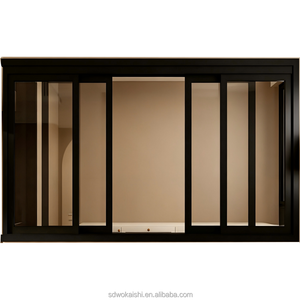
Submit your door schedules, project elevation drawings, or specification inquiries. Our senior fenestration engineers will provide technical reviews, system recommendations, and factory-direct commercial estimates within 24 hours.