Certified Fenestration Solutions
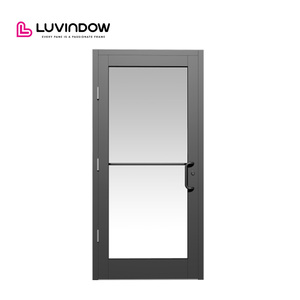
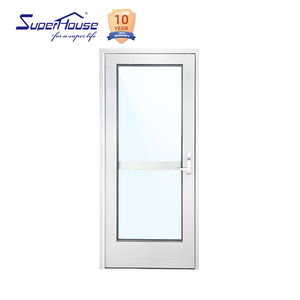
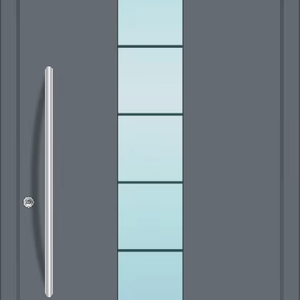
High-Performance Storefront Systems for Commercial Demands
Engineered for high-traffic retail, hospitality, institutional, and mixed-use commercial developments requiring wind-load resistance, acoustic dampening, and advanced thermal break technology.
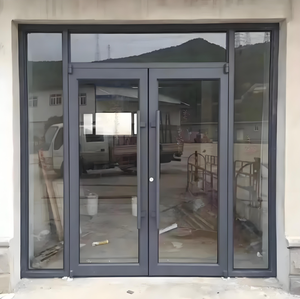
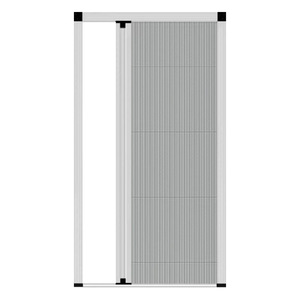
Integrated Screen Systems
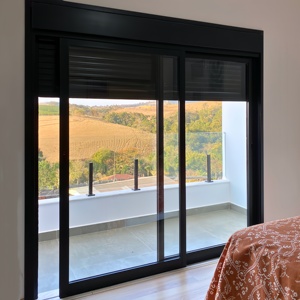
Architectural Grade Folding Pleated Stainless Mesh Commercial Sliding Screening Assembly
Technical Data Sheet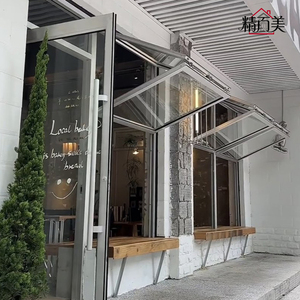
Bi-Fold Servery Frontage
Heavy Commercial Bi-Folding Awning Shopfront System with Welded Aluminum Framing
Technical Data Sheet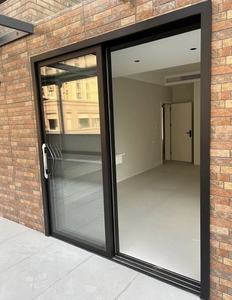
Global Vendor Landscape
Top 10 Aluminium Shop Front Doors Manufacturers & Suppliers
A rigorous supply-chain evaluation focusing on structural extrusion profiles, acoustic attenuation, blast mitigation, cycling endurance, and adherence to international building codes (AAMA, ASTM, AS 2047, and EN 12207).
RANK 01 · TIER 1 DIRECT
China (Global Hub)
DERCHI (Guangdong Dejiyoupin)
An enterprise-scale fenestration powerhouse operating a centralized 180,000 m² smart production base. DERCHI specializes in high-traffic commercial storefront entryways, oversized architectural pivot doors, and certified hurricane-impact assemblies engineered for North American and European structural codes.
RANK 02 · ENTERPRISE
United States
Kawneer (Arconic Building Systems)
Globally renowned pioneer in architectural aluminum storefronts and curtain wall engineering. Their 190/350/500 standard entrance series sets the institutional benchmark for welded corner construction, extreme duty cycles, and integration with commercial building management platforms.
RANK 03 · SYSTEMS LEADER
Germany
Schüco International KG
The definitive global leader in high-insulation aluminum envelope systems. Schüco’s ADS series features advanced polyamide thermal breaks, multi-point electro-mechanical locking systems, and Cradle-to-Cradle sustainability credentials suitable for passive commercial envelopes.
RANK 04 · ARCHITECTURAL
Belgium
Reynaers Aluminium
European design-forward aluminum system engineer recognized for ultra-slim profiles, high-inertia mullions, and high-security anti-burglary (RC3) certifications. Widely deployed across prestigious luxury retail shopfronts and institutional façades.
RANK 05 · INTEGRATED
United States
Oldcastle BuildingEnvelope (OBE)
North America’s largest integrated manufacturer of commercial architectural glass and storefront aluminum frames. Their StormMax and Reliance systems dominate hurricane-zone commercial building envelopes along the Gulf Coast and Eastern seaboard.
RANK 06 · PRECISION
Japan / USA
YKK AP America Inc.
Celebrated for precision manufacturing tolerances and proprietary anodizing finishes. YKK AP entrance systems such as the ProTek line provide verified blast mitigation and forced-entry deterrence for high-security civic centers and luxury retail store frontages.
RANK 07 · MODULAR
United States
Tubelite Inc. (Apogee Enterprises)
Engineered for rapid field installation and tight commercial delivery schedules. Tubelite manufactures durable wide, medium, and narrow stile entrance doors equipped with tie-rod corner construction and thermal strut insulation technologies.
RANK 08 · COMMERCIAL UK
United Kingdom
Senior Architectural Systems
The UK's largest privately owned fenestration systems house. Their Pure commercial entrance doors employ patented expanded polyurethane (PUR) thermal barriers, achieving exceptionally low U-values for high-street shops and public education buildings.
RANK 09 · GLOBAL HYBRID
Luxembourg
AluK Group
An international designer of aluminum fenestration serving commercial specifiers across Europe, the Middle East, and Asia. AluK's commercial entrance systems deliver balanced acoustic performance, automated multi-point sliding configurations, and minimalist visual frames.
RANK 10 · HARDWARE & STOREFRONTS
United States
C.R. Laurence (CRL) / U.S. Aluminum
A powerhouse distributor and manufacturer of complete architectural entrances, continuous frameless glass shop fronts, and commercial pivoting systems. Their heavy-duty hardware integration, panics, and patch fittings make them a standard choice across retail corridors and shopping malls internationally.
Technical Engineering Insights
Engineering Evolution in Commercial Aluminium Shopfronts
Modern commercial storefronts have advanced past simple extruded channels. Today's commercial building codes demand rigorous physical metrics across structural wind resistance, thermal break efficiency, and automated life safety ingress.
Structural Alloy & Corner Joint Integrity
Commercial doors face millions of operational cycles. Leading manufacturers utilize primary 6063-T6 architectural grade aluminum extrusions with minimum 3.0mm wall thickness at hinge load-bearing stiles. State-of-the-art joints combine internal heavy-duty aluminum corner blocks, hydraulic corner crimping, and high-tensile internal steel tie-rods, completely preventing sag, deflection, and misalignment over decades of rigorous pedestrian access.
Polyamide Thermal Barrier Technology
Historic aluminum shopfronts were notorious for high heat loss and condensation bridging. Today, multi-chambered polyamide (PA66 GF25) thermal insulation strips mechanically isolate exterior and interior aluminum extrusions. Combined with argon-filled low-emissivity double or triple insulated glass units (IGUs) with warm-edge composite spacers, commercial entryways now attain overall U-factors as low as 0.28 BTU/(hr·ft²·°F), satisfying ASHRAE 90.1 energy mandates.
Severe Windload & Cyclone Impact Mitigation
Due to accelerating climatic volatility, municipal codes (including the Florida Building Code and Australian AS 2047) mandate impact-certified storefronts. Heavy storefront systems utilize SentryGlas (SGP) ionoplast structural interlayers sandwiched between tempered glass panels. These assemblies can withstand the missile impact of 9-pound 2x4 lumber traveling at 50 feet per second, followed by 9,000 cyclic pressure reversals, remaining water-resistant under 150+ mph wind pressures.
Procurement Strategy
Future Procurement Trends for Commercial Fenestration (2025–2030)
Architects, corporate developers, and general contractors must navigate evolving green building codes, smart sensor integration, and global supply-chain consolidation.
01
Direct-to-Factory Engineering
Commercial developers are increasingly eliminating regional middle-tier distributors to source directly from primary factories that supply free engineered CAD shop drawings, shortening project lead times and cutting procurement costs by 30–45%.
02
BIM & Digital Twin Compliance
Suppliers are expected to deliver parametric 3D BIM models (Revit/IFC) detailing structural anchor points, thermal boundary dynamics, and life-safety wiring schematics prior to manufacturing sign-off.
03
Smart Access & IoT Building Integration
Shopfront doors are evolving into smart envelope nodes, arriving pre-routed for concealed electromagnetic locks, concealed power transfers, touchless motorized automation, and fire alarm override controllers.
04
Embodied Carbon & Low-Carbon Billet
Under international green taxonomies (LEED v4.1, BREEAM), procurement bids increasingly score suppliers based on Environmental Product Declarations (EPDs) and the use of hydro-powered, recycled aluminum billets.
Commercial Specifier Knowledge Base
Frequently Asked Questions on Aluminium Shop Front Procurement
In-depth engineering, logistical, and building code considerations addressed directly by commercial fenestration specialists.
What are the key structural distinctions between Narrow, Medium, and Wide Stile commercial doors?
Vertical stiles determine both aesthetic transparency and structural durability. Narrow Stiles (2" to 2-1/2") offer maximum glass area, perfect for retail boutique displays and low-impact foot traffic where panoramic sightlines are prioritized. Medium Stiles (3-1/2" to 4") represent the industry workhorse for municipal office buildings, restaurants, and medical centers, balancing slim sightlines with capacity for heavy mortise panic devices. Wide Stiles (5" or wider) are engineered for high-traffic public transit hubs, public high schools, and heavy commercial applications, featuring increased wall thickness to accommodate large mortise lock cases, continuous geared hinges, and severe duty cycles.
How do thermally broken storefront systems prevent interior condensation and heat transfer?
Aluminum has high thermal conductivity (approx. 200 W/m·K). Without an engineered barrier, cold winter temperatures transfer directly to the interior frame, triggering relative humidity to condense into water droplets, damaging interior trims and promoting mold growth. Thermally broken profiles resolve this by inserting low-conductivity polyamide (PA66 GF25) strut extrusions between the interior and exterior aluminum sections. Combined with double or triple insulated glass units (IGUs) incorporating warm-edge spacers and gas fills, this structural configuration achieves low Condensation Resistance (CR) ratings and meets the stringent energy conservation requirements of ASHRAE 90.1, IECC, and Canadian NECB standards.
How are oversized aluminum shopfront doors and pivot doors protected during international ocean transit?
Export fenestration demands heavy packaging to counter moisture, salt air, and dynamic transport vibration. At DERCHI, all commercial door leaves and frames undergo a four-tier packaging regimen: first, a non-residue electrostatic protective film over all aluminum profiles; second, high-density polyethylene foam corners to safeguard all mitered joints; third, complete sealed bubble wrap vapor barrier wrapping; and fourth, enclosed fumigated non-coniferous hardwood crates or reinforced steel-frame crates. Glass lites are cushioned with rubber separation blocks to prevent vibration-induced stress micro-fractures, ensuring goods arrive at U.S., Canadian, or European project docks in pristine condition.
What hardware prep and life safety egress codes must be coordinated before production?
Commercial storefront doors must comply with International Building Code (IBC) Chapter 10 (Means of Egress) and ADA (Americans with Disabilities Act) Title III standards. Key requirements include: (1) Minimum clear opening width of 32 inches when the leaf is open at 90 degrees; (2) Bottom rail height of at least 10 inches to allow smooth push surface for wheelchairs; (3) ADA-compliant low-profile thresholds not exceeding 1/2 inch in height, beveled at a slope not steeper than 1:2; and (4) Proper structural prep for rim panic exit devices, concealed overhead closers, and electronic access strikes. Our engineering team prepares free 2D/3D CAD shop drawings integrating your specific hardware template to guarantee flawless field drop-in without on-site cutting.
What testing standard is most critical for coastal wind-borne debris and hurricane zones?
For coastal zones across Florida, the Caribbean, the Gulf Coast, and typhoon-prone Pacific corridors, the gold standard testing protocols are ASTM E1886 and ASTM E1996, alongside Miami-Dade TAS 201, 202, and 203. For Australian specifications, the corresponding standard is AS 2047 (with N6 rating representing the ultimate wind pressure threshold exceeding 4400 Pascals). Testing involves firing a 9-pound 2x4 lumber projectile at 50 ft/s directly at the door center and structural corners, immediately followed by 9,000 positive and negative air pressure cycles to simulate hours inside hurricane-force eyewalls. DERCHI provides verified impact certifications to satisfy local code authority building permit submittals.
Initiate Your Commercial Fenestration Specification
Send our senior engineering team your architectural elevation drawings, door schedules, or structural windload specifications. We will review your project parameters and supply detailed CAD shop drawings, glass performance evaluations, and factory-direct pricing within 24 business hours.
Send an Inquiry
Dedicated English-speaking technical sales engineers covering US, CA, and AU business hours.