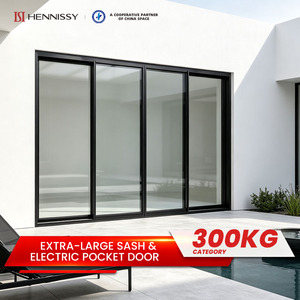
Engineering Excellence & Factory Direct Benchmarking
Strategic Evaluation of Global Industrial Double Door Fabricators
Choosing an industrial-grade manufacturing partner for architectural aluminum double front doors dictates lifecycle costs, building code compliance, and thermal enclosure integrity. This comprehensive guide outlines tier-1 manufacturing specifications, testing standards, supply trends, and direct-from-source engineering capabilities.
180,000 m²
Manufacturing Footprint
25+
Years Engineering Pedigree
100+
Patents & Global Accreditations
AS 2047 N6
Maximum Wind & Water Load
Factory Production Inventory
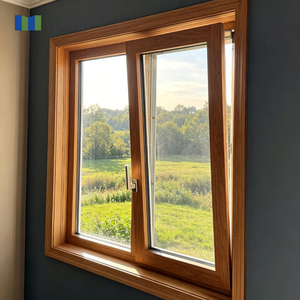
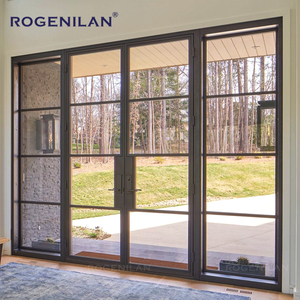
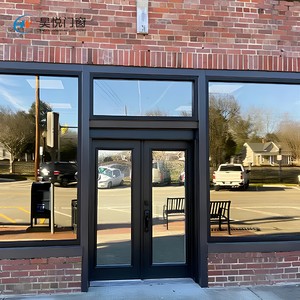
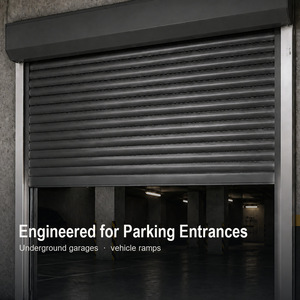
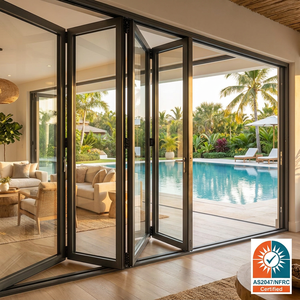
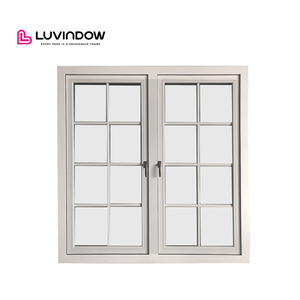
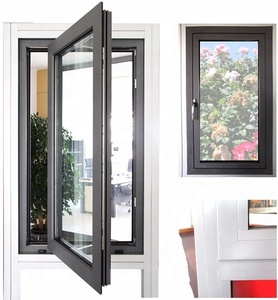
Specified Aluminum & Glazed Fenestration Assemblies
Engineered to withstand extreme environmental stress while providing seamless aesthetic continuity for modern residential villas, luxury developments, and commercial storefronts.
Information Gain Specification
Anatomy of an Industrial-Grade Aluminum Double Front Door
Understanding structural alloys, thermal isolation breaks, and hardware mechanical ratings separates true tier-1 fabrication facilities from basic regional assembly shops.
Modern architectural fenestration requires aluminum double doors to deliver three primary metrics: structural rigidity against cyclic wind pressure, extreme resistance to air-water infiltration, and continuous perimeter thermal interruption. Leading factories incorporate 6063-T6 or 6061-T6 architectural grade aluminum extrusions possessing wall thicknesses ranging from 2.0mm to 3.5mm on structural load points.
| Evaluation Parameter | Standard Market Offering | DERCHI Factory Specification | Field Performance Benefit |
|---|---|---|---|
| Alloy Composition & Temper | Recycled aluminum / 6063-T5 (1.4mm) | Virgin Primary Ingot 6063-T6 (2.0mm–3.0mm) | Zero deflection on double leaf heights > 3.0 meters |
| Thermal Break Strategy | Standard PVC Strips (non-reinforced) | Polyamide PA66 GF25 Isobar Technology | U-values below 0.28 BTU/hr·ft²·°F (Sub-1.4 W/m²K) |
| Structural Wind Performance | Standard ASTM E330 (DP30–DP45) | Certified AS 2047 N6 & High-Velocity Cyclone | Zero structural yielding up to 4500 Pa cyclic wind loads |
| Sealing & Perimeter Gasketing | Standard EPDM sponge extrusion | Dual-Vulcanized Co-extruded EPDM + Silicone Core | Sustained airtightness across -35°C to +80°C extremes |
| Locking & Hinge Hardware | Single/Dual deadbolt point latches | Multi-Point European Locking + Concealed Floor Pivots | Anti-jemmy forced entry certification & RC3 security |
Market Horizon
Procurement Vectors: What B2B Buyers Must Anticipate
A data-informed analysis of shifts in material preferences, regulatory updates, and supply chain strategies dominating 2026–2030 building contracts.
Embodied Carbon & Green Aluminum
Global standards, including the EU Carbon Border Adjustment Mechanism (CBAM) and North American LEED v4.1 certifications, are steering architectural procurement toward low-carbon billets smelted via hydropower, cutting lifecycle emissions by up to 60%.
Oversized Pivot & Continuous Hinges
Traditional butt-hinge assemblies are progressively substituted by heavy-duty continuous geared hinges and oil-bath bearing pivots capable of handling individual active leaves weighing up to 450kg (1,000 lbs) for ultra-wide, grand custom entrances.
Smart Access Control Pre-Fabrication
Specifiers no longer accept post-delivery surface wiring. Demands require in-factory integrated motorized multipoint locking units, hidden concealed door contacts, biometrics, and PoE conduits routed cleanly inside the insulated core profiles.
Technological Trajectory
Engineering Progression: From Cold Hollow Tubes to Smart Thermal Barriers
The transformation of double entrance doors over three decades of advanced industrial metallurgy and thermal science.
During early commercial door manufacturing, aluminum profiles were simple hollow extrusions characterized by high thermal conductivity, condensation problems, and poor air-sealing. Over time, European and North American building envelope regulations (ASHRAE 90.1, IECC, and Passivhaus standards) catalyzed a paradigm transition.
Modern double front door manufacturing is driven by three technological pillars:
1. Ceramic Powder Coating & Fluorocarbon (PVDF) Chemistries: Advanced surface finishes withstand 3,000+ hours of continuous salt-spray testing, essential for coastal villas in Florida, California, and the Caribbean.
2. Multilayer Acoustic Infill: Hybrid PU foams, aerogel blankets, and high-density mineral wool cores yield STC (Sound Transmission Class) ratings above 42 dB, keeping urban and highway noise out of luxury residences.
3. CNC 5-Axis Precision Extrusion Machining: Modern fabrication utilizes German-engineered 5-axis profile machining centers, ensuring hinge preps, weatherstripping grooves, and lock pockets meet 0.05mm tolerances without on-site cutting.
Manufacturer Authority
Why Tier-1 Contractors Rely on DERCHI’s 180,000 m² Facility
Backed by Guangdong Dejiyoupin Doors and Windows Co., Ltd., DERCHI delivers turn-key manufacturing stability for builders, commercial general contractors, and overseas distributorships.
Global Certification Arsenal
Every fenestration batch complies with CE, ISO 9001, AS 2047, and UL fire-rated certifications. DERCHI holds more than 100 patents and formal laboratory test results to pass strict municipal structural and fire inspections.
Free In-House CAD & BIM Drafting
Avoid field fitting errors. Send door schedules or conceptual sketches, and DERCHI's in-house engineering team provides complete shop CAD drawings, structural deflection calculations, and anchoring details within 48 hours.
North American Logistical Alignment
With completed landmark projects across the USA, Canada, Australia, and the Middle East, our logistics division manages export-grade steel-reinforced plywood crating, customs documentation, and full ocean container freight support.
Technical Due Diligence
B2B Procurement & Specification FAQ
Addressing the core technical, logistical, and compliance considerations facing commercial developers, distributors, and general contractors.
How do aluminum double front doors perform against extreme thermal fluctuations and condensation?
Industrial thermal performance hinges directly on the inclusion of polyamide (PA66 GF25) thermal breaks between the interior and exterior aluminum profiles. This creates a continuous non-conductive barrier, eliminating condensation risks and lowering frame U-factors to meet rigid Northern US and Canadian energy codes. When paired with Argon-filled Low-E insulated glass units (IGU), the entire entrance system effectively controls thermal transmission in sub-zero and desert climates.
Can the factory accommodate custom rough opening sizes and imperial dimension schedules?
Yes. Every production run is custom engineered to the client's door schedule. We accept exact millimeter or imperial inch specifications. Prior to cutting any profile, our engineering team outputs comprehensive CAD approval drawings highlighting masonry opening dimensions, finished buck sizes, threshold details, and ADA compliance clearances.
What quality control methods are implemented to prevent leaf sag on oversized double doors?
Leaf sag on paired doors typically results from low wall thickness or inadequate corner jointing. DERCHI addresses this through 3.0mm structural wall profiles, mechanical corner cleat crimping with two-component polyurethane bonding adhesives, internal diagonal steel tension cables, and heavy-duty 3D-adjustable or commercial continuous geared hinges rated for over 500,000 continuous operating cycles.
What testing data and certifications can DERCHI supply for code compliance review?
Our products possess CE, ISO 9001, AS 2047 (with top N6 rating), and UL fire-rated certifications. Comprehensive factory test reports detail cyclic structural load capacity, air leakage resistance, water penetration barriers, and acoustic attenuation. Complete documentation packages are available for architects and general contractors during plan submission.
How does DERCHI secure fragile glazed double doors during international ocean transit?
Every door leaf and outer frame is sealed within a waterproof plastic wrap, padded with corner protective foam buffers, and crated in fumigation-free, fully enclosed structural plywood crates. We pack using specialized interior steel-strut bracing and moisture-absorbing desiccant packs, mitigating shock, vibration, and humidity across long-haul ocean container transit.
Obtain Direct-from-Factory Engineering & Cost Schedules
Connect directly with DERCHI's fenestration engineering desk. Receive your comprehensive architectural catalog, structural profile breakdowns, and project-specific price matrices within 24 business hours.