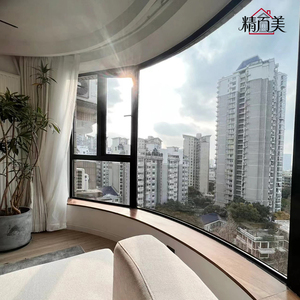
Architectural Curve
Full Arch Customized Curve Half Round Straight Leg Curved Window
Monolithic precision curved extrusion engineering preserving dimensional continuity for bespoke villa facades and luxury developments.
Manufactured under stringent ISO 9001, AS 2047, and UL fire standards. Engineered from high-tensile 6063-T5/T6 alloy profiles for commercial, high-security residential, and industrial applications.
Monolithic precision curved extrusion engineering preserving dimensional continuity for bespoke villa facades and luxury developments.
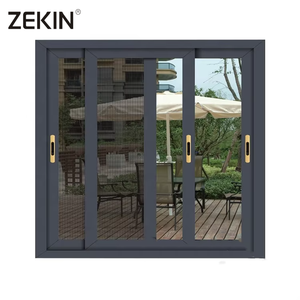
Engineered multi-cavity drainage, interlock seals, and acoustic acoustic dampeners designed for high-density office complexes.
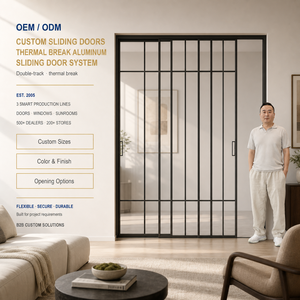
Minimalist narrow sightlines paired with double-glazed acoustic glass, flush bottom-track mechanics, and architectural black powder finish.
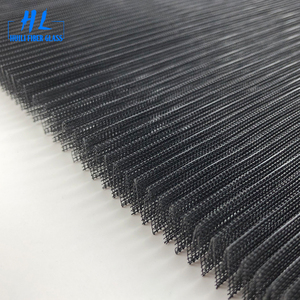
High-elasticity UV-stabilized pleated polyester mesh engineered with anti-derailment bottom guides for expansive patio integration.
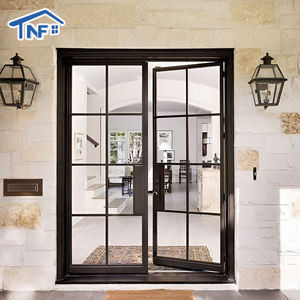
Thermally broken chamber geometry integrated with EPDM cellular perimeter gaskets and German multi-point gear hardware.
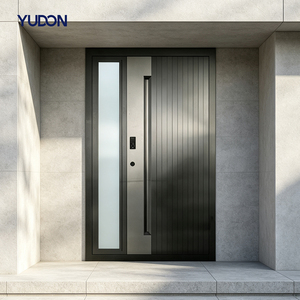
Armored frame integrity meeting IoT access ecosystems, built for custom luxury estates and modern architecture developments.
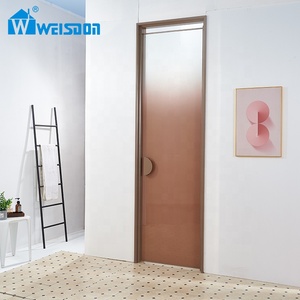
Impact-certified laminated safety glass encased in anodized high-salinity corrosion-resistant marine alloy frames.
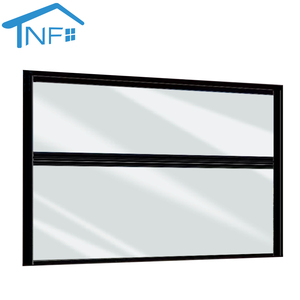
Automated counterweight guillotine fenestration providing unhindered panorama opening and structural wind-break balustrades.
In global structural contracting, sourcing exterior roller shutters, insulated architectural roll-up barriers, and high-velocity storm doors requires a balance of metallurgical purity, mechanical longevity, and export engineering. This whitepaper establishes objective technical benchmarks for evaluating the world's leading manufacturers and export entities.
Top-tier manufacturers reject secondary or scrap remelt aluminum, exclusively utilizing primary 6063-T5 or 6063-T6 aluminum ingots. Extrusion slat wall thicknesses must maintain strict tolerances (+/- 0.05mm) across spans exceeding 6,000mm. Extruded double-wall slats with internal reinforcing webs prevent structural deflection under extreme positive and negative air pressure differentials.
Structural Standard: ASTM E330 & EN 12424Exposure to coastal salt fog and extreme solar irradiance demands Class 2 Qualicoat architectural powder coatings (TGIC-free polyester or PVDF fluoropolymer) and hard anodized layers exceeding 20 microns. Sintered surface adhesion stops premature chalking, blistering, and galvanic oxidation over continuous 3,000-hour ASTM B117 salt spray chamber trials.
Corrosion Spec: AAMA 2604 / 2605A premier exporter integrates industrial-grade tubular motors, external side-mount flange chain hoists, and high-frequency planetary gearmotors with thermal overload relays. Safety compliance requires dual-sided parachute anti-drop brakes (compliant with EN 13241-1), wireless optical bottom-edge pressure reversal loops, and auxiliary battery-backup modules.
Cycle Reliability: > 50,000 OperationsA direct side-by-side analysis contrasting high-specification contract manufacturing against common low-grade commercial workshops.
| Engineering Attribute | DERCHI (Dejiyoupin) Tier-1 Export Standard | Secondary Market Suppliers | Standard Compliance Impact |
|---|---|---|---|
| Raw Material Origin | ✓ 100% Virgin 6063-T5/T6 Billet Aluminum | Recycled scrap mix with high iron inclusions | Eliminates profile brittleness & grain fracture |
| Wind Resistance Class | ✓ AS 2047 N6 (Cyclonic) / Class 4 (EN 12424) | Class 1 / Uncertified nominal deflection | Guarantees structural integrity under wind > 180 km/h |
| Thermal Insulation Slat Core | ✓ High-Density Polyurethane (45-55 kg/m³) | Low-density blown styrofoam or hollow chamber | Delivers U-values down to 1.8 W/m²K; reduces noise by 28dB |
| Side Guide Rail Engineering | ✓ Heavy Extruded 2.5mm+ with Dual Brush/EPDM Sealing | Thin 1.0mm formed metal without nylon dampeners | Eliminates slat vibration, wind rattle, and air infiltration |
| Export Packaging & Crating | ✓ Full Honeycomb Composite + Solid Fumigated Timber Cases | Shrink-wrap polyethylene film and corrugated corners | Zero transport bending, scuffing, or container rack losses |
| Technical Submittals | ✓ Parametric CAD Shop Drawings & BIM Models Free of Charge | Generic PDF leaflets; no project-specific engineering | Fast-tracks municipal architectural code approval |
Operating one of Southern China's premier fenestration and architectural shutter manufacturing campuses in Foshan, DERCHI (Guangdong Dejiyoupin Doors and Windows Co., Ltd.) combines heavy industrial capacity with bespoke European engineering tolerances.
Integrated processing covering automated billet slicing, 5-axis CNC machining, insulated foam slat filling lines, and vertical dust-free powder coating towers.
Full mechanical testing compliance for dynamic cyclonic storm pressures, structural dead-load stability, acoustic reduction, and UL 10B/10C fire safety integrity.
Dedicated bilingual engineering teams working inside US Eastern & Pacific business hours to generate CAD shop drawings, rough opening plans, and bill-of-materials.
Every roller door assembly, guide rail, barrel tube, and motor pack is individually wrapped, foam-padded, and packed into solid export crates ready for rough transshipment.
Global supply chain shifts, tightening energy performance mandates, and rapid smart-building integration are redefining how commercial developers and general contractors source roller doors.
North American and European institutional builders increasingly demand Environmental Product Declarations (EPDs). Sourcing is pivoting toward aluminum produced via hydroelectric smelting, yielding carbon footprints below 4.0 kg CO2e/kg aluminum. Factory-level recyclable traceability is shifting from a marketing benefit to a hard bidding prerequisite in LEED and BREEAM projects.
Procurement Shift: Circular Material PassportsModern roller shutter installations are moving away from isolated keypads. Specifiers are requiring IP-addressable, RS485/Modbus-compatible control boards that communicate directly with central Building Management Systems (BMS). Embedded cycle-counters, current-draw variance alerts, and torque monitoring allow facilities to execute predictive maintenance before mechanical failure occurs.
Tech Standard: IoT Protocols & API IntegrationRising jobsite mechanical labor rates in North America, the UK, and Australia have made field-assembled slat-by-slat doors economically unviable. Contractors prioritize factories offering "Plug & Play" structural cassette systems—where roller barrels, side guides, internal motor drives, and tension springs arrive factory-calibrated within pre-hung structural aluminum headboxes.
Efficiency Gain: 60% Faster Jobsite ErectionContinuous mechanical optimization has transformed simple rolling grilles into multifaceted building envelope shields capable of thermal containment, hurricane protection, and acoustic attenuation.
To resist negative cyclical storm pressures during typhoons and hurricanes, modern slats incorporate cast aluminum wind-locks mechanically riveted to slat extremities. Under severe wind deflection, these locks interlock tightly inside reinforced heavy-gauge structural guide rail chambers, preventing curtain blowout under pressures exceeding 5.0 kPa.
Target Code: Florida Building Code (FBC) TAS 202High-security commercial garages and retail storefronts increasingly specify CNC micro-perforated slats. Thousands of 1.5mm–2.5mm precision perforations allow up to 35% natural airflow ventilation and light transmission while preventing insect penetration and maintaining physical anti-intrusion forced-entry resistance.
Function: Security + Passive VentilationAddressing thermal transmission loss, modern engineered roll-up curtains feature dual-chamber extruded aluminum skins decoupled by polyamide structural insulating struts, injected with ozone-safe CFC-free polyurethane foam. This profile geometry eliminates condensation sweating and drastically lowers building energy heating/cooling loads.
Energy Metric: U-Value < 1.6 W/(m²·K)Authoritative technical, commercial, and logistics guidance directly from DERCHI's export engineering department.
Submit your door schedules, CAD architectural elevations, or structural wind load specifications. Our export engineering team will review your project parameters and deliver complete technical shop submittals within 24 business hours.