High-Performance Aluminium Full Glass Door Systems
Direct export configurations engineered to comply with AS2047, NFRC thermal performance standards, and Florida Building Code high-velocity hurricane zones (HVHZ).
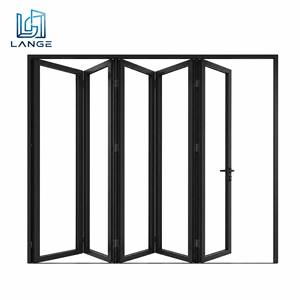
Modern Aluminium Bifold Windproof Glass Doors
- Full-View Panoramic Glazing
- Polyamide Thermal Break Profiles
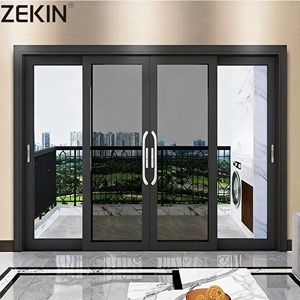
Panoramic Commercial Double Glass Stacker Sliding Doors
- Heavy-Duty Integrated Flyscreen
- Multitrack Smooth Stainless Steel Rollers
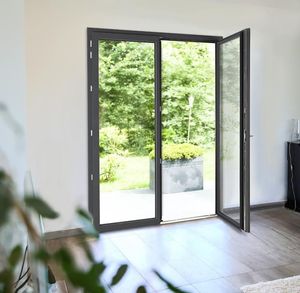
Aluminium Casement Front Swing Double Glazed Entry Door
- Reinforced Heavy Duty Pivot / Butt Hinges
- Multi-Point Perimeter Security Lock
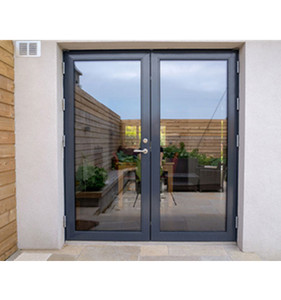
Modern Double Entry French Swing Architectural Door
- Narrow Sightline European Silhouette
- Anodized and Fluorocarbon Finish
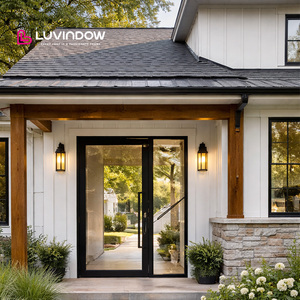
Acoustic Rated Tempered Double Glazed Exterior Door
- Sound Transmission Loss (Rw/STC > 38dB)
- Dual EPDM Vulcanized Gaskets
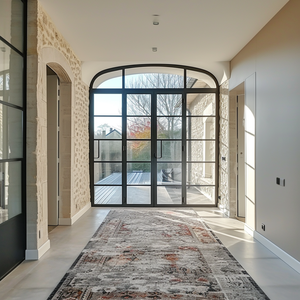
European Frosted Flush Glass Casement Aluminium Door
- Frosted / Acid-Etched Laminated Option
- Flush Frame-to-Sash Construction
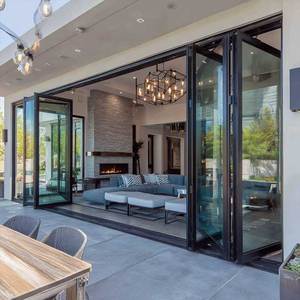
Heavy-Duty Panoramic Top-Hung Bi-Fold Patio Door
- 300kg+ Heavy-Duty Stainless Hardware
- Zero-Threshold / ADA Sill Options
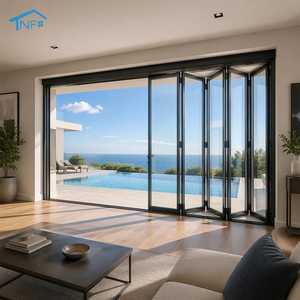
Exterior Double Glazed Accordion Bifold Patio Door
- Argon-Filled Dual Low-E Safety Glass
- High Wind Load Resistance (N6 Tier)
Guangdong Dejiyoupin Doors and Windows Co., Ltd. (DERCHI)
A proven leader in industrial fenestration manufacturing, combining high-speed automated precision with bespoke engineering across the United States, Canada, Australia, and the Middle East.
Integrated Industrial Prowess: Why Global Procurement Teams Rely on DERCHI
Operating as a premier architectural facade, entry system, and aluminium full glass door manufacturer from Foshan, Guangdong—the world’s epicentre for precision aluminium profile extrusion—Guangdong Dejiyoupin Doors and Windows Co., Ltd. (DERCHI) offers unparalleled scale and technical rigor. While typical trading intermediaries struggle with tolerance inconsistencies and fractured liability across fragmented vendors, DERCHI delivers an end-to-end engineered lifecycle. From our specialized 180,000 square meter intelligent manufacturing park, our operations house precision CNC multi-axis milling machines, automated robotic assembly cells, and in-line gas-filling insulating glass unit (IGU) production facilities.
Our engineering pedigree spans over a quarter of a century. We maintain complete traceability for every aluminium structural profile (6063-T5/T6 marine grade), polyamide insulation strip (PA66 GF25 reinforced), structural silicone sealant, and certified tempered/laminated glass panel. Backed by an engineering team aligned with North American (EST/PST) operational hours, we provide shop-drawing drafting, finite element structural deflection modeling, and wind load simulations directly from your initial door schedule. Our factory-direct architecture completely eliminates broker margins, yielding substantial cost savings for large-scale multi-family developments, luxury hotel resorts, and master-planned residential communities.
Certified Global Compliance
Every full glass door assembly is tested to international structural and thermal mandates. We hold verified certifications for AS2047 (Australian Standards including N6 Cyclonic Rating), NFRC / AAMA compliance for North America, CE marking for the European Union, and ISO 9001 quality system auditing.
One-Stop Portfolios & Consolidation
Streamline logistical complexity by sourcing entire building fenestration envelopes from a single manufacturer. Consolidate full-view panoramic sliding systems, heavy-duty bifold doors, cast aluminium statement entries, acoustic casements, and commercial glass storefronts within uniform container loadings.
CAD Shop Drawings & Customization
Zero reliance on rigid off-the-shelf sizing. Our design unit provides free parametric CAD elevations, detail drawings (plan, jamb, and head sections), anchor point engineering, and BIM models tailored to specific masonry, steel, or timber framing conditions prior to production deposit sign-off.
Future Procurement Trends in Aluminium Full Glass Doors
A whitepaper analysis for project developers, façade consultants, and general contractors navigating global supply chains and regulatory shifts through 2026–2030.
1. Transition Toward Ultra-Low U-Value Mandates and Life-Cycle Carbon Accounting
Global architectural codes are systematically tightening thermal envelope thresholds. The International Energy Conservation Code (IECC) updates in North America, alongside stringent European Passive House criteria and Australian NCC provisions, require overall window and door system U-values dropping well below 1.4 W/m²K (U < 0.25 BTU/hr·ft²·°F). Sourcing aluminium full glass doors now necessitates advanced techno-polymer thermal breaks, notably multi-cavity polyamide strips reinforced with axial glass fibers and aerogel insulation cores.
Procurement directors are demanding Environmental Product Declarations (EPDs). Sourcing from China no longer centers strictly on ex-factory purchase costs; developers are assessing embodied carbon footprints. At DERCHI, we lead this change by utilizing recycled "green aluminium" hydro-electric billets, lowering production emissions significantly compared to traditional coal-powered smelters. Sourcing strategies are prioritizing suppliers who provide certified Life Cycle Assessments (LCA) to secure green building certifications like LEED, BREEAM, and WELL.
2. Large-Format Glazing Driven by Advanced Structural Lamination
Architectural demand has decisively moved away from compartmentalized window walls to continuous visual expanse. Floor-to-ceiling panoramic glass panels exceeding heights of 3,500mm to 4,500mm and widths of 2,500mm per sash are increasingly specified in luxury residences and commercial hospitality pavilions. Fulfilling these demands without visual deflection or frame distortion demands aerospace-grade engineering.
Procurement frameworks now demand finite-element wind pressure analysis. Glass makeups are evolving from basic tempered double glass to triple-glazed configurations integrating high-strength SentryGlas (SGP) structural interlayers. SGP interlayers provide up to five times the tear strength and one hundred times the rigidity of conventional PVB, ensuring that panels remain intact even under high cyclonic positive and negative wind vacuums.
3. Supply Chain Rationalization: The Shift Toward True Tier-1 OEM Factories
High ocean freight rates and volatile geopolitical dynamics have rendered third-party traders obsolete. Modern procurement strategies emphasize supplier rationalization—direct contracts with primary original equipment manufacturers (OEMs). Direct collaboration mitigates the classic failure points of cross-border manufacturing: miscommunicated dimensional schedules, uncoordinated hardware handings, mismatched glass color coatings, and lack of warranty enforceability.
| Procurement Factor | Traditional Sourcing (Brokers / Traders) | Strategic OEM Direct (DERCHI Model) |
|---|---|---|
| Cost Structure | Layered broker margins (15%–35% markups) | Factory-direct pricing with absolute BOM transparency |
| Technical Oversight | Third-party reliance; slow drawing turnaround | In-house facade engineers delivering real-time CAD & BIM |
| Quality Audits | Intermittent spot-checks; high risk of profile substitution | ISO 9001 certified in-line testing, 100% pre-shipment mockups |
| Testing Compliance | Generic certificates borrowed from external factories | Project-specific AS2047, NFRC, CE, and Florida HVHZ reports |
| Logistics & Crating | Standard pallets; frequent transit breakage | A-frame steel racks and fumigated waterproof export plywood |
Technological Developments in Architectural Glass Doors
Exploring the engineering breakthroughs transforming modern aluminium glass doors from passive barriers into active, intelligent building systems.
Vacuum Insulated Glass (VIG) Integration
The industry is transitioning toward hybrid VIG configurations. By extracting air between two tempered lites to create an 0.1mm to 0.3mm vacuum, conductive and convective heat transfer is virtually eliminated, achieving Center-of-Glass U-values as low as 0.45 W/m²K in a frame profile half the thickness of traditional triple glazing.
Minimalist Sightlines & Concealed Drainage
Modern architectural language favors "invisible frames." New structural designs allow the entire perimeter frame to be recessed flush into finished flooring, ceiling bulkheads, and lateral wall reveals. Interlock profiles have narrowed to a razor-thin 18mm to 24mm sightline, while internal cascade-drainage chambers evacuate torrential rainfall at over 300 liters per hour without backflow risks.
Smart Home Automation & Dynamic Tinting
Motorized heavy-duty systems are now deeply integrated with building automation protocols (BACnet, KNX, Zigbee). Smart dynamic electrochromic glass allows users to adjust solar heat gain (SHGC) and light transmittance with the tap of a button. Brushless DC linear motors operate massive 500kg sashes whisper-quietly, protected by optical safety barriers and pinch-prevention sensors.
Corrosion Engineering for Marine and Coastal Façades
Coastal developments demand elevated metallurgy. Standard powder coatings inevitably suffer from filiform corrosion and blistering within 24 to 36 months when subjected to airborne maritime chloride salts. As an export specialist, DERCHI mandates Qualicoat Class 2 / Class 3 high-durability fluorocarbon (PVDF) 3-coat spraying and thick-film anodizing (20–25 microns). When combined with grade 316 marine stainless steel operating hardware, rollers, and multi-point lock bodies, our aluminium glass door assemblies operate reliably throughout decades of exposure to extreme tropical monsoons, oceanfront salt-mist, and high UV radiation.
Frequently Asked Questions on Importing Doors from China
Essential guidance addressing technical specifications, logistics protection, custom clearances, and code verifications.