High-Performance Aluminium Hinged Windows
Exporting verified fenestration assemblies manufactured under strict ISO 9001, CE, and AS 2047 protocols. Optimized for structural load, microclimate resilience, and energy conservation.
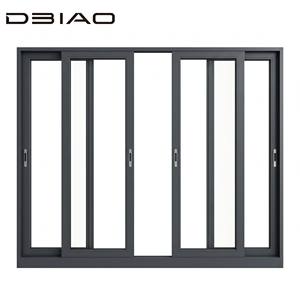
Engineered with hidden drainage tracks, reinforced sill profiles, and optimal wind-load capabilities ideal for exposed coastal or hillside luxury villas.
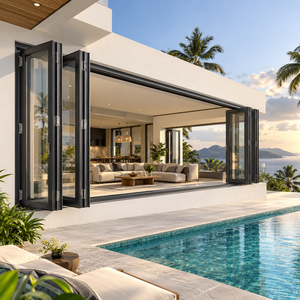
Heavy-duty bottom-rolling pivot hardware designed for broad transitional wall spaces, maximizing acoustic dampening and natural ventilation opening ratios.
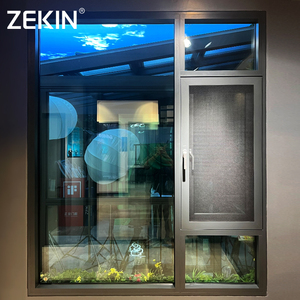
European dual-mode operating gear with perimeter multi-point compression locking. Delivers acoustic isolation up to 42 dB and micro-ventilation safety.
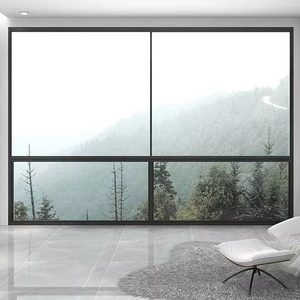
Hybrid slide-and-swing kinetic system providing uninhibited panoramic views and easy exterior glass cleaning access for mid-to-high-rise developments.
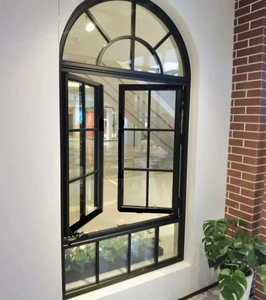
Symmetrical double sash swing system with stainless steel heavy-load hinges, thermal barrier profiles, and multi-tier EPDM automotive-grade weatherseals.
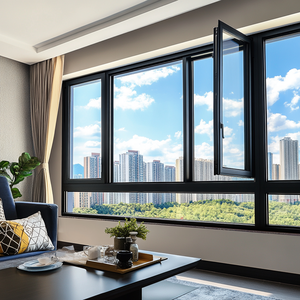
Engineered with German OAOSM 100,000-cycle certified hinges, 34mm multi-cavity polyamide insulating struts, and ultra-low U-factor profile geometry.
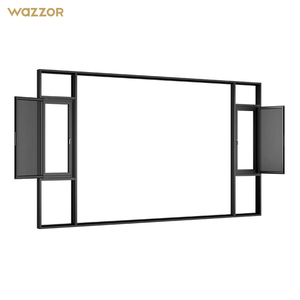
Built with reinforced extruded 6063-T6 alloy frames and laminated SentryGlas interlayers, rated for extreme cyclic wind loads and missile impact safety.
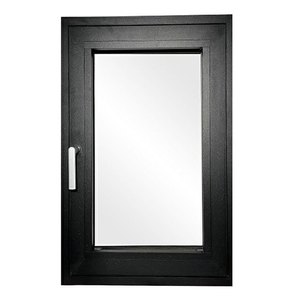
Optimized for commercial facades and institutional structures. Provides continuous wet-weather ventilation while securing maximum building envelope tightness.
180,000m²
Smart Manufacturing Base
25+ Years
Engineering Heritage
100+
Patents & Global Certifications
600+
Technical & Production Staff
Industrial Authority: Specifying Aluminium Hinged Windows for Global Projects
Aluminium hinged window assemblies (encompassing side-hung casement, top-hung awning, tilt-turn, and project-out typologies) represent the highest tier of atmospheric sealing among modern architectural fenestration systems. Unlike sliding systems that rely on brush seals prone to friction wear and progressive air leakage, precision-manufactured hinged systems close via mechanical compression along the sash perimeter. When fully engaged, continuous vulcanized EPDM gaskets establish a hermetic seal against draft, air infiltration, and driven rain.
As a leading Chinese manufacturer and global exporter, our engineering protocols align with international baseline standards, including AS 2047 (N6 Cyclic Wind Pressure Rating), ASTM E283/E330/E331, and European EN 12207/12208 certifications. Understanding the physical metrics of window fabrication determines the structural longevity and return on investment for high-end developers and general contractors.
-
Extrusion Integrity: Formulated using pure virgin 6063-T5/T6 billet alloy with wall thicknesses exceeding 1.8mm to 2.0mm, preventing racking under extreme facade pressures.
-
Thermal Decoupling: Low-conductance Technoform PA66 GF25 polyamide barrier struts engineered into multi-cavity chambers reduce overall fenestration U-values below 1.4 W/m²K.
-
Dynamic Hardware Longevity: Friction stays, heavy pivot hinges, and multipoint gear mechanisms independently tested across 50,000 to 100,000 duty cycles without mechanical deflection.
-
Surface Protection Systems: Architectural powder coating meeting AAMA 2604/2605 or high-micron fluorocarbon (PVDF) finishes that repel UV exposure and coastal saline degradation.
Future Sourcing & Technological Trends
The global construction market is undergoing rapid evolution driven by stringent carbon codes, extreme weather events, and intelligent building systems. Sourcing teams must track these pivotal developments.
Ultra-Passive & Aerogel Insulation
Building energy regulations in North America (ASHRAE 90.1) and Europe (EPBD recast) necessitate whole-window U-factors approaching Passive House benchmarks (Uw ≤ 0.8 W/m²K). Next-generation hinged windows integrate aerogel-filled cavities, warm-edge composite spacers, and triple/quadruple low-emissivity glass packages backfilled with 95% argon gas concentrations.
Severe Weather & Cyclone Mitigation
Accelerating microclimatic volatility has expanded coastal hurricane codes into inland regions. Procurement requirements are moving decisively toward laminated structural interlayers (PVB/SGP) matched with internal stainless steel corner-key reinforcements to resist both positive/negative cyclic wind forces and airborne debris impact without envelope breach.
Concealed Actuators & IoT Integration
Architectural demand favors clean, unbroken sightlines. Hinged systems increasingly feature concealed 180° swing hinges alongside internally routed low-voltage linear actuators. These tie into centralized Building Management Systems (BMS) for nighttime purge cooling, automated rain detection closing, and remote acoustic isolation control.
Digital BIM & DFM Integration
Global developers are compressing procurement timelines by demanding factory-direct Design for Manufacturability (DFM) verification. Parametric BIM modeling allows manufacturers to feed shop drawings directly into 5-axis CNC extrusion centers, drastically cutting tolerance errors on expansive commercial and residential orders.
Low-Carbon Recycled Billets
Decarbonization policies require transparent Environmental Product Declarations (EPD). Modern Chinese exporters utilize green-hydro-powered aluminium smelters and recycled post-consumer scrap to provide high-strength architectural alloys with certified low embodied carbon footprints.
Manufacturing Rigor & Supply Chain Reliability
Operating a modern 180,000-square-meter facility with over 600 skilled technicians, we eliminate middle-tier markups, mitigate technical miscommunications, and ensure schedule fidelity for overseas developers.
Comprehensive Fenestration Sourcing
Beyond specialized hinged casement and awning units, our infrastructure spans architectural entry doors, large-format pivot doors, heavy-duty interior wooden doors, and automated garage portals—enabling single-point logistics and container optimization.
Certified Code Compliance
Our window assemblies carry authentic certifications including AS 2047, ISO 9001, CE, and specialized UL fire ratings. All manufacturing output is verified with comprehensive structural deflection, water ingress, and air leakage inspection reports.
Precision CAD/BIM Shop Drawings
Eliminate jobsite fit discrepancies. Our engineering department develops complimentary, fully annotated CAD and BIM shop drawings detailing rough openings, sill pans, anchorage interfaces, and structural mullion connections prior to production.
Dedicated Time-Zone Engineering Support
Our bilingual fenestration sales engineers maintain coverage across North American (EST/PST), European, and Australasian working hours. Real-time engineering reviews, rapid RFQ turnaround, and virtual factory video audits eliminate cross-border friction.
Export-Grade Heavy Protection Packaging
Every window unit is encased with corner guards, moisture-barrier shrink wrap, high-density polyethylene foam sheets, and crated in fully enclosed, fumigated ISPM-15 plywood crates built for multi-modal ocean and rail transit.
Frequently Asked Questions on Aluminium Window Procurement
Key technical, logistic, and contractual considerations for purchasing professionals sourcing directly from China.
How do thermally broken aluminium hinged windows prevent interior condensation?
What is the standard manufacturing lead time and process validation timeline?
Can you manufacture hinged window systems to meet North American NFRC or Australian AS 2047 standards?
What dynamic hardware options are integrated into your casement and tilt-turn systems?
How do you guarantee finish durability in aggressive coastal salt-air environments?
Request Complete Product Catalogs & Technical Specifications
Connect directly with our engineering team for full-scale commercial fenestration schedules, CAD profile blocks, structural calculations, and competitive factory-direct quotations.
Get Catalog