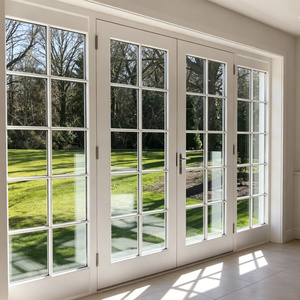
Heavy Security Series
Explore our export-certified architectural systems manufactured under ISO 9001 quality parameters. From heavy-duty thermal break extrusions to panoramic glass split configurations, every unit is engineered for demanding commercial and high-end residential installations.
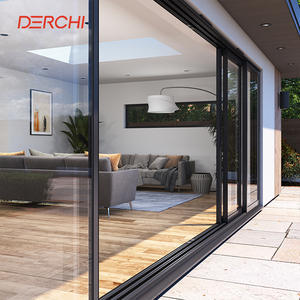
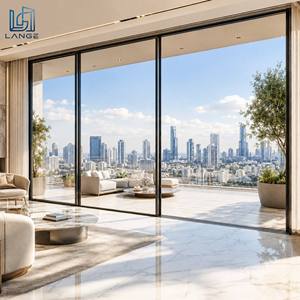
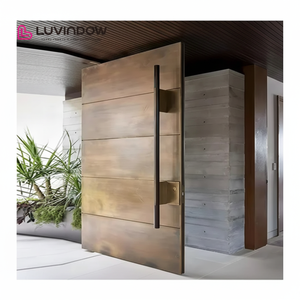
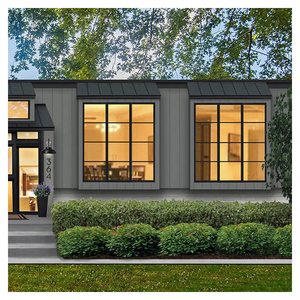
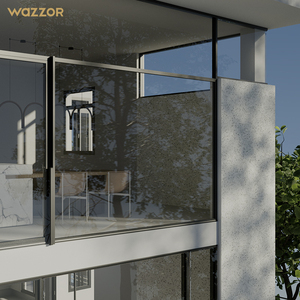
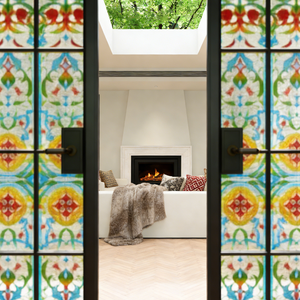
Aluminium stable doors (frequently classified in international architectural specifications as Dutch doors, dual-leaf split access systems, or equestrian-grade fenestration barriers) require an extraordinary synthesis of structural rigidity, micro-climate weather sealing, and absolute dimensional stability. Unlike conventional single-leaf swinging apertures, an aluminum stable door features horizontally divided top and bottom sashes that must function independently while sealing hermetically along a shared central horizontal transom meeting rail when latched together.
When engineering these systems for harsh marine zones, expansive agricultural operations, or luxury residential estates, ordinary secondary-market aluminum extrusions inevitably suffer structural deformation, rail sag, and thermal transmission failures. Sourcing from a tier-one China aluminum stable doors supplier requires an empirical understanding of metallurgical temper, poly-extrusion design, and precision interlocking joinery.
Technical Information Gain: DERCHI utilizes prime-billet 6063-T5 and structural 6061-T6 aluminum alloys yielding tensile strengths exceeding 205 MPa. Combined with 25% glass-fiber reinforced polyamide (PA66 GF25) thermal breaks and multi-point perimeter compression seals, our stable door assemblies achieve complete thermal isolation without sacrificing lateral torsional resistance.
Procurement directors and façade engineers must demand strict material accountability. The table below delineates the baseline metallurgical, thermal, and surface finishing standards applied across our Foshan manufacturing lines compared to conventional commercial market alternatives:
| Engineering Attribute | DERCHI Specification Standard | Standard Commercial Grade | Impact on Architectural Longevity |
|---|---|---|---|
| Primary Extrusion Alloy | Architectural 6063-T6 / Structural 6061-T6 (Virgin Ingot) | Secondary Recycled 6063-T4 / Mixed Scrap | Eliminates profile deflection and micro-fissuring under continuous cycle fatigue. |
| Profile Wall Thickness | 2.0 mm – 3.0 mm Reinforced Internal Webbing | 1.2 mm – 1.4 mm Thin-wall extrusion | Prevents door leaf sagging at heavy mortise hinge anchor points. |
| Thermal Insulation Core | 24 mm – 34 mm PA66 GF25 Polyamide Bar (Crimped) | Unbroken solid aluminum or low-grade PVC strip | Lowers U-values to below 1.4 W/m²K, preventing interior condensation. |
| Meeting Rail Interlock | Triple EPDM Bubble Gasket with Dual Tongue-in-Groove | Single felt strip or flat rubber flipper seal | Certified water penetration resistance up to 600 Pa (AS 2047 / ASTM E331). |
| Surface Protection | Fluorocarbon (PVDF) 3-Coat or 25µm Hard Anodizing | Standard single-coat decorative powder spraying | Over 3,000 hours of Neutral Salt Spray testing with zero blister degradation. |
As international construction paradigms shift toward accelerated modular prefabrication, passive environmental targets, and biophilic architectural integration, the procurement parameters for aluminum stable and split doors are undergoing substantial evolution. B2B importers, builders, and developers must orient their specification sheets to accommodate these structural trends:
Onsite labor expenditures in North America, Europe, and Australasia have catalyzed surging demand for fully consolidated prehung modular frames. Suppliers must deliver completely squared sub-frames with factory-milled mortise pockets, integrated flashings, and balanced deadbolt strikes to reduce site installation timelines by up to 65%.
Mandatory Environmental Product Declarations (EPDs) in Tier-1 jurisdictions require certified green aluminum processing. Smelting verified through hydroelectric or renewable energy profiles drastically reduces embodied carbon per square meter, satisfying LEED v4 and BREEAM compliance metrics for commercial institutional developments.
Modern stable doors are no longer relegated to rustic outbuildings; they act as primary entrances for ultra-luxury contemporary villas and modern barn conversions. Advanced procurement contracts now mandate invisible motorized multi-point deadbolts, concealed split-leaf electrical conduits, and biometric facial access integration.
Engineering split-leaf stable doors in aluminum eliminates the catastrophic volumetric expansion, warping, rotting, and fungal decomposition inherent to traditional timber joinery. Achieving complete atmospheric impermeability between the independently articulated leafs requires meticulous manufacturing innovation:
Automated CNC routing tables maintain absolute fabrication tolerances within ±0.15 mm, guaranteeing that latch catches and horizontal meeting rails seal symmetrically regardless of environmental temperature swings.
Validated under Australia's AS 2047 N6 protocol and American ASTM impact criteria, structural internal gusseting enables large-span aluminum stable entries to withstand ultimate wind pressures exceeding 4,500 Pa.
Advanced dual-crimp polyamide cavities fill profile chambers with high-density polyisocyanurate (PIR) structural insulating foams, effectively stopping interior thermal bridging during freezing winter drafts.
High-voltage fluorocarbon (PVDF) electrostatic processes and AkzoNobel Interpon D architectural coatings resist extreme UV exposure, preventing Chalking and fading in intense coastal climates.
Founded on an unyielding dedication to architectural integrity, DERCHI ranks as a definitive Tier-1 manufacturer specializing in heavy-duty aluminum entry systems, pivot enclosures, panoramic facades, and specialized Dutch/stable door solutions. From our 180,000-square-meter modern production base in Shishan Town, Foshan, we control every manufacturing touchpoint—from raw alloy ingot extrusion verification to final ocean-crated assembly.
Overseas developers, contractors, and fenestration suppliers work directly with our in-house engineering guild. We eliminate intermediate brokerage markups and supply chain opacity, providing comprehensive CAD shop drawings, calculation packages for local building code sign-offs, and dedicated technical project support aligned with EST/PST and GMT working hours.

Comprehensive engineering clarifications addressing rough-opening tolerances, acoustic ratings, weatherization standards, logistics packing, and contract compliance for overseas trade buyers.
The central horizontal junction represents the most critical engineering challenge in split door design. DERCHI solves water intrusion through a proprietary stepped tongue-and-groove profile interlock embedded with three continuous vulcanized EPDM compression gaskets. Furthermore, an external extruded aluminum drip-deflector hood sheds gravity-fed surface water away from the joint, while internal microscopic weep paths route capillary moisture into an isolated drainage channel within the sub-frame sill, rated to 600 Pa under cyclic water penetration testing.
Yes. Approximately 65% of our export fabrication supports projects across the United States and Canada. Our engineering department works natively with imperial fractions or decimal millimetric schedules. We custom-extrude and machine jamb extenders to accommodate 4-9/16", 6-9/16", or custom steel-stud wall depths, providing full pre-hung sub-assembly systems complete with integrated nail fins or retro-fit brickmold trims according to your project's architectural drawings.
By pairing multi-chambered 6063-T5 aluminum profiles featuring 34 mm PA66 GF25 thermal breaks with triple-pane double-Low-E argon-filled insulated glass units (IGUs) with warm-edge spacers, our systems achieve overall system U-factors as low as 0.24 BTU/(hr·ft²·°F) [1.36 W/(m²K)]. This complies comfortably with Northern US Climate Zone 7 and Canadian National Energy Code requirements, entirely eliminating profile sweating and frost formation.
Door sag occurs when corner joints lack internal rigidity or when hinge anchor points pull away from thin profile walls. DERCHI reinforces every corner joint with cast-aluminum corner keys crimped under mechanical hydraulic tension and sealed with two-part structural polyurethane sealant. Hinge anchor tracks are bolstered by 5 mm thick internal aluminum backing plates. All commercial models undergo 200,000-cycle mechanical endurance torture testing without exceeding 0.8 mm of leaf deflection.
Every completed door undergoes a four-tier packaging regimen: first, a peelable protective poly-film applied across all aluminum profiles; second, high-density polyethylene corner cushions and closed-cell foam wrapping; third, heavy-duty corrugated board casing; and fourth, fully enclosed, heat-treated fumigated plywood crates reinforced with interior steel strapping and silica desiccant bags. This packaging guarantees structural protection against container moisture condensation and ocean transit vibrations.
Absolutely. We encourage third-party pre-shipment inspections (PSI) and container loading checks (CLC). Clients may also tour our Foshan facility via real-time 360-degree Virtual Reality interfaces or coordinate with client-appointed quality control inspection agencies to verify dimensional accuracy, powder coat thickness (micrometer check), water spray adhesion, and glass tempering certification marks.