Featured Aluminum Replacement Windows & Architectural Openings
Precision-engineered multi-chamber extruded profiles fitted with polyamide thermal breaks, triple-insulated Low-E glass units, and heavy-duty European hardware configurations.
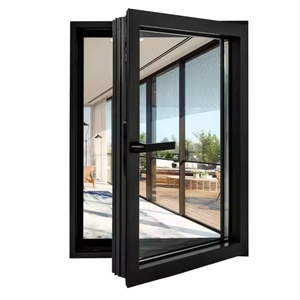
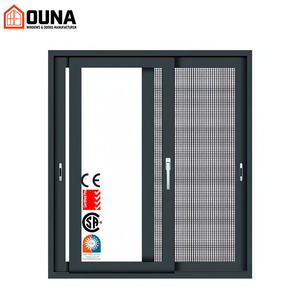
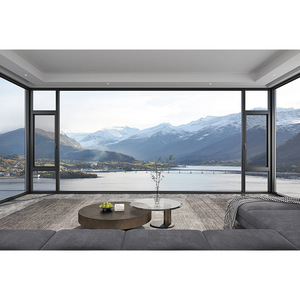
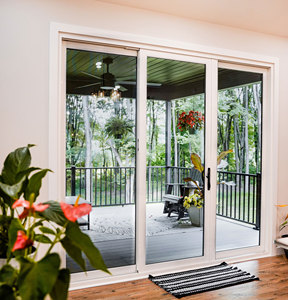
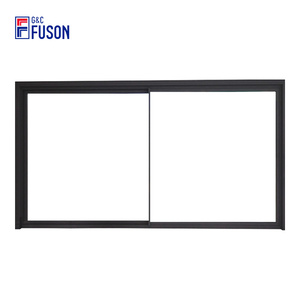
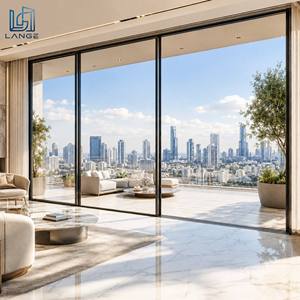
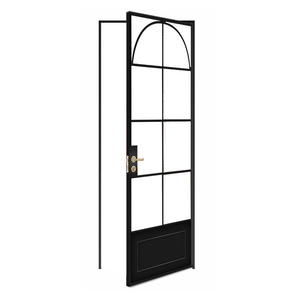
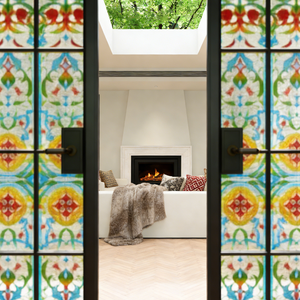
Strategic Sourcing: The Evolution of Chinese Aluminum Replacement Windows
The global construction sector is undergoing a profound structural shift toward deep decarbonization, requiring high-performance fenestration solutions with lower embodied energy and superior operational thermal envelopes. Historically, international builders and procurement teams treated aluminum window imports with caution due to the thermal bridging limitations of uninsulated frames. However, advanced manufacturers across China—particularly in the industrial manufacturing hub of Foshan, Guangdong—have transformed aluminum fenestration via multi-chamber polyamide (PA66 GF25) thermal breaks, structural silicone glazing, and precision automated CNC extrusion routing.
Today, sourcing replacement windows directly from tier-one Chinese suppliers is no longer merely a cost-reduction strategy; it is a calculated engineering decision. Modern retrofit envelopes require custom structural sizing, zero tolerance for frame racking, and complete compliance with local building envelopes—such as Title 24 in California, the National Building Code of Canada, and European CE/EN directives. Leading Chinese fabricators like Guangdong Dejiyoupin Doors and Windows Co., Ltd. (DERCHI) have closed the engineering divide by combining 6063-T5 and 6063-T6 virgin architectural alloys with automated automated assembly systems, producing systems that match or surpass German and North American standards in structural load (AS 2047 N6 rating), acoustic attenuation (STC 38–45 dB), and thermal transmittance (U-factors reaching under 0.22 BTU/hr·ft²·°F).
Future Sourcing & Engineering Trends (2025–2030)
Critical market vectors dictating specifications, commercial agreements, and material performance in the global fenestration space.
Direct-to-Fabricator Engineering
Bypassing multi-tier distribution networks via Building Information Modeling (BIM) integrations and bespoke CAD shop drawings. General contractors directly access factory floor engineers to tailor profile depths to irregular rough opening conditions.
Ultra-Slim Visible Sightlines
The architectural transition toward minimalist 'Crittall-inspired' profiles and panoramic glazing without sacrificing thermal isolation. Structural glazing allows interlock widths as narrow as 20mm, providing uninterrupted sightlines while resisting hurricane-grade wind loads.
Thermally Broken Polyamide Strips
Adoption of 34mm+ multi-chamber structural isolators with aerogel insulation cores. Fabricators are moving beyond standard thermal breaks to address severe winter condensation and pass stringent net-zero operational standards across North America and Scandinavia.
Technical Specification Benchmarks: DERCHI Replacement Systems
When specifying replacement systems for mid-rise, residential estate, or light commercial retrofits, comparative engineering performance guides procurement feasibility. The table below delineates verified performance metrics achieved across our core extruded product categories:
| System Category | Profile Alloy & Break | Glazing Specification | Acoustic (STC) | Thermal Transmittance (U-Value) | Structural Wind Rating |
|---|---|---|---|---|---|
| Thermal Break Casement | 6063-T6 / 24–34mm PA66 GF25 | 6mm Low-E + 16Ar + 6mm Tempered | 38 - 42 dB | 0.24 - 0.28 BTU/hr·ft²·°F | Up to 4500 Pa (AS 2047 N6) |
| Hurricane Impact Sliding | High-Tensile Aluminum / Reinforced | 5mm + 1.52PVB + 5mm + 12Ar + 6mm | 40 - 45 dB | 0.28 - 0.32 BTU/hr·ft²·°F | ASTM E1886/E1996 Large Missile D |
| Minimalist Balcony Slider | Deep-Cavity Extruded Aluminum | 8mm + 12Ar + 8mm Low-E Warm Edge | 35 - 38 dB | 0.30 - 0.35 BTU/hr·ft²·°F | 3000 Pa Design Pressure |
| Slim-Frame Steel-Look (Crittall) | Precision Billet 6063 / Composite Barrier | Double or Triple Glazed Argon Filled | 36 - 40 dB | 0.26 - 0.30 BTU/hr·ft²·°F | 2500 Pa Uniform Load |
DERCHI Enterprise Capabilities & Export Infrastructure
Operating as the export-grade division of Guangdong Dejiyoupin Doors and Windows Co., Ltd., we combine end-to-end metallurgical engineering with strict Western project management.
180,000 m² Production Complex
Located in Shishan Town, Nanhai District, Foshan, our unified manufacturing campus processes raw virgin billets through extrusion, powder coating, assembly, and automated QA under one roof to prevent subcontracting variances.
International Certifications
Products are rigorously tested to hold CE, ISO 9001, AS 2047 (Pass Class N6), and UL fire ratings. Backed by 100+ patents and testing documentation configured for easy submittal to municipal inspectors in the US, Canada, and Australia.
Full CAD Shop Submittal Workflow
Prior to extrusion line cutoffs, our 600+ staff include English-speaking senior façade engineers who generate exact CAD submittals, anchor-load calculations, and profile intersections tailored directly to your door and window schedule.
Frequently Asked Procurement Questions
Direct technical answers addressing tariff navigation, measurement conversions, ocean transit safeguarding, and code verification for overseas buyers.
Q: How do you prevent frame racking and dimensional inaccuracies during retrofits?
Every rough opening requires bespoke sizing down to the millimeter. Our structural engineering department requests either as-built framing details or 3D point-cloud survey dimensions. We provide a ±1.5mm production tolerance on fully welded or mechanical crimped corner assemblies, accompanied by heavy-duty sub-sills and flange adapters suited for typical drywall or masonry tie-ins.
Q: How does DERCHI ensure sea-freight integrity during long transits?
All finished windows undergo factory assembly and functional testing before being de-hung or consolidated. Glass units and frames are protected by low-tack protective film, corner impact guards, high-density pearl cotton wrapping, and fully enclosed, fumigated marine-grade plywood crates equipped with interior moisture desiccants to prevent container-sweat oxidation.
Q: Are your thermal break configurations fully certified for freezing climates?
Yes. For cold-climate designations (such as Climate Zones 5 through 7 in the United States and across Canada), we configure multi-chamber polyamide 66 reinforced with 25% glass fiber (PA66 GF25), combined with warm-edge spacers, argon gas filling, and low-emissivity (Low-E) double or triple IGU coatings to mitigate condensation and reduce overall fenestration U-factors below 0.24.
Q: What is the typical lead time from shop drawing sign-off to delivery?
Standard lead times for precision extrusion, fluorocarbon (PVDF) or powder-coat surface finishing, and assembly typically range from 25 to 35 business days from final CAD approval. Ocean freight transit to West Coast North American ports averages 14–18 days, while East Coast and inland rail destinations range between 28 and 35 days.