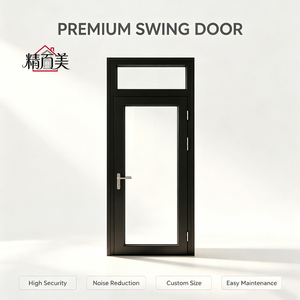
Direct Factory Production
Engineered Architectural Aluminum Door Series
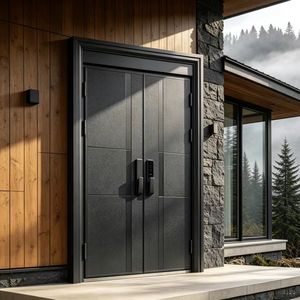
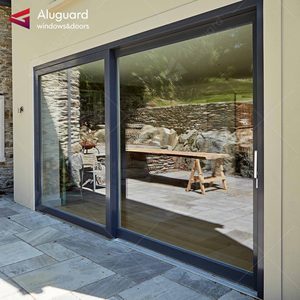
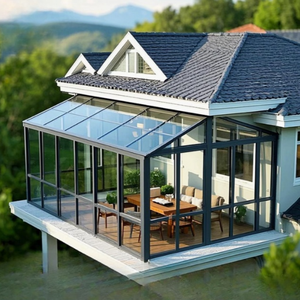
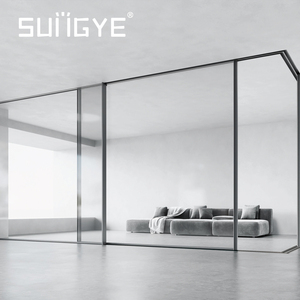
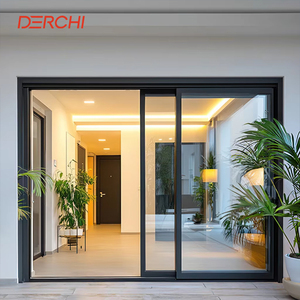
Our specialized manufacturing lines produce precision-extruded, thermally broken, and bullet-resistant entrance doors. Engineered according to international standards (CE, AS2047, NFRC, UL), each unit is custom-fabricated to fit your shopfront structural schedules.
180,000m²
Modern Production Base
600+
Skilled Craftsmen & Engineers
100+
Patents & Global Certifications
25+
Years Engineering Excellence
Manufacturing Leadership
Factory-Direct Advantage & Technical Capabilities
Manufactured by Guangdong Dejiyoupin Doors and Windows Co., Ltd. (DERCHI), our facility integrates structural design, CNC aluminum profile machining, thermal break crimping, automated glass sealing, and strict multi-point QA under one roof.
One-Stop Architectural Envelope
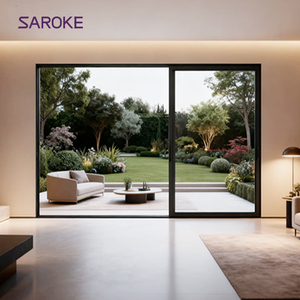
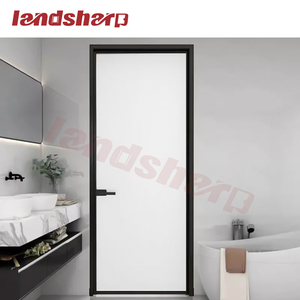
Eliminate project communication fragmentation. We manufacture storefront aluminum systems, ultra-large pivot entrances, bi-fold doors, interior casements, and heavy-duty sliding systems with unified color matching and coordinated schedules.
Stringent International Testing
Tested and certified to withstand harsh environments. Our systems comply with Australian AS2047 (N6 Cyclic Wind Load testing), American NFRC thermal metrics, CE directives, and UL 10C positive pressure fire-resistance ratings.
CAD Shop Drawing Support
We bridge architectural concepts and jobsite reality. Our in-house facade engineers generate detailed CAD shop drawings, anchoring calculations, structural mullion sizing, and threshold waterproofing details free of charge prior to cutting.
Time-Zone Responsive Logistics
Operating dedicated North American, European, and Australian project desks. We offer export-standard non-fumigation plywood crating, sea freight consolidation, customs clearance documentation, and remote site installation support.
Engineering Whitepaper
Procurement Dynamics, Material Science, and Engineering Trends in Aluminum Shop Doors
A comprehensive specification manual for real estate developers, facade engineers, and general contractors sourcing commercial shopfront entries directly from Chinese manufacturers.
1. The Evolution of Aluminum Storefront and Entrance Systems
Commercial shopfront entrances have evolved beyond passive barriers into critical elements of thermal containment, architectural branding, and high-frequency structural security. In high-traffic commercial environments such as retail plazas, boutique hotel lobbies, luxury showrooms, and multi-tenant mixed-use developments, shop doors must withstand continuous operation without deflection or hardware fatigue.
Chinese aluminum manufacturing has shifted from commodity extrusion to high-precision engineering. Advanced manufacturers utilize 6063-T5 and structural-grade 6061-T6 aluminum alloys. Precision extrusion profiles integrate structural wall thicknesses ranging from 2.0mm to 3.5mm at critical load-bearing hinge junctions. When specified with modern polyamide (PA66 GF25) thermal insulation strips, these systems minimize perimeter condensation while maintaining high air-tightness under extreme wind loads.
Technical Insight: Standard hollow architectural aluminum exhibits thermal conductivity of roughly 160–200 W/(m·K). Integrating multi-chamber extruded polyamide thermal barriers reduces the overall frame U-factor down to 1.6–2.2 W/(m²·K), meeting international commercial energy codes without compromising torsion resistance.
2. Structural Matrix: Material Science & Fenestration Comparison
Selecting the appropriate fenestration framing and glass configuration requires balancing physical performance with aesthetic intent. Below is a comparative engineering matrix detailing key operational properties across primary commercial entrance typologies.
| Door System Typology | Structural Profile Spec | Acoustic & Thermal Rating | Hardware Integration | Best Architectural Application |
|---|---|---|---|---|
| Thermally Broken Commercial Swing Door | 6063-T5 / 2.0mm–2.5mm wall; 24mm–34mm PA66 insulation barrier | U-value: 1.8–2.3 W/(m²·K) Sound: STC 34–38 dB |
Heavy-duty concealed floor springs, multi-point lock, panic push bars | Boutique shopfronts, hotel main entries, luxury retail streetfronts. |
| Oversized Pivot Entry System | Extruded multi-chamber box section / up to 3.5mm reinforced hinge side | U-value: 2.0–2.6 W/(m²·K) Sound: STC 32–36 dB |
German/Italian bottom pivot bearings (up to 500kg load capacity) | Flagship luxury stores, automobile dealerships, estate galleries. |
| Heavy-Duty Commercial Lift & Slide | 6063-T6 / 2.5mm frame depth; stainless steel 304/316 tandem rollers | U-value: 1.6–2.0 W/(m²·K) Air Infiltration: Class 4 |
Lift-assist lever handles, EPDM compression perimeter gaskets | Hospitality terraces, auto show displays, indoor-outdoor dining. |
| Armored Security & Fire-Rated Entry | Reinforced aluminum profile with internal galvanized steel cores | UL 10C Fire Resistance (30-90 min) Anti-burglary RC3/RC4 |
Electronic motor locks, biometric access, multi-deadbolt latches | Jewelry stores, bank branches, VIP commercial suites. |
3. Future Procurement & Technological Trends (2025–2030)
International fenestration procurement is navigating three distinct technical shifts. Sourcing managers and architects must account for these parameters to avoid early building obsolescence:
Trend 01: Thermal Mandates
Zero-Carbon Envelope Codes
Global regulatory bodies (such as North America's IECC and the EU's EPBD) mandate strict thermal performance for storefront perimeters. Procured systems increasingly combine multi-cavity thermal profiles with Argon-filled Low-E insulated glazing units (IGUs) incorporating warm-edge spacers.
Trend 02: Smart Access
IoT Hardware Interoperability
Modern shop entrances require concealed raceways within the aluminum extrusion to support smart access. This includes automated concealed closers, motorized multi-point locks, and integration with building management systems (BMS) via dry-contact and POE connections.
Trend 03: Climate Resilience
Severe Weather Performance
Rising sea levels and intense coastal storms require higher wind and water ratings. Storefronts now regularly require cyclic wind pressure resistance up to 4500Pa and impact-rated laminated interlayers (PVB/SentryGlas) compliant with ASTM E1886/E1996 and AS2047 cyclonic metrics.
4. Quality Assurance Protocol for Direct Factory Sourcing
Direct sourcing from Chinese suppliers requires verification across four operational control points. At Guangdong Dejiyoupin Doors and Windows Co., Ltd. (DERCHI), these benchmarks are embedded into every commercial order:
1. Alloy Composition and Anodizing/Coating Integrity: Reject suppliers using recycled or contaminated ingot stock. Insist on 6063-T5 virgin aluminum with documented spectrometer analysis. Surface coatings should comply with Qualicoat Class 2 standards for powder coating or AAMA 2605 fluoropolymer (PVDF) requirements for coastal exposure.
2. Structural Corner Jointing: High-performance shop doors must not rely solely on simple screw-fix joints. Our production standard incorporates heavy cast-aluminum corner keys injected with dual-component structural epoxy (crimped with hydraulic corner-combining machines). This prevents corner sag, water intrusion, and joint separation over decades of use.
3. Gasketry and Weatherproofing: Low-cost PVC weatherstripping degrades and shrinks under intense solar UV radiation within 24 months. Specifying co-extruded EPDM or Santoprene rubber gaskets ensures elastic recovery and maintains continuous air and water tightness.
Procurement Clarity
Frequently Asked Technical & Sourcing Questions
Direct answers to the most common questions raised by commercial builders, facade consultants, and overseas project developers.
How do Chinese aluminum shop doors ensure structural compliance with local building codes (e.g., US, Canada, Australia)?
Compliance starts at the engineering stage. Professional manufacturers like DERCHI build directly to the project's door schedules, referencing international performance standards. Our designs hold CE certifications, Australian AS2047 (with N6 wind load verification), and American NFRC ratings. When working with US and Canadian projects, we incorporate approved tempered/laminated glass meeting SGCC and ANSI Z97.1 standards, providing structural calculation sheets and CAD submittals for local building code sign-off.
What is the typical production and delivery lead time for custom shopfront systems?
For custom shopfront doors, standard manufacturing lead time is 25 to 35 working days following final sign-off on CAD shop drawings and finish approvals. Complex finishes (such as custom PVDF colors or specialized anodizing) or custom glass buildups (like bullet-resistant laminated glass) may require 35 to 40 days. Ocean freight typically ranges from 14 to 22 days to US West Coast/Australia, and 28 to 35 days to US East Coast and European ports.
Can the manufacturer install commercial hardware like panic hardware, electric strikes, and closers?
Yes. We provide complete hardware integration in-house. We source global tier-one hardware brands (such as DormaKaba, GEZE, Siegenia, Hoppe, or Allegion) or factory-machine prep cutouts to your exact hardware schedule. If you prefer to supply your own locks, panics, or access controllers, our CNC centers mill the profiles according to your physical samples or templates before surface coating, ensuring zero raw aluminum exposure on site.
How are oversized aluminum shopfront doors crated to prevent shipping damage?
Export packing follows international multi-layer protection standards. Profile surfaces are wrapped in protective polyethylene film, corners are secured with heavy-duty edge guards, and door leaves are encased in sealed bubble-wrap. The entire assembly is then secured inside custom, fully enclosed plywood crates (ISPM-15 compliant, no fumigation required) with internal high-density foam cushioning. Crates feature steel banding and integrated forklift skids to facilitate container loading and site handling.
What makes thermally broken aluminum superior to non-thermal profiles for shop entrances?
Non-thermally broken aluminum acts as a thermal bridge, rapidly transferring ambient heat or cold into the interior. In conditioned spaces, this results in high HVAC loads and interior condensation, which can ruin merchandise, cause slip hazards, and deteriorate flooring. Thermally broken systems isolate the exterior and interior aluminum extrusions with reinforced fiberglass polyamide struts, preventing condensation and lowering envelope energy loss by up to 45%.
Can we audit the factory and inspect the manufacturing process prior to shipment?
We encourage factory audits. Clients are welcome to visit our 180,000 square meter production facility in Foshan, Guangdong in person, or inspect production through our interactive 360-degree online VR platform and scheduled live video walk-throughs. Furthermore, we regularly accommodate third-party inspection agencies (such as SGS, TÜV, or BV) to verify dimensional accuracy, coating thickness, and trial assembly prior to container dispatch.
Submit Your Architectural Drawings for a Free Engineering Review
Connect directly with our commercial facade engineering department. We evaluate wind load requirements, configure thermal barrier profiles, and deliver comprehensive CAD shop drawings with transparent factory-direct commercial estimates within 24 hours.