Engineered White Aluminum Systems & High-Performance Assemblies
Explore our export-certified architectural doors and fenestration solutions. Manufactured under ISO 9001 and AS 2047 benchmarks with multi-point perimeter compression seals and impact-tested extruded alloys.
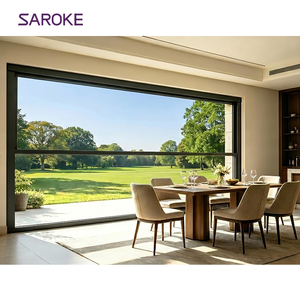
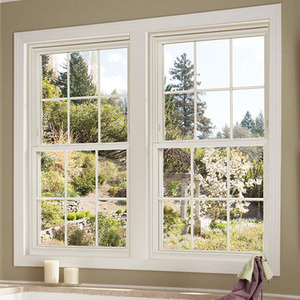
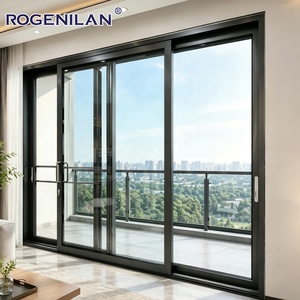
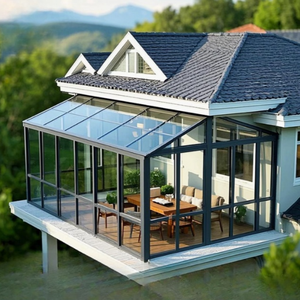
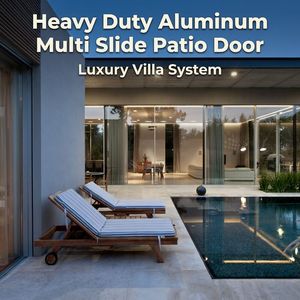
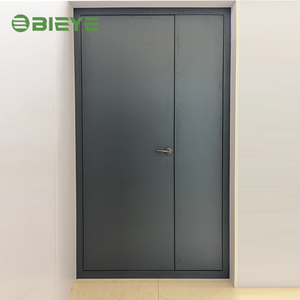
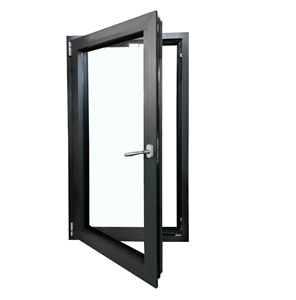
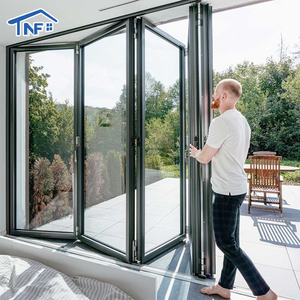
Material Science & Structural Engineering of Architectural White Doors
White finishes represent the highest benchmark in aluminum extrusion finishing. Unlike dark fluorocarbon coatings that absorb broad-spectrum solar radiation evenly, architectural white surfaces demand rigorous pigment purity, UV reflectance, and structural alloy stability to prevent photodegradation and chalking.
6063-T6 Primary Extrusions
Leading China aluminum white door factories strictly utilize A00 primary aluminum ingots rather than remelted secondary scrap. Extruded to 6063-T5 or 6063-T6 temper with a tensile strength exceeding 205 MPa, our profiles ensure that oversized exterior door frames maintain structural planar tolerance without bowing, sagging, or thermal torsion under severe temperature deltas.
AAMA 2605 & Qualicoat Class 3
White aluminum doors face severe chalking risks under intense ASTM G155 xenon-arc weathering. Top Chinese manufacturers apply Super-Durable PVDF 70% Fluorocarbon or AkzoNobel Interpon D2525 powder systems. These coatings maintain a color retention delta of $\Delta E < 5.0$ and greater than 50% gloss retention after 10 years of continuous Florida exposure testing.
PA66GF25 Thermal Insulation
Eliminating thermal bridging in white doors requires glass-fiber reinforced polyamide bars (PA66GF25). Offering low thermal conductivity ($\lambda = 0.30\text{ W}/(\text{m}\cdot\text{K})$), our multi-cavity thermal break designs reduce complete system U-values to below 1.2 W/(m²·K), preventing condensation and indoor heat loss in cold North American heating climates.
| Performance Parameter | Standard Powder Coat (RAL 9016) | Qualicoat Class 2 Super-Durable | PVDF Fluorocarbon (3-Coat) | Electrostatic Composite White |
|---|---|---|---|---|
| Coating Thickness | 60 - 80 μm | 70 - 90 μm | 35 - 45 μm | 25 - 35 μm |
| UV Resistance (Accelerated QUV) | 500 Hours | 2,500 Hours | 4,000+ Hours | 1,500 Hours |
| Salt Spray Resistance (ASTM B117) | 1,000 Hours (C3 Environment) | 2,000 Hours (C4 Environment) | 4,000 Hours (C5-M Marine Coastal) | 1,500 Hours |
| Pencil Hardness (ASTM D3363) | F - H | H - 2H | HB - F (Flexible impact resistance) | 2H - 3H |
| Gloss Retention (10 Yr Weathering) | < 30% | > 50% | > 70% | 40 - 50% |
| Recommended Building Typology | Interior Partitions & Low-Rise Inland | Suburban Multi-Family & Commercial | Luxury Coastal Villas & High-Rise Façades | Interior Architectural Hospitality |
Guangdong Dejiyoupin Doors and Windows Co., Ltd. (DERCHI)
Headquartered in Shishan Town, Nanhai District, Foshan—the world epicenter of aluminum extrusion manufacturing—DERCHI operates an integrated 180,000 square meter industrial park powered by precision German four-axis CNC machining centers, automated powder-coating lines, and robotic corner-crimping cells.
With over 25 years of engineering experience and 600+ skilled manufacturing technicians, DERCHI serves leading custom builders, developers, and wholesale dealers across the United States, Canada, Australia, and the Middle East.
- Full North American Code Compliance: AS 2047-N6 structural certification, CE standard conformity, ISO 9001 certified QC, and UL fire-rated core options.
- Bespoke Engineering Submittals: Complimentary bilingual CAD shop drawings, rough opening verification, wind deflection engineering, and anchor point schedules.
- Dedicated Time Zone Coordination: Fluent technical sales engineers active across EST and PST schedules to assist architecture firms and general contractors directly.
Future Procurement & Technology Trends in White Aluminum Doors
The global envelope market is transitioning from conventional off-the-shelf fenestration toward fully integrated, smart-enabled, and zero-carbon envelope assemblies. When sourcing from China suppliers, international specifiers must capitalize on four dominant manufacturing trends.
1. Ultra-Slim Sightlines
Interlocking vertical mullions are reducing to record widths of 18mm to 25mm. High-strength aluminum allows maximal glazed surface area without sacrificing ASCE 7-22 structural wind load ratings or sash rigidity on heights up to 4.5 meters.
2. Smart IoT Biometrics
White entrance systems are standardizing concealed multi-point motorized locking (e.g., German Siegenia or KFV). These integrate facial recognition, biometric finger-vein scanning, and complete low-voltage Building Management System (BMS) controls.
3. Low-Carbon Hydro Billets
With international carbon border adjustment mechanisms (CBAM), top-tier Chinese extrusion facilities are transitioning to hydropower-smelted virgin aluminum, documenting life-cycle EPD certificates showing carbon intensity below 4.0 kg CO2/kg Al.
4. High-Efficiency Glass
Standard double-pane units are rapidly superseded by warm-edge triple-glazing with double silver Low-E coatings ($U_g \le 0.6\text{ W}/(\text{m}^2\cdot\text{K})$), filled with 90% Argon gas to prevent thermal bowing in pure white sashes exposed to direct sun.
Frequently Asked Questions on Importing China Aluminum White Doors
Technical answers addressing code approvals, testing, lead times, custom finishes, and overseas container logistics.
How do Chinese manufacturers guarantee white powder coat color consistency across large batch orders?
Top-tier suppliers like DERCHI utilize automated vertical and horizontal powder lines with computerized electrostatic dosing. By securing powder stock from certified tier-1 masterbatches (such as Tiger Drylac or AkzoNobel Interpon) under strict batch lot tracking, color variance is controlled within a Spectrophotometer Delta E ≤ 0.5 under D65 artificial daylighting. Pre-treatment includes multi-stage deoxidizing and chromate-free silane zirconium conversion coatings to ensure optimal mechanical adhesion.
What is the thermal difference between standard aluminum and thermally broken white doors in sub-zero climates?
Non-thermal aluminum profiles possess high thermal conductivity ($k \approx 160\text{ W}/(\text{m}\cdot\text{K})$), acting as a massive energy drain that leads to inner-frame frost and condensation during Canadian or northern US winters. Thermally broken systems physically decouple exterior and interior aluminum extrusions using precision-crimped 24mm to 34mm PA66GF25 structural insulating struts, achieving system U-factors as low as 0.22 BTU/(h·ft²·°F) and maintaining warm internal surface temperatures.
Can factory-direct doors from China meet strict North American Hurricane Impact (NOA/TAS) and AS 2047 codes?
Yes. Guangdong Dejiyoupin Doors and Windows Co., Ltd. specifically engineers fenestration systems conforming to AS 2047-N6 cyclone ratings, ASTM E1886/E1996 missile impact requirements, and high design pressure ratings (DP 50 to DP 70+). Engineering reports, finite element deflections, structural glass calculations, and laboratory test results are provided for local municipal building department submittals.
What are the export packaging protocols to prevent surface abrasion on white aluminum finishes during ocean transit?
White finishes show scratches and abrasions easily. Our export crating protocol mandates a low-tack UV-resistant protective film applied immediately post-curing, full PE foam wrap on all profiles, injection-molded corner protectors, and moisture-absorbing desiccant sachets. Everything is crated in IPPC-certified fumigated multi-layer plywood cases engineered for forklift handling, container stuffing, and zero transit rubbing.
What is the typical production lead time and minimum order quantity (MOQ) for custom project schedules?
Custom residential and commercial door orders generally operate with an MOQ as accessible as a single complete project schedule or villa package (10–50 m² minimum). Standard production schedules require 20 to 30 business days following final CAD shop drawing approvals and finish sample verification. Bulk container shipments for commercial developments follow scheduled rolling vessel bookings coordinated directly to destination ports.
Connect with DERCHI Senior Fenestration Engineers
Send architectural schedules, elevations, rough opening dimensions, or CAD files. Our Foshan factory technical desk delivers comprehensive shop drawings, structural wind load calculations, and competitive direct container pricing within 24 business hours.
Send an Inquiry