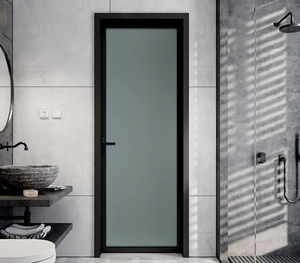
Casement Systems
Delivering exceptional mechanical integrity, thermal performance, and minimalist European aesthetic profiles direct from our 180,000 m² advanced manufacturing facility.
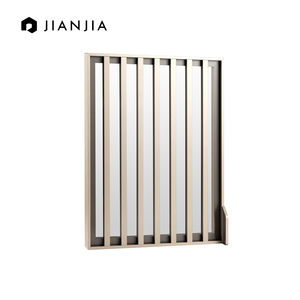
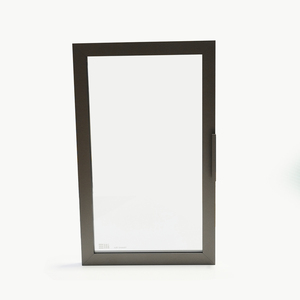
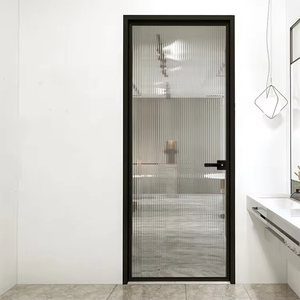
A technical review of structural deflections, atmospheric moisture mitigation, and precision metallurgy in luxury kitchen joinery.
Kitchen environments present a demanding microclimate characterized by rapid temperature swings, ambient grease vapors, and localized moisture vapor spikes. Standard commercial-grade extrusions frequently exhibit structural degradation or surface pitting under sustained cyclic exposure.
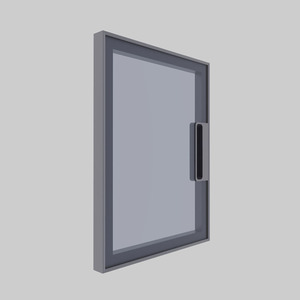
Kitchen glass doors perform as dynamic visual acoustic barriers between functional cooking zones and open-concept living quarters, necessitating precision-cured safety glazing compliant with international impact safety guidelines (ANSI Z97.1 & EN 12150).
Operating as Guangdong Dejiyoupin Doors and Windows Co., Ltd. (DERCHI), our fully integrated industrial hub executes end-to-end extrusion, thermal breaking, glass processing, and export engineering.
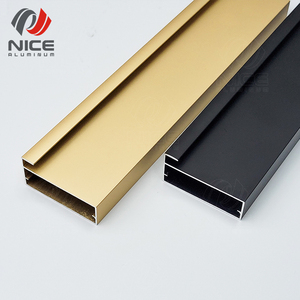
Our multi-axis German-engineered CNC milling stations process extrusions down to tolerances of ±0.2mm, assuring perfect miter cuts, flush integrated corners, and flawless concealed hinge hardware mortising.
Tested and approved against extreme cyclical wind load, air tightness, and seismic deflection criteria. Verified quality backed by ISO 9001, AS 2047, and UL fire-rated technical dossiers for municipal approvals.
Eliminate project variance. Our internal facade engineering group produces full shop drawings, structural calculations, and custom section profiles tailored to specific rough architectural openings prior to tooling.
Reinforced custom timber crating with shock-absorbing foam isolation liners engineered for oceanic and intermodal freight, guaranteeing zero edge-spalling or frame warp upon jobsite arrival in North America and Europe.
Fluent bilingual facade engineers and sales representatives maintain real-time correspondence throughout EST-PST hours, mitigating lead-time lag across project revisions, hardware confirmations, and customs document filings.
Consolidate costs by purchasing directly from the production base. Tiered volume pricing structures provide procurement contractors and developers up to 40% margin savings compared to regional domestic distributors.
Strategic market analysis for distributors, developers, and lead architects planning luxury residential multi-family and commercial developments through 2026–2030.
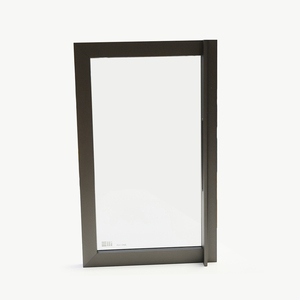
Consumer and interior design preferences are overwhelmingly shifting towards almost imperceptible aluminum perimeters. Concealed jambs, hidden floor pivots, and micro-framed profiles (such as our MR208 system) dominate the high-end residential kitchen market, demanding higher alloy yields to maintain door rigidity.
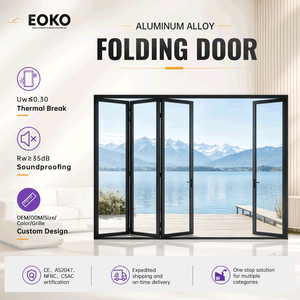
As modern architectures merge luxury preparation kitchens directly with outdoor alfresco verandas, the demand for bi-fold and pivot systems with certified thermal breaks has grown exponentially. Multi-chamber polyamide nylon strips (PA66) prevent interior condensation while maintaining interior climate stability.
The integration of Polymer Dispersed Liquid Crystal (PDLC) switchable glazing and low-voltage concealed wire conductors inside aluminum hinges allows modern kitchens to transition from open transparent vistas to completely opaque culinary staging zones at the touch of a sensor.
Empirical specification data illustrating mechanical stability under kitchen heat, vapor, and mechanical cycles.
| Performance Dimension | Aluminium Framed Glass (DERCHI) | Solid Wood / Veneered MDF | Hollow Metal / Carbon Steel |
|---|---|---|---|
| Dimensional Stability | Zero swelling or thermal warping across 95% relative humidity conditions. | Susceptible to hydroscopic expansion, veneer delamination, and binding. | Dimensionally stable, but prone to seam oxidation under high vapor exposure. |
| Frame Weight to Strength Ratio | Exceptional; permits ceiling-height openings up to 3.5m without sag. | Heavy; requires substantial framing support, prone to hinge fatigue over time. | Extremely heavy; increases shipping mass and demands heavy commercial pivot anchors. |
| Odor & Grease Resistance | Inert powder coat and anodized barriers; wipes clean with neutral solvents. | Porous finishes absorb airborne volatile organic compounds and cooking oils. | Resistant if treated, but requires ongoing protective coatings against rust. |
| Acoustic Isolation Rating | Up to Rw 36 dB using dual-glazed acoustic laminated glass assemblies. | Rw 28 - 32 dB depending on internal solid-core mass density. | Rw 30 dB; often hollow or foam-filled with metallic resonance issues. |
| Environmental Lifecycle | 100% infinitely recyclable aluminum billet with minimal VOC footprint. | Biodegradable, but frequently utilizes toxic resins and bonding adhesives. | Recyclable, but energy-intensive initial refinement and high transport footprint. |
Direct technical answers addressing the concerns of overseas project managers, developers, and door distributors.
Our engineering division models all custom configurations using finite element analysis (FEA) to ensure wind load, seismic resistance, and deflection criteria align with AS 2047, CE, and North American IBC regulations. Full structural calculation packets and certified test reports are provided during shop drawing submittals.
Yes. We routinely engineer custom profile cavities to accept European and North American mortise locks, pivot hinges, and electronic concealment hardware from brands including Dorma, Hafele, Blum, and FritsJurgens, providing pre-machined internal reinforcement plates.
Standard custom architectural project timelines run approximately 25 to 35 business days from final CAD shop drawing sign-off. Expedited runs are available for phased construction developments, backed by prioritized container staging from our direct logistics bay.
Each door leaf is wrapped in multi-layer PE scratch film, shielded with 20mm corner edge-protectors, and secured within fully enclosed, fumigated solid marine-grade plywood crates. Internal desiccants are added to eliminate moisture condensation during transit.
Connect directly with our senior facade engineering staff. Receive complimentary CAD shop drawings, acoustic evaluation data, and factory-direct volume pricing within 24 hours.