Thermal Profiles
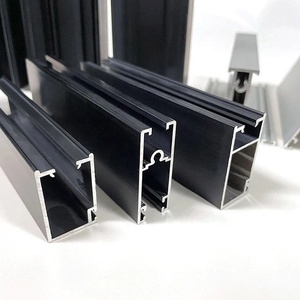
Aluminium Thermal Break Window Door Profiles 6000 Series Custom Fabrication
- Polyamide PA66-GF25 Thermal Strip
- Precision CNC Cutting, Bending & Welding
- AAMA 2604/2605 Architectural Coating
Our precision-engineered product line leverages primary 6063-T6 / 6060-T66 virgin aluminum alloys, structural multi-point locking gear, and reinforced thermal break extrusions meeting stringent worldwide fenestration standards.
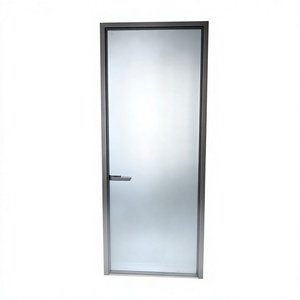
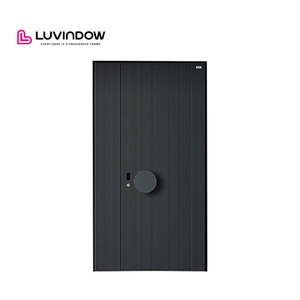
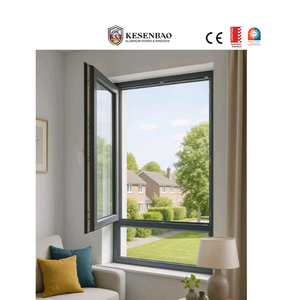
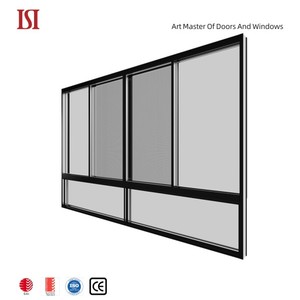
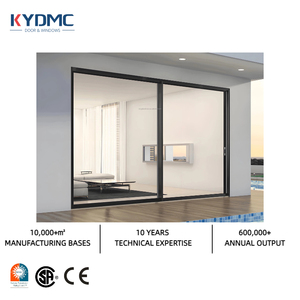
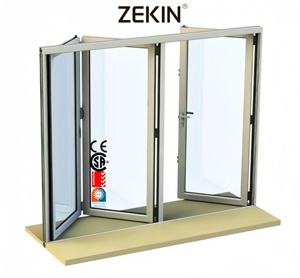
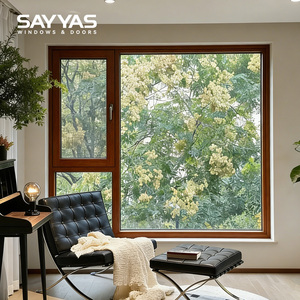
Ranked among China's Top 10 door and window manufacturers, our Shishan Town manufacturing hub merges cutting-edge German fabrication automation with strict ISO and international export verification protocols.
DERCHI systems carry formal compliance documentation for international building codes, including CE, ISO 9001, North American NFRC, UL 10C / UL 10B Fire Ratings, and Australian AS 2047 cyclonic impact classification (N6 highest level rating).
Eliminate subcontractor fragmentation. We produce entry pivot doors, heavy-duty sliding systems, hurricane louvers, and interior aluminum systems in single, synchronized shipping batches with harmonized architectural finishes.
From architect schematics to full rough-opening coordination, our engineering department furnishes verified shop drawings, structural wind-load deflection calculations, and thermal modeling to ensure effortless local permit approvals.
An engineering analysis into how modern aluminum alloy security doors surpass conventional steel, timber, and uPVC portals in longevity, force deflection, and thermal resistance.
Modern architectural entry points must reconcile two historically conflicting objectives: uncompromising physical security resistance and ultra-low thermal transmittance (U-factor). In commercial structures and high-end residential estates, outdated solid steel entrance assemblies suffer from substantial thermal bridging, rapid atmospheric oxidation (rusting) in coastal or humid regions, and excessive self-weight that damages perimeter jamb hinges over prolonged operating cycles. Conversely, solid hardwood doors exhibit dimensional instability, warping up to 8mm across seasonal humidity deltas and compromising peripheral gasket seals.
Thermal transmission in monolithic metal doors has traditionally generated internal condensation, causing drywall mildew and interior finish degradation. Our engineering methodology introduces 25% glass-fiber reinforced Polyamide (PA66-GF25) thermal struts. These polymer isolators break the conductive transmission loop between the exterior structural envelope and the conditioned interior living zone. Paired with dual or triple-pane Low-E insulated glass units (IGU) containing 90%+ Argon fills and warm-edge spacer bars, the complete fenestration system achieves overall U-values down to 0.18 BTU/h·ft²·°F (equivalent to 1.02 W/m²·K), effortlessly adhering to the most stringent international energy conservation codes.
Physical security is dictated by dynamic impact mitigation and anti-pry hardware integration. Unlike conventional center-deadbolt assemblies, DERCHI security doors integrate heavy-gauge European or German multipoint locking matrices featuring mushroom cam heads, stainless steel anti-saw hooks, and hardened shootbolts that lock directly into continuous structural strike plates extruded into the jamb frame. Even under crowbar leverage exceeding 4,500 Newtons, force is dispersed across 5 to 7 anchor vectors rather than concentrated on a single latch point. Furthermore, our doors can be customized with class RC2/RC3 European burglary resistance certifications, backed by drill-proof manganese steel plates protecting the core lock cylinder.
| Engineering Metric | DERCHI 6063-T6 Aluminum Security Systems | Standard Commercial Hollow Metal Steel | Solid Hardwood Architectural Doors |
|---|---|---|---|
| Yield / Tensile Strength | 160 / 195 MPa (Engineered rib reinforcement) | 180 / 240 MPa (Heavy, prone to weld fatigue) | 30 / 65 MPa (Subject to grain cleavage) |
| Corrosion & Salt Spray Resistance | Exceeds 3,000 hrs (Qualicoat Class II) | 500 - 800 hrs (Pitting at weld seams) | Rot & Biological Fungi Risk |
| Thermal Transmittance (U-Value) | 0.18 - 0.28 BTU/h·ft²·°F (PA66 Break) | 0.45 - 0.70 BTU/h·ft²·°F (High bridging) | 0.30 - 0.45 BTU/h·ft²·°F (Moderate) |
| Air & Water Infiltration | Class 4 Air / 900 Pa Water (Continuous EPDM) | Class 2 Air / 300 Pa Water | Seasonal warping causes perimeter air leaks |
| Maintenance Cycle & Lifespan | 30+ Years / Zero maintenance painting | 10-15 Years / Periodic repainting required | 5-8 Years / Routine resealing & revarnishing |
Major shifts in building codes, carbon accounting, smart building protocols, and extreme climate events are reshaping how developers and procurement directors source security systems.
Mechanical keys are being systematically replaced by native IoT locks featuring 3D structured-light facial recognition, palm-vein scanners, and encrypted Zigbee / Matter protocols synchronized with central building automation systems (BMS).
Driven by climate volatility, building codes in coastal zones (Florida TAS 201/202/203, Australian Cyclonic AS/NZS 1170.2) now necessitate missile impact ratings. Cast aluminum and laminated SentryGlas composites are becoming universal procurement baseline specs.
Luxury architectural demand has shifted toward monumentality. Standard 2-meter openings have yielded to 3-meter to 5-meter tall monolithic pivot doors with offset bottom floor springs capable of carrying dynamic glass and aluminum sash weights up to 800 kg.
Green building certification schemes (LEED v4.1, BREEAM) require third-party verified Environmental Product Declarations (EPD). Sourcing billet aluminum processed with hydro-electric renewable energy dramatically slashes upfront embodied carbon.
Institutional property developers and bulk distributors are transitioning from "lowest initial bid" to "Total Cost of Ownership (TCO)" assessment models. In commercial and residential rental portfolios, hardware failures, air infiltration penalties, and thermal condensation account for over 65% of lifetime lifecycle costs. By investing in factory-certified, thermally broken 6063-T6 aluminum doors equipped with German multi-point gear and electrostatically applied fluorocarbon (PVDF) finishes, asset managers preserve asset value and eliminate post-handover warranty disputes.
Straightforward answers compiled by our chief facade engineers to address common questions asked by overseas contractors, architects, and purchasing agents.