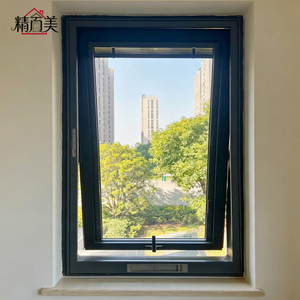
Engineered Portfolio
Featured Architectural Glazing & Profile Systems
Factory-direct structural aluminum profile systems engineered specifically to resist extreme relative humidity, high vapor pressure, and chemical cleaning agents while maintaining clean architectural sightlines.
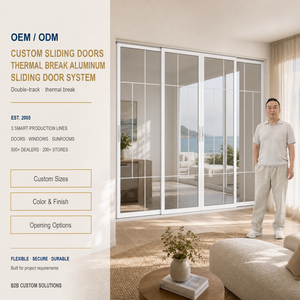
Wood Grain Aluminum Sliding Door Interior Wood Finish Transfer Sliding Glass Door
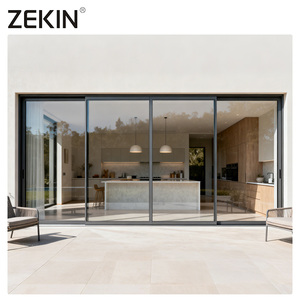
ZEKIN Double Glazed Low E Glass Soundproof Exterior Standard Sliding Door
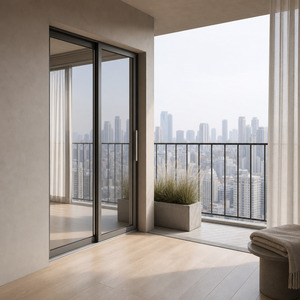
Aluminum Door 4 Panel Slim Frame Sliding Glass Door Thermal Break Profile
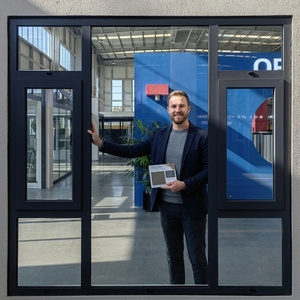
Outdoor Hurricane Proof Patio Impact 4 Tracks Large Glass Thermal Break Doors
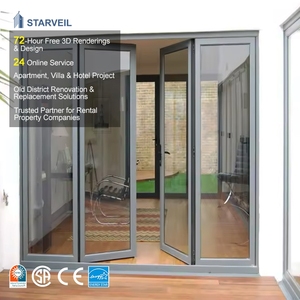
European Interior Aluminium Steel Framed Swing Glass Door Crittall Style French Doors
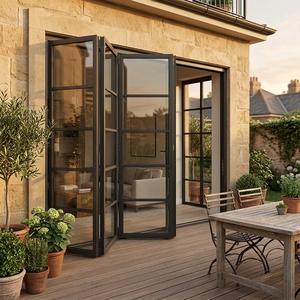
Customized Waterproof Aluminum Bifold Door Tempered Glass Folding Patio Doors
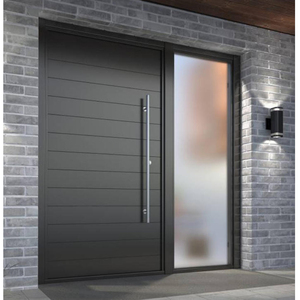
European Style Cast Aluminum Entrance Pivot Door Handmade Composite Security Door
Enterprise Verification
Guangdong Dejiyoupin Doors & Windows (DERCHI)
With over 25 years of specialized fenestration manufacturing, Guangdong Dejiyoupin Doors and Windows Co., Ltd. represents one of China's premier integrated manufacturing enterprises, maintaining comprehensive control across extrusion, CNC fabrication, surface treatment, and structural assembly.
180,000m²
Production Infrastructure
600+
Specialized Workforce
100+
Certificates & Patents
25+
Years Engineering Pedigree
Corrosion Immunity (6063-T5/T6)
Wet-area doors require rigorous surface passivation. DERCHI utilizes primary architectural-grade 6063-T5 aluminum extrusions with a minimum 2.0mm wall thickness, treated via specialized fluorocarbon (PVDF) electrostatic coatings or anodic oxidation reaching 15-25µm film thickness to withstand continuous vapor and harsh cleaning surfactants.
Structural Moisture Barrier Integrity
Standard interior hollow doors suffer swelling and substrate delamination under cyclic humidity. DERCHI bathroom solutions integrate continuous co-extruded EPDM perimeter weatherseals with mechanical mortise corner-locking cleats, ensuring 100% moisture cutoff between wet ablution zones and dry living quarters.
Direct Engineering Support
Navigating global building regulations requires verifiable compliance. DERCHI's in-house fenestration engineers translate complex architectural door schedules into full CAD/BIM shop drawings within 48 hours, synchronizing hardware cutouts with North American, Australian (AS 2047), and European (CE) standards.
Strategic Sourcing Analysis
Future Procurement & Technological Trends in Wet-Area Architecture
Architectural demand for bathroom fenestration is transitioning rapidly from commodity partitions to precision-engineered acoustic and hydrothermal building envelope elements.
Ultra-Narrow Sightlines
Commercial luxury developments prioritize visual transparency. Modern procurement schedules specify 16mm-25mm visible stile widths utilizing high-torsion reinforced profiles, enabling maximum daylight integration while supporting heavy laminated security glass.
Acoustic Decoupling (STC 38+)
Hospitality developers demand acoustic isolation to eliminate hydraulic and airborne noise. Modern systems implement double-glazed insulated units (IGU) featuring laminated acoustic PVB interlayers and pressure-tight perimeter compression hardware.
Smart Dynamic Privacy Glazing
Polymer Dispersed Liquid Crystal (PDLC) switchable smart glass integration is becoming standard in luxury residential and boutique hospitality sectors, shifting between translucent privacy and optical clarity via building automation interfaces.
Barrier-Free Concealed Tracks
Modern accessibility standards mandate zero-threshold floor profiles. Advanced pocket and sliding bathroom door specifications favor top-hung magnetic levitation tracks or flush-recessed floor drainage channels to eliminate trip hazards.
| Evaluation Parameter | Commercial Grade Aluminum (DERCHI) | Standard Solid Wood / Engineered Timber | PVC / Vinyl Cellular Partitions |
|---|---|---|---|
| Hydrothermal Dimensional Stability | Zero deflection; expansion coefficient <0.02% under 100% RH | High vulnerability; swelling, warping, and perimeter bind | Moderate; subject to thermal sagging and hinge pull-out |
| Microbial & Fungal Resistance | Inorganic; 100% impervious to mold, spore adhesion, or rot | Organic substrate requires active chemical fungicides | Non-porous, but plasticizer migration attracts grime |
| Structural Lifespan Cycle | 30+ Years with anodized or PVDF architectural coatings | 5–10 Years before delamination or repaint overhaul | 7–12 Years before embrittlement and discoloration |
| Acoustic Isolation Capability | STC 32 to STC 42 depending on dual-glazed IGU configuration | STC 25 to STC 30 for solid core timber panels | STC 18 to STC 24 (predominantly hollow structures) |
| Hardware Load Capacity | Heavy-duty 304/316 SS hinges supporting panels >120kg | Screw holding strength degrades with moisture intrusion | Limited load; prone to fastener stripping over time |
Procurement Due Diligence
Frequently Asked Technical Questions
Critical technical and contractual considerations for general contractors, architectural specifiers, and global importers.
How does DERCHI prevent galvanic corrosion between aluminum profiles and stainless steel hardware?
Galvanic corrosion occurs when dissimilar metals contact in the presence of conductive moisture. At DERCHI, all stainless steel fasteners (AISI 304 or 316) are isolated from 6063-T5 aluminum extrusions using precision-machined non-conductive nylon 66 or EPDM isolation gaskets. Additionally, internal reinforcement brackets undergo specialized non-reactive surface passivation, preventing electrochemical oxidation even in saturated wet-room environments.
Can DERCHI match imperial rough opening sizes and specific ADA accessibility codes?
Yes. North America is our core export market, meaning our engineering team operates fluidly in both imperial (inches/feet) and metric dimensions. For ADA compliance, we engineer clear opening widths exceeding 32 inches (813 mm), provide zero-clearance recessed bottom tracks or drop-down automatic acoustic seals, and position hardware preps between 34 and 48 inches above the finished floor level to satisfy US accessibility requirements.
What glazing options are recommended for maximum privacy combined with safety?
For bathroom applications, building codes mandate safety glazing. We provide fully tempered (ANSI Z97.1 / EN 12150) or tempered-laminated glass. Privacy is achieved via three options: ceramic frit acid-etched obscure finishes, Reeded/Fluted (Moru) architectural textured glass, or dynamic switchable PDLC smart glass that transitions from opaque to clear at the flick of a switch or sensor integration.
What quality verification documentation is provided prior to sea freight dispatch?
Every production batch undergoes comprehensive pre-shipment quality inspection. We provide our B2B clients with Mill Test Certificates (MTC) verifying aluminum alloy chemistry and tensile strength, coating thickness calibration logs, dimensional verification sheets matching the signed shop drawings, water-tightness chamber testing records, and high-resolution staging inspection photography of the assembled units and ocean-ready wooden crates.
How does DERCHI package fragile aluminum and glazed door panels for transoceanic freight?
Export crating follows a heavy-duty four-tier protection scheme: (1) peelable protective film on profile extrusions, (2) shock-absorbing high-density polyethylene foam edge guards, (3) waterproof shrink-wrapping with desiccant packs, and (4) ISPM-15 compliant fully fumigated plywood crates with internal reinforcement steel banding. Panels are oriented vertically on specialized A-frames to prevent surface scratching or flex fracture during port handling.