Certified High-Performance Casement Window Systems
Engineered to satisfy stringent NFRC, AS2047, CE, and CSA standards across extreme structural and thermal requirements.
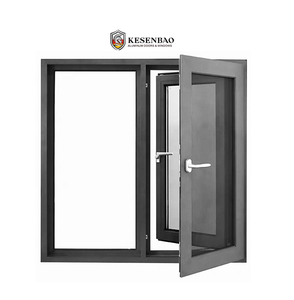
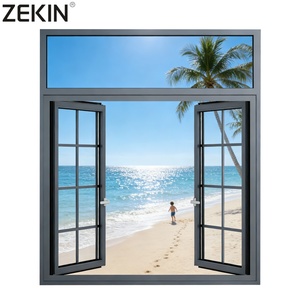
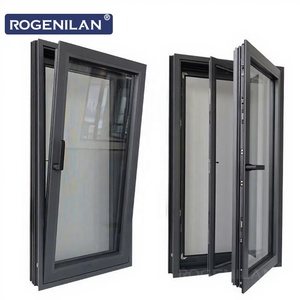
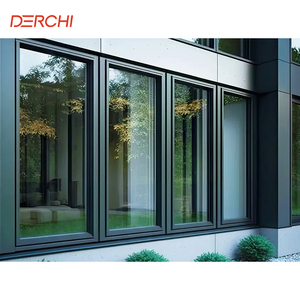
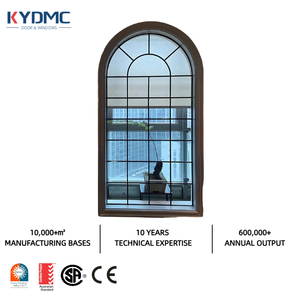
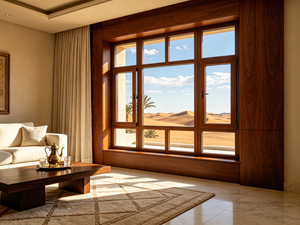
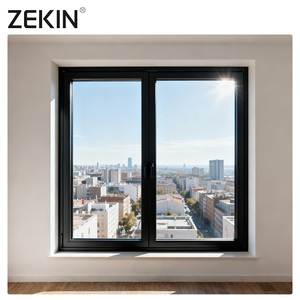
Engineering Superiority: Derchi Group Infrastructure
A vertically integrated production base delivering strict dimensional tolerance, continuous batch validation, and globally accepted credentials.

Technical White Paper: The Evolution of Casement Fenestration
Navigating structural rigidity, thermal bridging, and acoustic isolation in contemporary facade design.
In modern architectural fenestration, the specification of aluminum casement windows has transitioned from basic envelope demarcation to advanced structural and thermodynamic engineering. Driven by the climate mandates of North American ASHRAE 90.1, the Canadian National Energy Code for Buildings (NECB), and European Passive House standards, fenestration assemblies are scrutinized down to their thermal edge seals, alloy chemistry, and air-tightness integrity.
1. Multi-Chamber Polyamide Thermal Barrier Technology
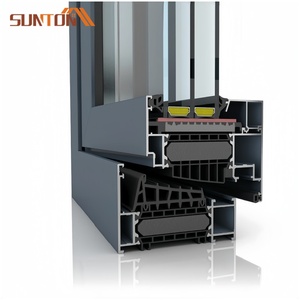
Standard aluminum framing exhibits high thermal conductivity (approximately 160 W/m·K). To eliminate convective and conductive heat transmission, our casement systems integrate extruded Polyamide 66 reinforced with 25% glass fiber (PA66-GF25). These multi-cavity thermal break struts maintain structural load resistance under extreme wind pressure while delivering frame U-factors compliant with sub-zero geographic zones across the Northern United States and Canada.
| System Class | Frame Profile | Glass Configuration | Overall U-Factor (W/m²·K) | Acoustic STC | Standard Compliance |
|---|---|---|---|---|---|
| Commercial Standard | 65mm Non-Thermal / Single Break | Double Glazed Low-E (5+12A+5) | 2.2 - 2.8 | 32 dB | GB/T 8478, AS2047 |
| High-Efficiency Residential | 75mm Multi-Chamber PA66 | Double Glazed Argon (6Low-E+16Ar+6) | 1.4 - 1.8 | 38 dB | NFRC / CSA A440 |
| Passive House Grade | 85-105mm Aerogel / Multi-Break | Triple Glazed Dual Low-E (5Low-E+12Ar+5+12Ar+5Low-E) | 0.8 - 1.1 | 43-46 dB | PHI / CE EN 14351-1 |
| Coastal Extreme Impact | Heavy-Duty Structural Alloy (6063-T6) | Laminated SGP + Insulated (6+12A+6+1.52SGP+6) | 1.5 - 1.9 | 42 dB | AS2047 N6 / ASTM E1886/E1996 |
2. Acoustic Decoupling and Gasket Compression Architecture
Unlike sliding window assemblies that rely on brush seals prone to degradation, outward-swinging casement profiles deploy co-extruded EPDM vulcanized continuous gasket seals. Upon actuation of the multipoint perimeter locking system, the sash exerts uniform compression against the inner and outer gasket seals. This mechanical interlock achieves water tightness beyond 700 Pa and air infiltration rates lower than 0.05 m³/(h·m), effectively insulating building occupants from low-frequency urban traffic reverberations and driving rains.
Global Procurement Trends & Next-Gen Developments
Key market shifts shaping contract specifications, procurement timelines, and architectural standards through 2028.
Slimmer Sightlines, Higher Static Loads
Architectural demand is moving rapidly toward concealed hinges and ultra-slim sash frames with visible sightlines under 50mm. Achieving this without sacrificing wind resistance requires transitioning to primary structural billets of 6063-T6 aluminum, engineered with increased web wall thickness (up to 2.0mm-3.0mm) to bear expansive triple-glazed lites without deflection.
Embedded Smart Actuation & Micro-Ventilation
Modern building management systems (BMS) are demanding the native integration of hidden chain motors, wireless weather station connectivity, and automated trickle vents. Motorized casement window units can automatically trigger night-cooling purge cycles or seal against impending storm events based on environmental sensor readings.
Circular Carbon & Surface Durability
Exporters are increasingly required to provide Environmental Product Declarations (EPDs). Specifiers favor low-carbon billet extrusion alongside Qualicoat Class 2 certified architectural powder coats or 25-micron PVDF coatings, protecting profiles against intense UV degradation and coastal saline mist corrosion for a verified 30+ year service life.
Procurement & Engineering FAQ
Direct technical answers addressing structural compliance, export logistics, and customization parameters.
How do Derchi casement windows achieve structural compliance with AS2047 N6 and hurricane impact codes?
Can our engineering office submit imperial door/window schedules and custom CAD profiles?
What measures prevent seal failure and condensation inside the double or triple-glazed units?
How are fragile oversized architectural assemblies secured for intercontinental ocean freight?
What hardware options are supplied for European vs. American operational preferences?
Collaborate with a Leading Engineering Manufacturer
Upload your architectural elevations, fenestration schedules, or specifications. Our team provides comprehensive CAD shop drawings, thermal simulation data, and transparent factory-direct quotations within 24 hours.
Contact Us