Technical Whitepaper • Market Localization
Engineering Aluminium Side Doors for the Brazilian Architectural Landscape
Sourcing exterior aluminium joinery for Brazil involves understanding strict technical parameters: intense ultraviolet exposure, high littoral salt spray (maresia), seasonal deluge rains, and regional safety concerns within closed communities.
In contemporary Brazilian architecture—distinguished by brutalist heritage, modernist cantilever forms, and indoor-outdoor open integration (exemplified by firms in São Paulo, Curitiba, and Belo Horizonte)—the side door (porta lateral or porta de serviço) is no longer treated as an afterthought. It plays a pivotal structural role in preserving building envelope integrity, managing utility and garden access, and upholding property perimeter security.
Supplying this market requires meeting rigorous material qualifications set by the Associação Brasileira de Normas Técnicas (ABNT), specifically NBR 10821 (Esquadrias externas para edificações), which classifies doors according to wind resistance, water tightness, air permeability, and cyclic mechanical endurance. DERCHI leverages over 25 years of manufacturing mastery to produce custom door packages designed precisely to overcome the primary failure points of standard hardware in tropical South America.
Combating Severe Maresia
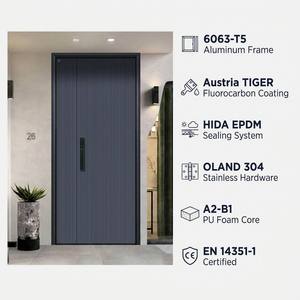
Brazil features over 7,400 km of coastline with aggressive marine chloride concentrations. Our doors use 6063-T6 virgin billet aluminum treated with Qualicoat Class 2 certified fluorocarbon or 25-micron architectural anodizing to eliminate pitting corrosion.
Tropical Thermal Insulation
Under direct solar irradiation in states like Bahia or Goiás, surface metal temperatures often exceed 68°C. Our polyamide (PA66 GF25) thermal break profiles isolate external thermal transference, cutting interior air conditioning loads drastically.
High-Security Perimeter Defense
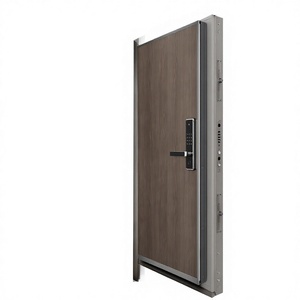
Security remains paramount for Brazilian home builders. Side access ways require reinforced door leaves, anti-drill cylinder plates, and multi-point perimeter latching hooks that integrate seamlessly with biometric smart home automation.
Architectural Application Scenarios Across Brazil
The specification of aluminium side doors varies dramatically across Brazil's distinct geographic microclimates and residential typologies:
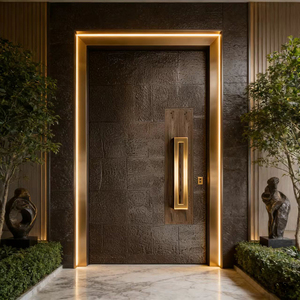
Private luxury enclave residences requiring high-end finishes that match main entry aesthetics while offering daily functional durability.
- Application Lateral Garden & Garage Entry
- Preferred Style Woodgrain Sublimation / Minimalist
- Security Multi-point Biometric Integration
- Infill Core High-density Acoustic PU Foam
Direct ocean-front estates exposed to constant onshore gale winds, airborne salt mists, and humidity cycles.
- Application Veranda Side & Service Passages
- Alloy Grade 6063-T6 Marine Corrosion Guard
- Hardware AISI 316 Marine Stainless Steel
- Wind Load Rated up to ABNT NBR Class S4
Corporate headquarters, private dental surgical suites, and gourmet culinary installations demanding sanitary sealing and quiet operation.
- Application Cleanroom, Utility & Executive Exits
- Acoustics Rw 38dB – 42dB Drop Down Seals
- Operation Automated Sensor & Card Access
- Compliance Anvisa Clean Air Protocols
Emerging Macro Trends in the Brazilian Architectural Door Market
1. Shift from Natural Timber to Woodgrain Sublimated Aluminium: Traditional hardwoods such as Cumaru and Ipê face stringent environmental logging regulations (IBAMA licensing) and high annual preservation costs due to cracking under tropical rain-sun cycles. High-fidelity thermal woodgrain aluminum has surged as the preferred alternative for architects seeking warm aesthetics combined with maintenance-free longevity.
2. Integration of Smart Lock Automation: Urban high-end residences in São Paulo and Rio de Janeiro are adopting smart side-door management systems. DERCHI pre-engineers lock mortises to support 3D facial recognition, Tuya, and Zigbee protocol access control, enabling homeowners to monitor delivery entries or household staff remotely.
3. Oversized Flush Pivot Side Assemblies: Modern Brazilian villas favor floor-to-ceiling side entries reaching heights of 3.2m to 4.0m. Such dimensions are unachievable with timber due to warping. High-moment-of-inertia extruded aluminum profiles enable oversized structural leaves with pinpoint pivot balance.