High-Performance Exterior & Architectural Door Systems
Explore our premium CE-certified exterior doors, thermally broken systems, acoustic partitions, and impact fenestrations engineered for demanding commercial and luxury residential projects across South Korea.
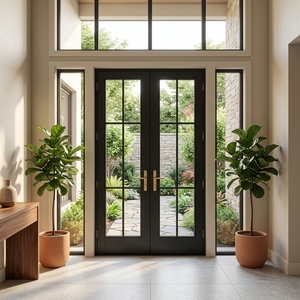
Modern Aluminum Crittall Style Glass French Doors
- Thermal Break: Polyamide PA66 Insulating Bar
- Glazing: 6mm+12A+6mm Tempered Low-E
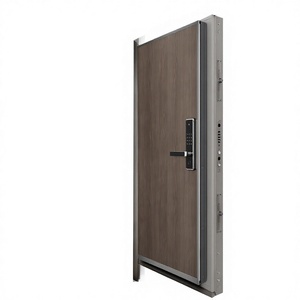
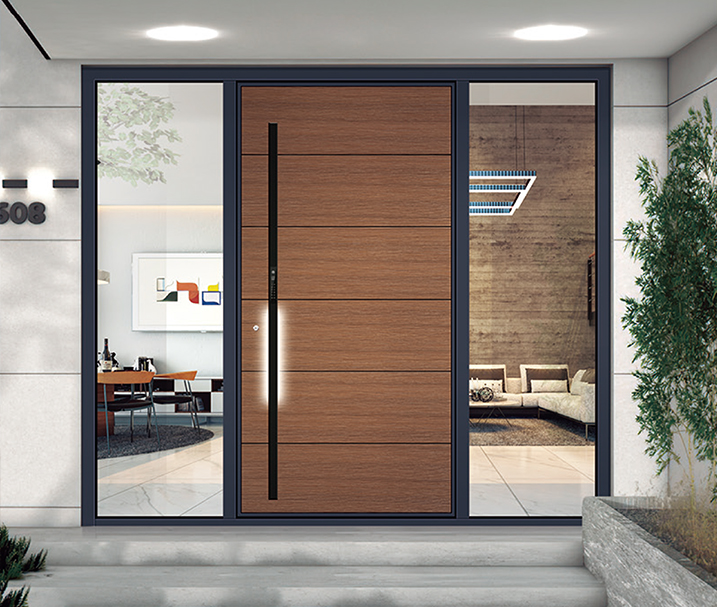
Lolands Custom Aluminum Alloy Swing Entrance Door with Sidelight
- Airtightness: Grade 1 Equivalent (KS F 2292)
- Smart Lock: Mortise Prep for Samsung/Gateman
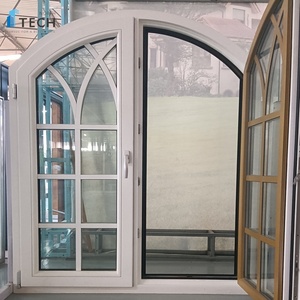
Aluminum Clad Wood Casement Doors & Windows with Colonial Bars
- U-Value: ≤ 1.1 W/(m²·K) for Cold Zones
- Hardware: German Roto / Siegenia Concealed Hinges
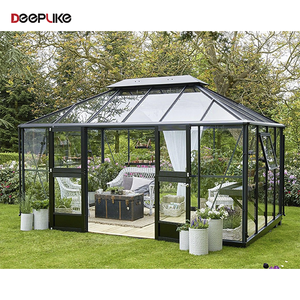
Balcony Aluminum Frame Sunroom & Patio Enclosure Systems
- Wind Resistance: Wind Load Class 5 Tested
- Water Tightness: Up to 700 Pa Pressure
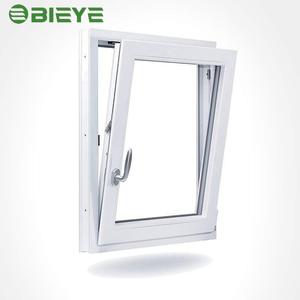
Soundproof Aluminum Double Pane French Casement Window & Door
- Acoustics: Sound Transmission Class (STC) 42
- Screen: High-Tension Diamond Security Mesh
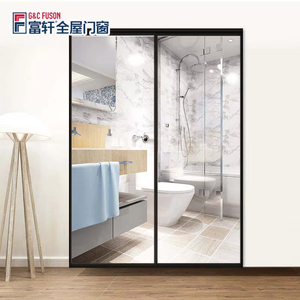
Fuson High-Quality Heavy Lift-and-Slide Aluminum Door System
- Sash Capacity: 400 kg Smooth Movement
- Threshold: Barrier-Free Low Incline Track
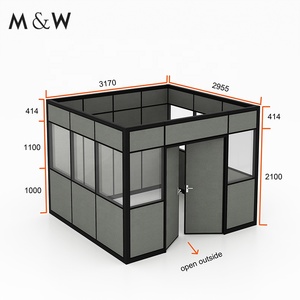
M&W Acoustic Aluminium Glass Partition Wall & Door System
- Profile Depth: 85mm / 100mm Extruded System
- Fire Performance: Incombustible Core Available
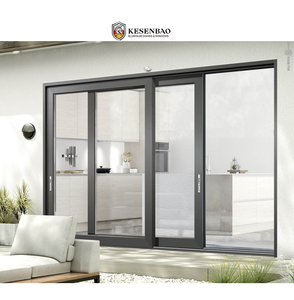
Typhoon-Proof Outdoor Impact Aluminum Sliding Patio Doors
- Structural: Resists up to 4,500 Pa Dynamic Wind
- Impact Grade: SentryGlas® Interlayer Tested
Guangdong Dejiyoupin Manufacturing Base
Engineers, master fabricators & QC inspectors
CE, ISO 9001, AS 2047, UL Fire Rated
Serving top-tier architectural contractors worldwide
Bridging European CE (EN 14351-1) with Korean KS Architectural Standards
Specifying high-end aluminum exterior doors for development projects in the Republic of Korea requires navigating a stringent intersection between structural safety, dynamic airtightness, and ultra-low thermal transmittance. While our full product range is factory-audited under the harmonized European Standard CE EN 14351-1, our engineering department formulates custom shop drawings and extrusion cross-sections that proactively fulfill Korean Building Codes.
In South Korea, building envelope fenestration is heavily regulated under the Rules on Building Energy Saving Design Standards issued by the Ministry of Land, Infrastructure and Transport (MOLIT). Aluminum exterior entry systems must address severe sub-zero winter temperatures without surface condensation, which necessitates multi-cavity polyamide thermal breaks (PA66 GF25), aerogel perimeter barriers, and triple-glazing with warm-edge Swissspacer technology.
Engineering Directive for Korea: Under KS F 2278 (Thermal Resistance) and KS F 2292 (Airtightness), our exterior doors achieve heat transmission coefficients as low as U = 0.82 W/(m²·K) and Grade 1 airtightness, qualifying for Korea's mandatory Zero-Energy Building (ZEB) Class 5 Certification roadmap.
Whether supplying custom large-format pivot doors for coastal cliff residences in Seogwipo (Jeju) or flush aluminum panels for multi-family developments in Pangyo Techno Valley, we guarantee dimensional stability under extreme hydrothermal expansion ratios.

| Performance Parameter | European Harmonized Standard (CE) | Korean Industrial Standard (KS) | DERCHI Factory-Tested Specification |
|---|---|---|---|
| Thermal Transmittance (U-Value) | EN ISO 10077-1 / EN ISO 10077-2 | KS F 2278 (Heat Transmission Test) | 0.82 to 1.15 W/(m²·K) Triple Low-E Argon Filled |
| Airtightness Performance | EN 12207 (Class 1 to 4) | KS F 2292 (Air Permeability Grade 1 to 5) | Grade 1 Highest (< 1.0 m³/h·m² at 10 Pa) |
| Water Tightness Under Pressure | EN 12208 (Class 1A to 9A / E750+) | KS F 2293 (Water Resistance Test) | Class 9A / Up to 900 Pa with EPDM Triple Fin |
| Wind Load Resistance | EN 12210 (Class C1 to C5) | KS F 2296 (Deflection & Safety Proof) | Class C5 Tested to withstand 4,500 Pa dynamic loads |
| Acoustic Attenuation (STC) | EN ISO 717-1 (Rw + C; Ctr) | KS F 2808 (Sound Insulation Method) | 38 dB to 44 dB Sound reduction for urban cores |
Localized Application Scenarios Across South Korea
From the freezing microclimates of Gangwon-do to typhoon-prone coastal cliffs in Jeju and high-density luxury residential districts in Seoul, we customize materials, seals, and hardware to specific geographical challenges.
Seoul Metropolitan Area & Luxury Villas (Hannam-dong, Seongbuk-dong)
Luxury residential estates and private modern mansions require oversized architectural pivot doors with flush aesthetic alignments. We supply large-span cast aluminum doors and minimalist aluminum glass entries embedded with European concealed hydraulic pivots (FritsJurgens systems) capable of sustaining door leaves up to 500 kg with effortless finger-touch swing mechanics.
Northern Gyeonggi-do & Gangwon-do Alpine Cold Zones
Regions characterized by severe winters and extreme daily temperature differentials require our ultra-deep 85mm to 105mm thermal-break profiles. These eliminate the thermal bridging phenomenon that commonly plagues non-insulated metal doors, preserving the energy efficiency of indoor radiant floor heating (Ondol systems) and eliminating interior perimeter condensation.
Busan Haeundae & Incheon Songdo High-Rise Coastal Fronts
High-rise residential complexes and coastal hotels require marine-grade durability. We apply AkzoNobel Interpon D2525 super-durable architectural powder coatings or Qualicoat Class 2 fluorocarbon (PVDF) treatments that resist saline corrosion, UV oxidation, and high wind-driven salt spray over decades without chalking or peeling.
Jeju Island Resort Villas & Oceanfront Commercial Projects
Subjected to seasonal typhoons and high horizontal wind pressures exceeding 45 m/s, installations in Jeju benefit from our multi-point interlocking perimeter gaskets and heavy-wall extruded 6063-T6 profiles. Reinforced stainless steel hinges prevent sash sagging while maintaining positive pressure against moisture intrusion.
Commercial HQs & Tech Parks (Pangyo, Teheran-ro)
Corporate headquarters require seamless integration between structural access control and modern fire safety codes. Our systems offer precise factory milling and internal wire raceways for electromagnetic locks, high-capacity electrified strikes, facial-recognition entry terminals, and direct links to central BMS automation systems.
Suburban Hanok-Modern Fusion Developments
Architects across Korea increasingly blend traditional Hanok aesthetics with contemporary high-thermal building skins. Our custom aluminum clad wood collections allow designers to retain authentic Korean pine/oak interior expressions while utilizing exterior powder-coated aluminum clad to endure weather exposure without warping or cracking.
Emerging Architectural Trends in Korea's Door & Fenestration Sector
The Korean residential and commercial door market is undergoing a structural paradigm shift driven by legislative mandates and progressive architectural design preferences. Traditional heavy steel entrance doors are rapidly being substituted with advanced thermally broken aluminum alloy systems.
1. South Korea Zero-Energy Building (ZEB) Mandate: The government has mandated ZEB compliance for all public buildings, with nationwide expansion to private housing above 30 units underway. Exterior doors must exhibit stringent envelope conservation, driving commercial developers to specify factory-certified insulated frames rather than field-assembled composite doors.
2. Ubiquitous Smart Home Ecosystem Integration: In a country boasting the world's highest digital door lock penetration rate, doors must natively accommodate Korean mortise lock standards (such as push-pull locks from Samsung SDS, Gateman, and Yale Korea). DERCHI provides computerized CNC lockbox mortising directly on the extrusion lines, ensuring frictionless installation of smart hardware on Korean job sites.
3. Monolithic Minimalist Entrances & Concealed Hardware: Discerning Korean homeowners and designers favor hidden hinges, flush frames with concealed perimeter profiles, and seamless floor transition thresholds that provide wheelchair and robotic vacuum access without sacrificing water drainage integrity.
Why South Korean Builders & Importers Partner with Us
Backed by Guangdong Dejiyoupin Doors and Windows Co., Ltd., DERCHI combines colossal production scale with bespoke German CNC manufacturing standards to deliver unmatched engineering reliability.
180,000 m² Mega Industrial Base
Our expansive intelligent manufacturing campus in Shishan Town, Foshan, houses specialized extrusion, fluorocarbon spraying, thermal-break assembly, and robotic CNC processing lines. We ensure timely delivery for both small custom residential batches and large-scale commercial contracts.
Comprehensive Testing & Certifications
We operate in-house testing labs verified under ISO 9001 and hold over 100 invention patents and performance certifications, including CE, AS 2047, and UL fire-rated credentials. Detailed lab test reports accompany every commercial export container.
Free Pre-Engineering & CAD Submittals
Our dedicated structural engineering team provides Korean general contractors, developers, and architects with complete 2D/3D CAD shop drawings, wind load calculations, and structural anchors at zero preliminary charge prior to manufacturing approval.
One-Stop Architectural Envelope Sourcing
Consolidate your sourcing workflow. Beyond aluminum entry swing doors, our factories produce grand pivot doors, cast aluminum armored doors, curtain wall modules, heavy lift-and-slide doors, and automated garage entrances—consolidating ocean freight shipments into Busan or Incheon.
Plywood Ocean Export Crating
All door panels, extruded jambs, and double/triple glazed glass units are encased in multi-layer shock-absorbent pearl cotton, edge guards, and heat-treated ISPM-15 compliant solid fumigation-free wooden crates designed to ensure zero freight damage during sea transit.
Direct Manufacturer Cost Advantage
Eliminate layers of trading intermediaries and local markup. By procuring direct from our Foshan facility, Korean developers and window distributors enjoy competitive factory pricing while preserving pristine European architectural build quality.
Digital Factory Verification & End-to-End Quality Protocol
We believe in absolute transparency. Korean procurement delegations, general contractors, and developers can inspect our production lines, raw material quality checks, and packaging departments via our interactive 360-degree online VR virtual factory tour or schedule an on-site visit to our Foshan industrial center.
Every exterior door manufactured for the Korean market proceeds through a strict 6-stage quality assurance protocol:
- Alloy Spectroscopy: Verification of primary 6063-T6 aluminum purity and tensile yield.
- Precision CNC Machining: Automated 4-axis milling centers guarantee sub-millimeter tolerances on all corner crimping and lock mortises.
- Polyamide Insertion Check: Laser verification of mechanical knurling and thermal-barrier shear resistance.
- Pre-Assembly Chamber Testing: In-factory mock-up testing for water tightness and zero air leakage.
Our commitment to rigorous QA guarantees that your doors arrive ready for immediate, trouble-free installation on site.

Frequently Asked Questions by Korean Importers & Contractors
Essential guidance covering customs documentation, KS/CE standard equivalency, Korean smart lock integration, shipping transit times to Busan/Incheon, and on-site assembly support.
How does your CE Certification align with Korean Building Regulations and KS F standards?
Can you pre-cut mortise lockboxes for Korean digital door locks (Samsung, Gateman, Yale)?
What is the standard production lead time and shipping duration to Busan and Incheon Ports?
How do your aluminum exterior doors prevent thermal bridging during severe Korean winters?
What custom surface finishes do you offer for coastal areas like Jeju or Busan?
How do you support on-site installation and provide post-delivery assistance in Korea?
Ready to Source High-Performance Aluminum Doors for Your Korean Projects?
Submit your architectural drawings, door schedules, or design renderings. Our experienced structural fenestration engineers will provide custom CAD shop drawings, U-value thermal analysis, and competitive direct factory quotations within 24 business hours.