B2B Architectural Glazing • India Supply Chain

Glass Entry Door Manufacturers & Supplier for India

Direct Factory OEM/ODM Sourcing: High-Acoustic, Low-E Thermal Break Systems Engineered for High-Rise Apartments, Luxury Bungalows, and Commercial Hubs Across India.

180,000 m²
Production Facility
100+
Patents & Global Certs
25+ Years
Door Engineering Legacy
AS 2047 N6
Tested Monsoon Rigidity
Industrial Product Portfolio

Engineered Door & Fenestration Assemblies for Indian Development

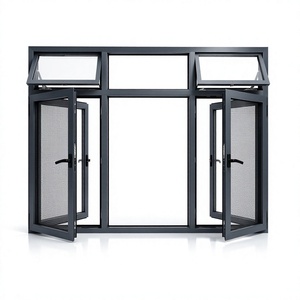
Explore precision-engineered glass swing systems, thermal break profiles, storm-resistant casements, and heavy-duty sliding doors designed for severe tropical climates and urban sound isolation.

Industrial White Paper

Engineering Structural Glass Entry Portals for India's Extreme Microclimates

The specification of exterior glass entry doors and fenestration facades in India requires a radical departure from standard European or North American default configurations. Building envelopes across Indian metropolitan centers encounter some of the world's most grueling environmental stressors: sustained monsoon storm pressures exceeding 2500 Pa in coastal Mumbai and Chennai, scorching summer ambient temperatures crossing 47°C in Delhi-NCR, fine dust abrasion (PM10/PM2.5) across North India, and unrelenting urban traffic sound decibels surpassing 75–85 dB(A).

Direct Engineering Insight: When selecting a glass entry door manufacturer for Indian high-end residential, hotelier, or commercial developments, relying solely on standard aesthetic profiles risks structural deflection, air conditioner cooling losses up to 38%, and water ingress during heavy cyclonic depressions.

As a global Tier-1 door manufacturer with an expansive 180,000 square meter intelligent production base, DERCHI delivers custom engineered glass entry portal systems configured precisely to satisfy the Bureau of Indian Standards (BIS) and Energy Conservation Building Code (ECBC) structural mandates.

Performance Metrics Standard Local Commercial Glass DERCHI Heavy-Duty Engineered System Benefit for Indian Developments
Acoustic Attenuation 22 – 26 dB (Single Pane 8mm) 40 – 45 dB (PVB Acoustic Laminated Double IGU) Dampens ambient vehicular congestion & metro rumble in tier-1 hubs
Thermal Transmittance (U-Value) 5.7 W/m²K (High HVAC Heat Load) 1.3 – 1.8 W/m²K (Polyamide Thermal Break + Argon) Drastically lowers monthly peak AC power consumption during heatwaves
Water Impermeability 150 – 250 Pa (Prone to monsoonal leak) Tested up to 600 Pa (Triple EPDM Gasket System) Zero water penetration during severe monsoon cyclonic cloudbursts
Structural Wind Rigidity 1200 – 1600 Pa (Deflection risk on high-floors) AS 2047 N6 Approved (≥ 3000 Pa) Eliminates structural frame rattle in 40+ story high-rise developments
Corrosion Resistance Standard Anodized (Pits in coastal salt-air) Fluorocarbon (PVDF) 3-Coat / AkzoNobel Powder Prevents peeling and salt spray oxidation across Arabian Sea coastlines

Specific Urban Localization Scenarios

Our custom architectural glass entry doors and matching thermal fenestration assemblies are engineered for localized performance across diverse Indian sectors:

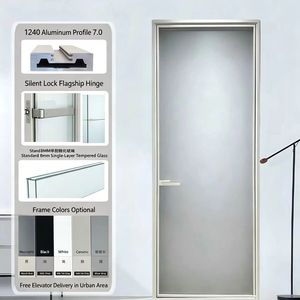
  • Ultra-Luxury Villas in Alibaug, Goa, and ECR Chennai: Custom cast-aluminum and structural hurricane glass pivot entry doors. Designed with marine-grade 6063-T5 aluminum extrusions and marine PVB interlayer glass to eliminate oxidation caused by salt spray and severe humidity.
  • High-Rise Penthouses & Residencies in Mumbai, Bengaluru & Gurugram: Large-format minimalist pivot glass doors that integrate flush floor thresholds with drainage chambers, preventing water rollback even during cloudburst conditions.
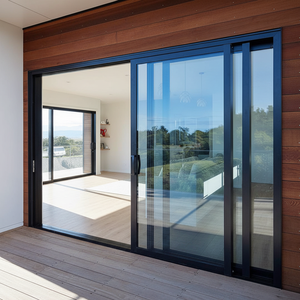
  • Modern Corporate Headquarters & Flagship Retail: Automated high-cycle entry swinging and sliding glass structures integrated with European smart access control (dormakaba, HOPPE compatibility), delivering clean modern transparency with impenetrable anti-burglary specifications.
Market Trends

Key Architectural Glass & Door Trends Shaping the Indian Market

Analyzing the strategic shift from conventional timber and uninsulated glass to engineered architectural entry facades in India's top development belts.

The Decline of Solid Timber for Main Entrances

Indian high-end developers are aggressively shifting away from teak and seasoned hard timber doors. Heavy monsoonal humidity causes warping, swelling, and latch misalignment, while subterranean termite infestation requires recurring pesticide treatments. Precision aluminum glass systems offer zero moisture absorption, remaining millimeter-stable over decades.

Thermal Breaks & Solar Heat Gain Optimization (SHGC)

India's ECBC regulations and stringent green building rating bodies (IGBC, GRIHA) now penalize uninsulated exterior envelopes. Developers demand glass entry doors with polyamide structural insulation breaks (PA66GF25) and spectrally selective Low-E glass that actively reject infrared radiation while welcoming maximum natural daylighting.

Biometric-Driven Pivot Mechanisms for Grand Entrances

Luxury residential design across NCR, Bengaluru, and Hyderabad favors grand pivot doors scaling over 3.5 meters in height and 1.8 meters in width. These massive assemblies require heavy-duty bottom floor springs (tested up to 500kg payloads) coupled with concealed multi-point motorized locking and fingerprint/facial recognition IoT modules.

Acoustic Sanctuaries in Dense Metropolitan Hubs

Decibel pollution along arterial corridors in cities like Bengaluru, Mumbai, and Kolkata is creating surge demand for STC 40+ rated entry glass units. Double-chamber insulated assemblies filled with argon gas and configured with differential glass thicknesses disrupt resonance frequencies, turning metropolitan residences into quiet sanctuaries.

Direct-from-Factory Supply Chain Consolidation

Indian contractors and procurement managers are bypassing intermediate distributors to eliminate substantial markups. Working directly with Tier-1 manufacturers like DERCHI provides full visibility into raw material mill test certificates, precision CAD/BIM shop drawings, custom color matching via AkzoNobel finishes, and containerized ocean shipments delivered to major ports including Nhava Sheva (JNPT), Mundra, and Chennai.

Manufacturing Rigor

Guangdong Dejiyoupin (DERCHI): Engineered Excellence for Global Infrastructure

Combining 25+ years of fenestration craftsmanship with robotic manufacturing precision to meet the demanding architectural standards of international developers.

180,000 m² Automated Manufacturing Hub

Operated by Guangdong Dejiyoupin Doors and Windows Co., Ltd. in Foshan, China. Housing over 600 skilled technicians, CNC profile milling centers, robotic sealing stations, and specialized dust-free glass lamination rooms ensuring zero internal contamination or optical distortion.

100+ Global Certifications & Patents

Our engineering portfolio is verified by ISO 9001, CE, AS 2047 cyclonic testing, and UL fire certifications. We deploy over 30 proprietary patents covering weatherstripping corner crimping, load-bearing hidden pivot hinges, and thermal insulation stabilization.

Free In-House CAD & BIM Engineering Submittals

Our technical team reviews client elevations, structural load calculations, and door schedules. We generate complete architectural shop drawings and 3D installation details, ensuring that every rough opening matches on-site masonry dimensions without guesswork.

Extreme Marine & Monsoonal Anti-Corrosion

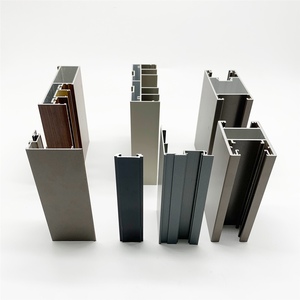
Every profile undergoes 12-stage chemical pre-treatment and electrostatic powder coating or PVDF fluorocarbon application, delivering 30+ year fade resistance under India's aggressive tropical UV index and coastal chloride atmospheric exposure.

Standardized Export Crating & Indian Port Logistics

Every glass panel and pre-hung assembly is wrapped in pearl-cotton protective film, edge-guarded with high-density corner guards, and sealed inside fumigated, moisture-desiccant-packed plywood crates designed to endure ocean transport to JNPT, Mundra, or Chennai without micro-cracks or moisture stains.

Procurement Guide

Frequently Asked Questions: Sourcing Glass Entry Doors for India

Essential guidance covering customs duties, BIS requirements, monsoon water-tightness guarantees, shipping timelines, and on-site fitting protocols.

How do DERCHI glass entry doors withstand severe Indian monsoon rain and water leakage?
Our systems utilize an advanced multi-tiered defense architecture specifically tested under high wind pressures up to AS 2047 N6 ratings. First, we incorporate vulcanized continuous EPDM weatherstripping gaskets (not cheap PVC) that maintain elasticity in extreme heat without cracking. Second, our sub-sill frames feature hidden staggered drainage weep chambers with one-way outflow valves that vent water away under cyclonic gust pressures up to 600 Pa, preventing the water backflow common with standard sliding or pivot doors.
What is the standard shipping lead time to Indian major ports like JNPT (Mumbai) or Mundra?
Once custom CAD shop drawings and architectural specifications are signed off, our production cycle spans 20 to 28 days inside our Foshan factory base. Ocean transit from Shenzhen/Guangzhou ports to JNPT (Mumbai) or Mundra (Gujarat) typically takes between 14 to 18 days. In total, developers should estimate 5 to 7 weeks from final design approval to port arrival, allowing streamlined scheduling for construction milestones.
Can you manufacture doors to custom structural rough opening sizes and imperial dimensions?
Yes, absolutely. We do not restrict projects to modular, standard catalog sizes. Every door assembly is engineered 100% custom based on your site-measured rough openings or structural BIM/CAD drawings. Our in-house engineering wing processes measurements in millimeters, inches, or feet, delivering coordinated submittal drawings complete with sill threshold detailing and structural anchoring schedules prior to extrusion cutting.
What documentation and certifications are provided for Indian customs clearance and project audits?
We provide an end-to-end documentation portfolio to streamline clearance through ICEGATE. This includes commercial invoices matching specific HS Codes (typically 761010 for aluminum doors/windows), packing lists with container load maps, bills of lading, Certificate of Origin (COO), and official raw material Mill Test Certificates (MTC). Additionally, all glass elements include tempered/safety test compliance documentation aligned with international safety norms recognized by Indian municipal development bodies.
How are glass entry doors protected against transit damage during container handling?
Glass handling follows rigid export-grade preservation standards. Finished doors and glass infills are wrapped in multi-layer shock-absorbing PE foam, fortified with heavy edge guards, and encased inside bespoke, fully enclosed, heat-treated plywood crates (ISPM-15 compliant). Desiccant silica packs are sealed inside to prevent moisture buildup or salt condensation during humid sea voyages across the Indian Ocean.
How does DERCHI assist our local contractors and installers on-site in India?
Every shipment arrives pre-assembled and pre-hung for factory tolerance checks, then tagged with individual unit identification labels that map directly to the architectural door schedule. We provide comprehensive step-by-step 3D visual installation manuals, fastener schedules, and exploded-view diagrams. Our technical support engineering team is available for real-time video conferencing to guide local Indian facade crews through pivot leveling, multi-point lock alignment, and silicone perimeter sealing.

Architectural Glass Entry Doors: Request Direct Factory Pricing & Engineering Review

Send your project elevations, door schedules, or rough opening dimensions. Our bilingual technical engineering team provides free CAD shop drawings, structural glass thickness optimizations, and CIF/FOB pricing for your next Indian development within 24 hours.