Engineered Architectural Doors & High-Performance Fenestration Systems
Explore our eight signature product configurations exported worldwide across North America, Europe, Oceania, and the Middle East, engineered for optimal acoustic attenuation, cyclone-rated structural integrity, and maximum thermal resistance.
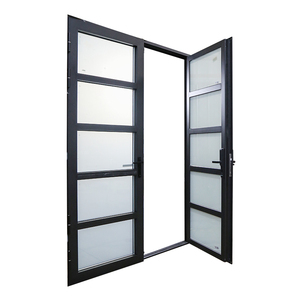
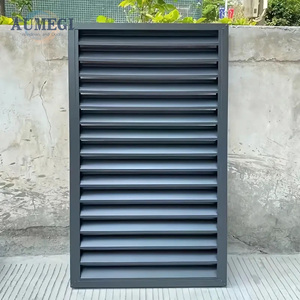
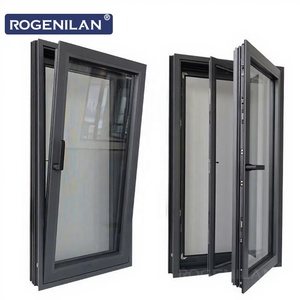
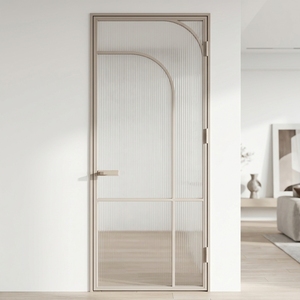

Engineering White Paper: China’s Role in Global Aluminum Overhead Door Manufacturing
In modern industrial logistics, premium automotive retail, high-bay warehousing, and luxury residential architecture, the aluminum overhead sectional door has evolved from an ordinary functional closure into an intricate mechanical and thermal barrier. As worldwide energy efficiency codes become increasingly stringent—such as ASHRAE 90.1, the International Energy Conservation Code (IECC) in North America, and Eurocode EN 13241-1 across the European Union—procurement authorities are transitioning from traditional pressed steel panels toward precision-extruded aluminum alloy overhead systems.
Chinese manufacturers have led this transformation by combining vertical extrusion ecosystems with advanced CNC precision machining, high-capacity powder coating facilities, and robotic polyurethane insulation injection. Guangdong Dejiyoupin Doors and Windows Co., Ltd. (DERCHI) stands at the pinnacle of this industrial evolution, operating from an expansive 180,000 square meter automated manufacturing campus in Shishan Town, Foshan. Supplying contractors, real estate developers, and door distributors across North America, Australia, the UK, and Europe, our integrated manufacturing process satisfies demanding structural and thermal performance parameters while mitigating lead-time bottlenecks.
Technical Distinction: Unlike conventional roll-formed thin gauge steel doors that easily dent, rust in marine atmospheres, and delaminate over time, our 6063-T5/T6 structural aluminum overhead doors integrate internal stiffening ribs, polyamide thermal break barriers, and insulated glass units capable of withstanding dynamic wind loads up to 4.5 kPa (AS 2047 N6 / ASTM E330).
Structural Anatomy & Material Science of Modern Aluminum Overhead Doors
To qualify as a tier-one overhead door for international commercial distribution, an aluminum sectional system must conquer three vital engineering challenges: structural wind-deflection resistance, thermal transmittancy (U-factor minimization), and long-cycle mechanical endurance under high-frequency operation.
1. Extruded Architectural Profiles vs. Roll-Formed Sheet Panels
The structural framework of DERCHI architectural full-vision overhead doors relies on primary extrusions manufactured from prime architectural aluminum billet (Al-Mg-Si alloy 6063-T6). Wall thicknesses range from 2.0mm to 3.5mm, reinforced at critical load-bearing hinge anchor tracks. This structural spine prevents sectional sag and deflection when spanning architectural openings up to 8.5 meters in clear width without requiring bulky external truss bracing.
2. Thermal Break Integrity & Polyurethane Composite Panels
For applications demanding tight climate regulation—such as automated temperature-controlled fulfillment hubs, coastal luxury automotive showrooms, and colder Northern climate facilities—our overhead panels incorporate continuous structural polyamide (PA66 GF25) thermal breaks. Panel cores are insulated with high-density, CFC-free expanded polyurethane (PU) foam with a core density exceeding 45 kg/m³. This prevents thermal bridging, eliminates interior panel condensation, and drops the overall assembly thermal transmittance to as low as U = 1.35 W/(m²·K).
3. Full-Vision Fenestration Glazing Integration
Commercial full-vision overhead doors are frequently integrated into fire stations, automobile dealerships, and design-forward residential pavilions. Our panels support diverse glazing profiles: 5mm+9A+5mm or 6mm+12A+6mm tempered double glazing, acoustic laminated glass with 0.76mm PVB interlayers, and scratch-resistant solar-reflective polycarbonate panes. Each glazing unit is mounted using continuous weather-resistant EPDM perimeter gaskets that retain elasticity from -40°C up to +85°C.
| Engineering Attribute | DERCHI Heavy Industrial Grade | DERCHI Architectural Full-Vision | Standard Commercial Industry Spec |
|---|---|---|---|
| Alloy Material | 6063-T6 Structural Extrusion | 6063-T5 Architectural Anodized | Commercial 6061-T4 or Sheet Steel |
| Panel Core | 45 kg/m³ High-Density CFC-Free PU | Double Low-E Argon-Filled Glazed | EPS Foam Core or Single Hollow Glass |
| Wind Resistance | Class 4 / AS2047 N6 (Up to 4.5 kPa) | Class 3 / ASTM E330 (Up to 3.0 kPa) | Class 1-2 (Under 1.8 kPa) |
| Surface Protection | Fluorocarbon (PVDF) / C5 Marine Grade | Anodized 20μm / Super Durable Powder | Standard Industrial Polyester Paint |
| Spring & Track Cycle Life | 50,000 – 100,000 High-Duty Cycles | 25,000 – 50,000 Cycles Standard | 10,000 – 15,000 Base Cycles |
| Water / Air Tightness | EN 12425 Class 3 / ASTM E283 | Continuous Double-Lip EPDM Perimeter | Single Vinyl Strip / Class 1 |
Strategic Sourcing: Future Procurement Trends for Global Buyers (2025–2030)
Procurement directors, general contractors, and supply chain managers sourcing architectural overhead doors from China face a rapidly changing operational landscape. Sourcing is no longer driven purely by factory gate price; decisions are governed by verified compliance documentation, full life-cycle carbon footprints, and technological longevity.
Low-Carbon Aluminum Mandates
International environmental benchmarks like the EU Carbon Border Adjustment Mechanism (CBAM) and LEED v4.1 credits demand verifiable Environmental Product Declarations (EPDs). Forward-looking Chinese suppliers utilize hydro-powered clean aluminum smelting and post-consumer recycled billets to slash embodied carbon by up to 60% compared to legacy coal-fired production.
Smart BMS & IoT Drive Integration
Overhead industrial doors are integral nodes in the automated logistics chain. Modern procurement specifications require variable-frequency industrial motor drives (SEW-Eurodrive or German-engineered equivalent controls) with Modbus, BACnet, or Ethernet/IP interconnectivity for predictive cycle tracking, automatic open-rate speeds up to 1.5 m/s, and integrated light curtain safety fields.
Engineered Modular Pre-Assembly
High international on-site labor rates make turnkey modular assembly mandatory. By pre-punching torsion spring plates, pre-installing vertical angle tracks, routing internal cable passages, and pre-fitting hinge assemblies inside our workshop, site installation schedules in the US, Australia, and Europe drop by up to 45% per door unit.
Quality Verification Protocols: How to Audit a Tier-1 Chinese Door Exporter
Commercial buyers must safeguard their capital investments by reviewing objective third-party audit documentation rather than subjective sales collateral. When vetting a Chinese overhead door manufacturing partner, strict inspection checkpoints must be enforced:
1. Certified Structural Engineering Drawings: Leading producers supply project-specific CAD submittal packages detailing jamb track attachments, head-room clearance curves, low-headroom rear-mount torsion springs, operator mounting brackets, and center-line wind truss load calculations signed off by registered structural engineers.
2. Corrosion-Resistant Metallurgy Testing: Surface treatments must meet American AAMA 2604/2605 specifications or Qualicoat Class 2 standards. For marine environments, ask for accredited 1,000 to 3,000-hour neutral salt spray (ASTM B117) test reports verifying hardware fasteners, zinc-electroplated torsion springs, and powder-coated extruded rail profiles retain zero blistering or rust creeping.
3. Ocean Freight Packaging Integrity: Trans-oceanic transit poses high risks of glass shattering, surface scratching, and track twisting. Professional exporters utilize fumigated solid-plywood structural crates, closed-cell polyethylene foam wraps, moisture-absorbing desiccant sacks, and reinforced corner impact blocks engineered to withstand rough intermodal transport across global freight ports.