Engineered Fenestration Systems: Tested Under Extreme Mechanical Loads
Direct from our 180,000 m² automated manufacturing facility, explore our premier architectural door systems and specialty fenestration profiles built to exceed AAMA/WDMA/CSA and severe-weather missile-impact criteria.
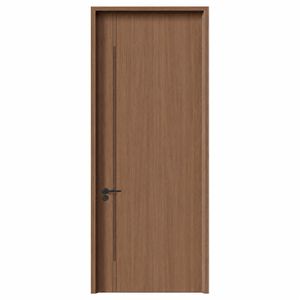
Aluminum Clad Timber Door for Hotel Commercial Building Project
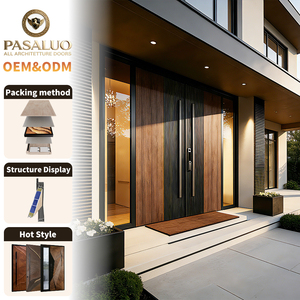
2026 OEM PSL New Design Stylish Wooden Residential Home Villa Entrance Security Front Entry Exterior Aluminium Doors for Houses
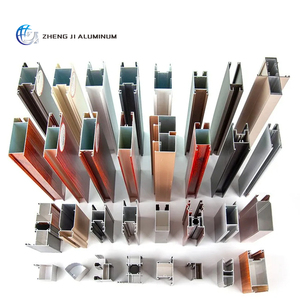
Custom Size Aluminum Window Door Extruded Profiles Slim Glass Door & Partition Aluminum Extrusion Profile Manufacturer
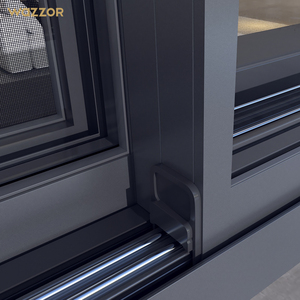
Wazzor Hotel Hurricane Impact Window Balcony Soundproof Double Glass Aluminum Windows Triple Glaze Black Aluminum Sliding Window
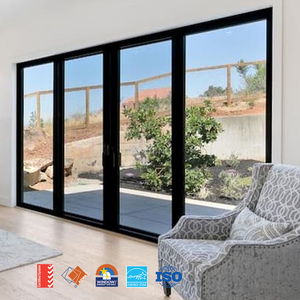
AMJ AS2047 Australian Pocket Stacker Windows and Doors Double Glazed Commercial Exterior Patio Panoramic Aluminium Sliding Doors
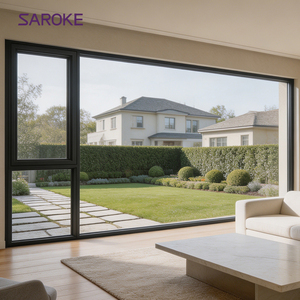
Child-Safe Rounded Corner Protection Design Aluminum Outswing Window Triple Glazed Toughened Glass Security Casement Window
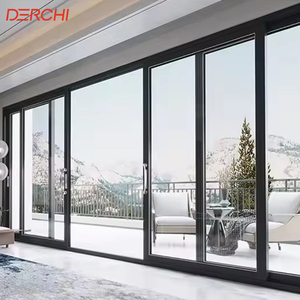
Heavy-Duty Commercial Modern Energy Efficient Office Door External Glass Slide Large Sliding Patio Doors And Windows For Home
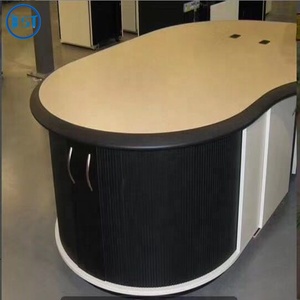
caravan Furniture Door Pvc Abs Roller Shutter Slat Kitchen caravan Accessories Shower Tambour Door
Structural Engineering of Impact-Resistant Aluminum Entry Systems
In high-velocity hurricane zones (HVHZ) and coastal architectural zones across Florida, the Gulf Coast, and the Canadian maritime seaboards, entrance doors operate not merely as aesthetic transitions but as structural pressure barriers. The fenestration envelope must simultaneously resist destructive positive and negative wind loads, absorb missile impact kinetic energy from airborne storm debris, prevent catastrophic interior barometric pressure spikes, and eliminate thermal bridging during extreme climate deltas.
1. Extruded Aluminum Metallurgical Purity and Wall Thickness
Derchi utilizes virgin 6063-T6 and 6061-T6 structural aluminum billets extruded under 1,800-ton hydraulic press pressure. Unlike commercial residential doors fabricated from secondary recycled alloys containing excessive iron impurities (which induce premature galvanic oxidation and brittle failure under wind fatigue), primary structural aluminum provides minimum yield strengths exceeding 170 MPa (25,000 psi) and ultimate tensile strengths above 205 MPa (30,000 psi).
For custom grand-format pivot doors and oversized impact swing portals exceeding 10 feet (3,048 mm) in height, stile and rail profile wall thicknesses are intentionally engineered between 3.0 mm and 4.0 mm. This structural cross-section guarantees an internal moment of inertia capable of resisting continuous deflection limits of L/175 and L/240 under sustained DP70 to DP100 (Design Pressure) test conditions.
Polyamide PA66 GF25 Iso-Bars
Thermal breaks reinforced with 25% glass fiber ensure dimensional stability, lowering total door thermal transmittance down to U-factors of 0.28 BTU/(hr·ft²·°F) without sacrificing torsional resistance.
Structural SGP Interlayer Glazing
Utilizing Kuraray SentryGlas (SGP) ionoplast interlayers that remain 5 times stronger and up to 100 times stiffer than standard PVB sheets, maintaining post-breakage barrier security under cyclonic gusts.
Four-Corner Hydraulic Crimping
Heavy-duty internal extruded aluminum corner keys combined with dual-component anaerobic adhesive injections produce completely sealed, non-sagging miters that withstand rigorous transport and install strains.
2. Structural Performance Metrics & Rigorous Test Matrix
When specifying custom entrance assemblies for commercial complexes, waterfront estates, or educational facilities, architectural engineers must benchmark performance criteria against international code certifications, including ASTM E1886/E1996, Florida Building Code TAS 201/202/203, and Australian Standard AS 2047 N6 cyclonic testing.
| Performance Standard | Laboratory Test Protocol | Design Parameters Verified | Architectural Application | Compliance Status |
|---|---|---|---|---|
| TAS 201 / ASTM E1886 | Large Missile Impact (Level D & E) | 9-lb 2x4 lumber at 50 ft/s (34 mph); 80 ft/s for Level E | Miami-Dade HVHZ, High-Velocity Coastal Envelopes | Certified Pass |
| TAS 203 / ASTM E1996 | Cyclic Static Wind Pressure | 9,000 cycles inward/outward (1.3x Design Pressure load) | Critical Infrastructure & Commercial Facades | Certified Pass |
| TAS 202 / ASTM E330 | Uniform Structural Load Test | Deflection monitoring under maximum positive/negative load | High-Rise Residential Balconies & Villa Portals | DP 70 - DP 100 |
| ASTM E283 / E331 | Air Leakage & Water Infiltration | Zero water penetration at 15% positive DP (up to 15.0 PSF) | Rainstorm Exposed Seafront Openings | <0.10 cfm/ft² |
| AS 2047 (N6 Rating) | Australian Cyclonic Performance | Ultimate design pressure > 4,000 Pa; Water test at 450 Pa | Oceania Tropical Cyclones & Coastal Zones | Class N6 Max |
| UL 10C / NFPA 252 | Positive Pressure Fire Endurance | 20-min to 90-min thermal resistance and hose stream testing | Hotel Corridors, Multi-Family Building Demising Walls | UL Classified |
Future Procurement Trends in Impact Fenestration (2026–2030)
As commercial building codes tighten and extreme weather frequencies accelerate, architectural procurement specialists must adapt to changing technical baselines.
Oversized Pivot Formats with Hidden Offset Hardware
Architects are replacing conventional paired double doors with single, monumentally proportioned pivot doors up to 14 feet tall and 6 feet wide. This mandates high-capacity concealed hydraulic floor boxes (DORMA or FritsJurgens systems) engineered into reinforced threshold assemblies to maintain airtightness and handle sashes weighing up to 1,000 lbs (450 kg).
Zero-Carbon Recycled Alloy & Low-E Triple Glazing
With LEED v4.1 and the 2024 International Energy Conservation Code (IECC) entering full enforcement, B2B buyers demand third-party Environmental Product Declarations (EPD). Procuring low-carbon smelting aluminum combined with triple-silver solar control Low-E coatings drastically cuts solar heat gain coefficients (SHGC < 0.22) across southern cooling climates.
Integrated Biometrics & Concealed Motorized Multi-Points
The standard single-cylinder mechanical deadbolt is becoming obsolete in high-end specifications. Leading developers demand fully integrated electromagnetic multipoint locking systems with concealed wiring channels, optical fingerprint recognition, facial scanning modules, and direct API handshakes with automated building management systems (BMS).
Direct-from-Factory Ocean Logistics & Modular Pre-Glazing
To eliminate expensive domestic assembly labor and local supply chain bottlenecks, procurement managers are shifting away from intermediate distributors. Factory-direct delivery of unitized, fully pre-glazed, pre-hung door cassettes crated in ISPM-15 compliant timber containers saves an average of 35% in total installed jobsite capital expenditure.
Engineered by Guangdong Dejiyoupin (DERCHI)
With more than 25 years of specialized fenestration manufacturing, our Foshan production complex combines German automated CNC machining, high-capacity powder coating, and international project execution.
Uncompromising Manufacturing Precision & Supply Chain Governance
At DERCHI, every entrance door is treated as an engineered architectural facade component. Our automated fabrication center features 5-axis CNC machining centers imported from Germany and Italy, allowing milling, drilling, lock-pocket preparation, and corner jointing with tolerances strictly held within ±0.15 mm. This exactness guarantees that multi-point locking rods and concealed pivots operate with silky smoothness, eliminating common on-site alignment friction.
For surface finishing, our automated vertical coating plant uses AkzoNobel and PPG fluorocarbon (PVDF) architectural powder coatings compliant with the highest AAMA 2605 specification. This ensures extreme color retention, UV resistance, and salt spray endurance of over 4,000 hours—indispensable for oceanfront installations in Florida, California, Hawaii, the Caribbean, and Australia.
Six-Stage Technical Procurement Protocol
Our structured OEM/ODM delivery process minimizes design ambiguity and guarantees complete compliance with local building inspections.
Drawing Review
Architectural floorplans, rough openings, wind-load data, and door schedule review by senior engineers.
Free CAD Submittals
Detailed 2D/3D shop drawings, profile extrusions, threshold details, and anchor schematics provided for sign-off.
Sample Validation
Corner profile cross-sections, glass layups, customized RAL color swatches, and hardware sets sent for client approval.
CNC Production
Automated cutting, milling, hydraulic corner crimping, structural glazing, and multi-point lock testing.
Trial Assembly & QC
100% pre-assembly in our facility to verify squareness, latching tolerances, and laser alignment before crating.
Export Logistics
ISPM-15 export-grade plywood crating with desiccants, foam armor, and door-to-port ocean documentation.
Frequently Asked Questions: B2B Sourcing & Technical Verification
Everything you need to know regarding structural certifications, material tolerances, ocean shipping logistics, and custom specifications.
What documentation do you provide for local North American building permit approvals?
What is the difference between standard PVB and SGP interlayers in your impact doors?
How does your factory prevent galvanic corrosion in oceanfront coastal installations?
Can you accommodate bespoke rough openings, imperial dimensions, and custom hardware preps?
What are the typical lead times and logistics packaging protocols for ocean freight?
How do your large pivot doors achieve reliable water and air infiltration ratings?
Request Project Specifications & Architectural Catalog
Connect with our technical engineering team for instant design schedule consultations, CAD shop drawings, and competitive direct-from-factory volume quotes for your upcoming projects.